Features

Great businesses don’t begin with balance sheets, boardrooms, or venture capital. They start with an idea – often a small, simple spark of inspiration that grows into something significant through determination, discipline and persistence. The journey from idea to product is rarely glamorous or straightforward. It’s messy, relentless and sometimes unforgiving. Yet when tackled with clarity and courage, it becomes one of the most rewarding adventures an entrepreneur can undertake.

As a small business owner and a business that also provides services direct to businesses (some of whom also happen to be small and startups), one of the things that I found the most stressful and that contributed to poor mental health when I first started out, was the amount of bad advice that exists and that is promulgated aggressively from other small businesses trying to make a quick buck from small businesses and startups.

There’s an old saying in engineering circles: “automation gives you speed, but agency gives you freedom.” In the twenty years I’ve spent building systems – from personalising e-commerce at Jio to designing AI-assisted cancer diagnostics at Zedsen, and most recently crafting an AI-driven ERP in Europe – I’ve seen organisations climb the ladder from digitisation to automation. But something new is stirring. We are on the cusp of a new organisational form: the agentic organisation, where multi-agent AI systems don’t just support teams – they become active members of them.

Over the last 20 years, I’ve worked with a wide range of young people and businesses and it’s clear that there’s a hang up around the word networking and what that means. There’s a belief that it’s having to sell, or awkwardly exchange business cards, and that it’s an ‘old fashioned’ way of doing business. Yet when I worked at Professional Liverpool on LeadHere, for those in the earlier stages of a business or career, I saw how a simple introduction could super-charge the career of a younger person.

e-Residency Estonia was introduced in 2014 as a way to provide non-residents secure access to its digital public services and transparent business environment. Since its launch, the programme helps over 110,000 people and their businesses operate regardless of location, and has generated over €213 million in revenue for the Estonian state budget from taxes and state fees.

No matter which retail executive you talk to, the reaction is the same: “I didn’t think that was possible yet.” While most headlines in tech are dominated by copilots, a quieter but deeper shift is happening in enterprise AI: the rise of agentic systems that don’t just assist, but act. And it’s catching many executives off guard.

The crucial question of how small businesses can effectively scale was given fresh focus this week, as some of the UK’s smallest and most ambitious businesses came together to explore new routes to growth.

While most founders claim how hard it is to build in the UK, millions of pounds are burned on infrastructure costs alone. The UK is a homeland for 2,300 VC-backed AI startups, including 20 AI unicorns. Europe’s biggest AI market, has reached a combined historical market valuation of $230 billion in Q1 2025 and may lose leadership to one of the highest electricity costs in the EU, rising data and infrastructure costs alone.

It takes grit, determination, and drive to set up on your own. And it takes even more to stay afloat, with an eye-watering 60% of businesses failing in their first three years. Perhaps just as much as the brilliant business idea, the difference between success and failure boils down to personal resilience. Just how do you handle those founders’ knock-backs, navigating funding rejections, business pivots, and burnout? Can you pick yourself up, dust yourself down, and start all over again?

Relocated tech founders are settling in Europe, but their experience points to a deeper issue: ecosystems feel closed, capital is hard to secure, and much of the support on offer is low-value. A new study suggests Europe risks wasting incoming talent, while investors may find overlooked opportunities in the gaps.

Five years ago, I launched my first startup in The Bay Area. I’ll skip to the end: it failed. The idea was solid, I was motivated, but my co-founder and I didn’t see eye to eye. It was a costly, time-sucking mistake and it taught me a lesson I wish I’d learned sooner: non-technical founders don’t need a technical co-founder to get started.

Every business is a tech company now. It doesn’t matter if you’re selling clothes or executing a large-scale green engineering project; you’re ultimately driven by tech. Without it, your company wouldn’t exist in its current form. And yet, with all the advanced tech available, you’re still running your business using spreadsheets. Because they’re familiar, they feel comfortable… And they’re letting your business down. It’s time for a new approach.
The recent debate around MIT’s NANDA report on the success or failure of generative AI in corporate projects underlines one truth about careers in technology: don’t get into it if you want certainty in your life. The reality is that this industry is changing continuously as innovations move through Gartner’s Hype Cycle.

Global capital has turned cautious, which has exposed a simple truth that disciplined teams, who obsess over product and customers, are edging ahead of competition who solely relied on larger cheques. In this article, Nicolai Chamizo explores how lean, founder-led fintech startups are gaining ground, which business models have genuine staying power and how the Nordic ecosystem has become an early proving ground for the next fintech chapter.

The AI boom has reshaped the startup landscape. By some estimates, just over half of all the new billion-dollar companies in 2025 so far are AI companies. Many founders still operate with the same mindset they had during the booming valuations of the late 2010s and early 2020s. The default, time and again, is focusing on raising big rounds and chasing billion-dollar status as quickly as possible.

India is a land of incredible opportunities – opportunities stitched together by diversity, ambition, and potential.
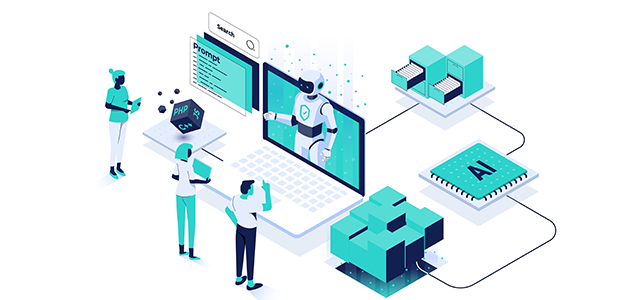
MyRoboteam is launching its third batch of its acceleration program for tech startups at the beginning of October 2025. This program is free and designed for sole non-developers and even developers themselves who want to establish their own business but lack funding and co-founders.

In the West Midlands, the startup ecosystem is getting a boost from an unlikely source: local pension funds and the combined authority. Involved from the start of this innovative approach is Rupert Lyle, Principal of the West Midlands Co-Investment Fund. This pioneering fund, launched two years ago, is changing how regional businesses get financed, offering a blueprint for how pension capital can fuel homegrown innovation.

For many startups, “going global” used to be an aspiration saved for later stages of growth. But today, ambitious young companies are thinking differently. They’re building globally distributed teams from the outset, treating international hiring not as an expansion strategy, but as a foundation for growth.

A new report from MIT recently sent shockwaves through the AI world: 95% of enterprise generative AI pilots deliver zero return on investment. Companies are moving fast with AI; some argue too fast. A wave of products are rushing to bolt on generative models, often with the same pattern: “Look what it can do!” But rarely: “How is this improving customer experience?”