Features

For decades, clinical trials have driven medical innovation. Yet behind every breakthrough lies a persistent problem: the process is often slow – it can take up to 10-15 years to complete all phases. Fragmented technology, inefficient coordination, and outdated systems can create delays, introduce errors, and make participation for patients stressful.

There’s no doubt that small and medium-sized enterprises are the heartbeat of Europe’s economy; powering our communities, and our economies.

The recent UK–US Tech Deal is a welcome vote of confidence in the UK’s technology sector. But if Europe is going to compete globally in AI, the decisive factor won’t be new policies or government partnerships. It will be how quickly startups can attract, cultivate, and retain the right talent.

Most customers don’t judge products on their own. Instead, they follow what others desire, a psychological driver known as Mimetic Desire. When people see something is popular, it doesn’t just reflect quality; it creates belonging and status.

Mimica has announced a $26.2 million Series B funding round led by Paladin Capital Group, with continued backing from Khosla Ventures, LGVP, and Entrepreneurs First.

When Google switched on AI Overviews for more than a billion users, it sent a shockwave through search. Publishers saw traffic collapse overnight, with lawsuits already challenging Google’s new model, writes The Verge. For brands, the reality is just as stark: you’re either cited inside machine-made answers or erased from the conversation.

An estimated £3.7 billion was lost by UK businesses due to internet failures in 2023. So, for SMEs relying on Cloud tools, VoIP, and remote work, unreliable internet isn’t just frustrating – it’s costly.

For many founders, selling a startup is the ultimate milestone – an opportunity to turn years of hard work into a well-earned reward. But while the headlines often highlight valuations and buyouts, the reality is more complex. Exiting a company is not just about numbers. It is a legal process that demands foresight, discipline, and meticulous preparation.

The UK has set ambitious goals for innovation, positioning itself as a hub for science and technology on the global stage. But while the appetite for R&D remains strong, the reality for many businesses is that their ability to claim R&D tax relief now hinges less on ambition and more on compliance.

My journey has been anything but straightforward. I started without a clear blueprint for success, but I learned to spot gaps others ignored, take risks, and turn those insights into a scalable SaaS product.

The wrong AI debate
If you scroll through LinkedIn, you’ll see the same headline again and again: AI will replace you. It will steal jobs from marketers, product managers, maybe even founders themselves. That’s not what I’ve seen.
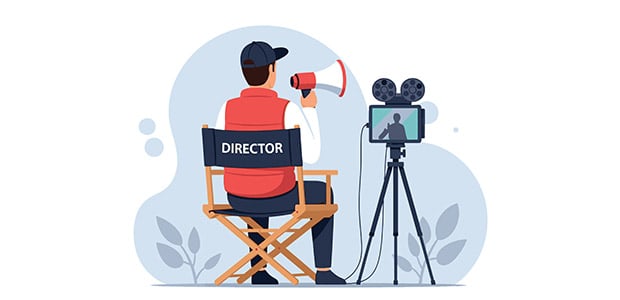
For a long time, video was treated as a marketing luxury. It looked great in a campaign, but when budgets were under pressure, it was one of the first things to go. Ads and owned media content were the must-haves, while video sat in a column marked “would be nice.”

The innovation efforts of many organisations are failing not because of a lack of ideas, but because of how those ideas are measured and managed. That’s the central argument of ‘Expected Value: The System to Align Innovation, Strategy, and Value Creation’, a new book by Simon Hill, CEO of global innovation scaleup Wazoku.

How you introduce your product to the market can shape your startup’s growth trajectory. Freemium and free trial models are two of the most popular approaches allowing businesses to attract users and encourage full adoption.
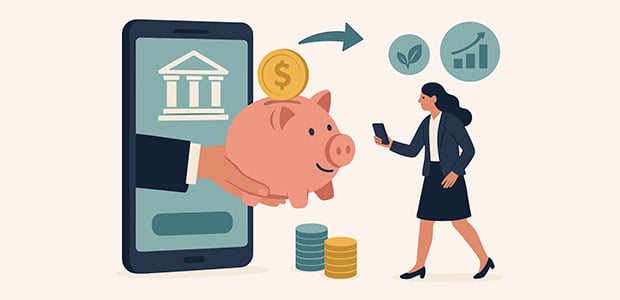
Nick Perrett spent years building gaming mechanics before losing track of his own pensions – an expensive wake-up call that led him to found Prosper. His contrarian view: ethical fintech isn’t just morally right, it’s more profitable long-term – and founders who understand this will build the next generation of financial giants.

Striking out on your own to launch a rival tech business could be one of the most exciting but also daunting times of your career. The temptation will be to hand in your notice, fire up your laptop, and start calling prospective clients.

Launching a new business is exhilarating – the energy, the creativity, the vision of building something that’s uniquely yours. But the statistics are sobering. According to ONS data, around one in five UK businesses fail within the first year, and nearly half don’t make it to their fifth birthday.

Away from the pomp and pageantry of Donald Trump’s State Visit to the UK, there was real progress made on business. The record-breaking £150 billion Tech Prosperity Deal of US investment in the UK rightly grabbed a lot of attention. This is the largest-ever single package of commercial investment linked to a State Visit.

After a run of double-digit growth, many founders look to bank the momentum and exit. Increasingly, however, others are turning to Employee Ownership Trusts (EOTs). For these leaders, the priority is building a company that can sustain growth and stay true to its values. In today’s volatile market, independence matters, and so does a culture that helps teams adapt without compromising standards. An EOT provides both: it secures that independence while keeping long-term goals at the centre of decision-making.

A mother-daughter perspective on AI’s impact on future careers.