
When Eoin Bara was trying to distribute his award-winning Mór Irish Gin internationally, he discovered something shocking: the $1.6 trillion alcohol industry still runs on emails, phone calls, and spreadsheets.

Most founders I meet believe PR is only possible when you have “real news”: a funding round, a product launch, a partnership, an acquisition. The problem? These moments don’t happen every month. In fact, for most startups, they’re rare.

Irish small and medium-sized enterprises (SMEs) are the backbone of the national economy, comprising a staggering 99.8% of all businesses. However, despite their importance, the majority of these SMEs are not exporting.

Ask any AI founder what keeps them up at night, and you’ll hear many of the same stories. Hidden infrastructure costs that blow up the burn rate without warning. Waiting weeks, or even months, for GPU capacity to come online. Scrambling to navigate compliance requirements that feel like a full-time job. These aren’t abstract problems. They are everyday hurdles that can delay product launches, frustrate investors, and stretch teams thin.

Launching a startup is a balancing act. You’re driving product development, fundraising, sales, and recruitment, often simultaneously. But for many non-technical founders, the most challenging area isn’t fundraising or sales. It’s building the product itself, especially when outsourcing to software consultancies.

“The companies that thrive in this new era will not be the ones that hand over the keys to an algorithm. They will be the ones where leaders treat AI as a force multiplier,” writes Alexander Walsh, Co-Founder and CEO of Oraion

Start Up Loans reports that this summer has seen the highest number of loans taken out by founders over the past four summers. This growth comes despite reports indicating low levels of business confidence, highlighting that UK small business founders accessing the programme remain undeterred and keen to start up new ventures.

Perfat Technologies, a food deeptech company pioneering healthy and functional fat alternatives and a member of EIT Food Rising Food Stars, has raised €2.5 million in Series A financing to scale production, grow its team, and launch innovative healthy lipid-based solutions, to address the problem of harmful saturated and tropical fats without compromising taste or texture.

BT has opened its test and integration facility, the largest in Europe, to cybersecurity innovator Sitehop to test its quantum-resistant encryption technology on the replica BT network, in a first of its kind proof-of-concept.

The startup dream is sold as a sprint to success, a flash of inspiration, a flurry of funding rounds, and an eventual big exit. But the reality? It is a long game that will stretch your resilience, test your decision-making, and reshape who you are as a leader.

With more than half of founders experiencing burnout last year, the rise in corporate wellness is less of a surprise, and more of a relief.

Messium, a UK agritech innovator using hyperspectral satellites and AI-driven crop growth models to solve the challenge of nitrogen efficiency in farming, has secured a £3.3 million seed investment.

One Carbon World (OCW) will be the official climate impact partner of the upcoming Carbon Markets Africa Summit (CMAS) taking place in Johannesburg from 22 to 23 October.

When you run a small or medium-sized business, it’s tempting to believe that building your own technology is the best way to stay in control. After all, nobody knows your customers like you do. Surely the smartest move is to develop the tools you need, tailor-made for your market.

Digital Catapult has announced that its Black Founders Programme has returned for a third year in partnership with Sony Music UK and Sony Music Publishing UK and, in a first for the programme, in collaboration with broadcaster Channel 4.

Confidence has become one of the most important currency markers in the workplace. Yet recent research – conducted by social research agency Hark – reveals that one in 10 children already feel a complete lack of confidence by the age of 13 in their ability to build a future career.
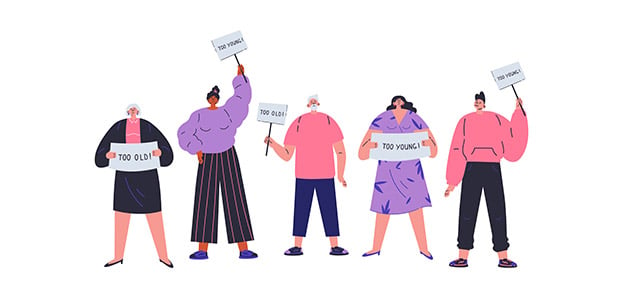
When we talk about workplace discrimination, most people immediately jump to gender, race, or disability. While those are urgent, undeniable issues, there’s one bias that every single one of us, no matter who you are, will face if we’re lucky enough to live long enough. It’s ageism.

Advertising is getting more and more invisible with 86% of internet users ignoring display ads because of “banner blindness”. People see between 1,700 and 2,000 online banners every month, but most of them go unnoticed. On top of that, 63% of millennials actively use ad blockers. No wonder so many ads can not break through: 54% of users never click on banners at all.

The Business AI Alliance, spearheaded by 4most, was launched on the 9th September at a Parliamentary Reception. The new alliance brings together sector-based organisations committed to shaping national AI policy with a focus on growth and influence, providing much needed SME representation in the face of big tech dominance and aspiring to a clear, positive narrative around AI’s economic potential for the UK.

AI is increasingly becoming the workplace’s first line of support, with a third (33%) of Gen Z professionals now using AI tools for work-related questions before asking their manager or colleagues, according to new findings from global talent solutions partner Robert Walters.