
Belgian water technology company Shayp has launched Shayp 4IMPACT, a corporate water conservation and efficiency platform that delivers quantifiable, verified benefits through precision monitoring.

Dubai is set to host one of the most anticipated tech events of the year as DATE (Digital Acceleration & Transformation Expo) makes its debut in the city on 26 – 27th November 2025, followed by DATE KSA on 8 – 9th December in Riyadh.

Panasonic Industry Europe announces a strategic collaboration with FISEGO Holding.

Running a small business is rewarding, but demanding. From serving customers to managing cashflow and dealing with economic uncertainty, you are constantly juggling different demands and roles. The daily grind can also make it easy to forget about your accomplishments, and our latest research shows fewer than half (43%) of small businesses regularly get the opportunity to pause and celebrate their wins.

A singular theme didn’t dominate the month of August in European tech ventures. What happened instead was a clear set of parallel shifts becoming more apparent. Moves in geographies, sectors, and funding models represented a reorganisation tipping point in the market.

Since its UK launch in April 2023, Temu has quickly made a name for itself. Last year it was the most downloaded iPhone app in the UK App Store and it’s getting a great reception from its users.

Once an afterthought in most transactions – except in pure technology acquisitions – intellectual property (IP) is moving to the centre of deal-making. Software, data, and AI shape nearly every product and service, and the know-how, data sets, and IP rights behind them increasingly determine whether a deal delivers its growth story.

The UK Government has announced a landmark £150 billion investment package from US-based private sector firms during the US state visit, marking a major milestone for UK–US economic ties and reinforcing the UK’s position as a global hub for innovation and technology

Humanoid Global, a publicly traded investment issuer focused on building and accelerating a portfolio of pioneering companies in the humanoid robotics and embodied AI sector, is pleased to announce that it has closed its indirect strategic investment in Agility Robotics via a single-asset special purpose vehicle.

Women exit from their businesses for 25% less than their male peers on average, wealth management firm Evelyn Partners has revealed.
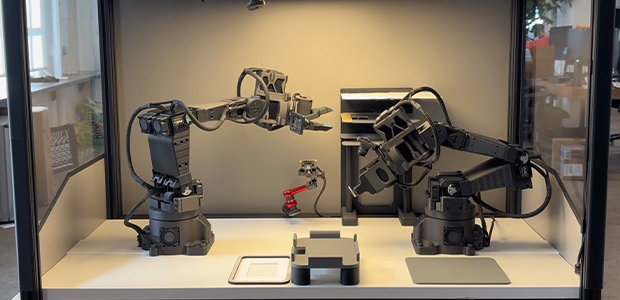
MicroFactory has raised $1.5 million in pre-seed funding from a set of visionary backers, including Clement Delangue, the founder of Hugging Face, and Naval Ravikant, early investor in Uber and Twitter, giving the company a post-money cap of $30 million.

Over my career I’ve worked with countless startups – some of which have gone on to become household names. The ones that stand out offer more than great products or clever marketing. They have a beating heart. They create moments that make people feel – joy, excitement, pride, nostalgia.

The Pharma Partnering Summit, a global premier conference series dedicated to strategic partnerships in the pharmaceutical industry. This high-impact conference brings together top executives from pharma, biotech, investment firms, and advisory groups for two dynamic days of deal-making, networking, and thought leadership.

Venture debt financing is an increasingly popular source of funding for growth companies in Europe, reaching record highs in 2024 with a deal value of €25.4 billion, according to PitchBook. With this growing interest, we are seeing a broader range of providers in the market, from established financial institutions to a wide range of funds.

Amazon is expanding its commitment to climate-focused innovation by welcoming 11 startups and scaleups into the latest ClimateTech cohort of its Sustainability Accelerator.

Small businesses are grappling with significant hurdles when it comes to hiring, new data has revealed.

Small and mid-sized businesses have always won on something enterprise giants can’t copy: the personal relationship with their customers. But now those same customers expect AI-powered experiences as part of the service, and the tools on the market are built for companies with entire AI teams, six-month budgets, and enterprise-scale infrastructure. SMBs can’t afford to build that, but they also can’t afford not to have it.

There is a growing disconnect between employee expectations and what organisations are delivering, putting pressure on HR leaders to rethink hiring, leadership development, and retention strategies. Research from Personio, Europe’s leading HR software provider for small and mid-sized businesses, reveals that more than half (54%) of employees in the UK are considering a job change within the next year as the gap between expectation and reality contributes to attrition.

Time pressures are limiting the ability of small businesses to focus on growth, according to new American Express research, with over two-fifths (43%) of small businesses looking to AI to help tackle this challenge.

Dr Florence Concepcion, Senior Quantum Engineer at Aquark Technologies has been awarded Innovate UK funding as part of the Future Leader Fellowship. The four-year fellowship will provide £1.9 million to support Dr Concepcion’s £2.7 million project to advance research in the miniaturisation and scalability of vacuum systems for scalable quantum technologies.