Now Reading
Numan raises $60M to lead next-gen of preventative healthcare

Numan raises $60M to lead next-gen of preventative healthcare

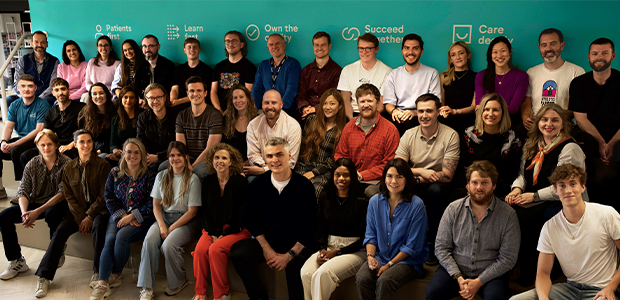
Numan, the digital health provider has announced that it has raised $60 million in fresh funding, following another year of exceptional growth.

The latest financing is an extension of Numan’s Series B round. It comprises a new $30 million equity investment led by Big Pi Ventures, known for investing in companies developing exceptional technologies to improve lives and transform industries. Big Pi Ventures is investing through its new Growth Fund strategy. The round was joined by Endeavor Catalyst as well as existing investors: White Star Capital and Novator Partners.

The fundraise also includes access to $27 million in growth capital from HSBC Innovation Banking, who support the UK’s leading health technology innovators and investors.

The new capital comes on the heels of a landmark year for Numan, which saw revenue more than double year-on-year to $90 million by the end of 2024. Building on the profitability first achieved 18 months ago, Numan continues to scale rapidly and is on track to achieve 150% growth in 2025. To date, the company has now treated over 650,000 patients across obesity management, men’s health, and diagnostics, whilst maintaining a market-leading NPS of 68 – cementing its position as one of Europe’s fastest growing and most trusted health platforms.

Sokratis Papafloratos, CEO of Numan, commented: “Our latest funding is a testament to both our commercial performance and belief in our long-term vision for providing personalised, preventative health at scale. With the fresh conviction of Big Pi Ventures, Endeavor Catalyst and HSBC Innovation Banking – as well as the continued backing of White Star Capital and our long-term investors – we are now perfectly positioned to expand our reach, deepen our clinical capabilities, and accelerate innovation to help our patients live happier, healthier, longer lives.

“We started 2025 in a very strong position, one that allowed us to be genuinely choiceful about our next move. Over the past 18 months we’ve seen an explosion in demand – our patients have shown incredible engagement and achieved life-changing outcomes. This interest fuelled our growth and success in both reaching and maintaining profitability. That’s why we believe now is the time to invest in scaling what works and innovating for the future of healthcare.”

Numan is redefining proactive healthcare in the UK. This latest investment will fuel the next phase of growth – accelerating momentum in the UK, expanding internationally, and unlocking access to new areas of care.

Specifically, the funding will power Numan’s expansion into female health and in deepening patient relationships through enhanced screening and preventative care programmes. It will also go towards scaling the platform’s infrastructure to serve a growing patient base, expanding marketing efforts to reach more people in need, and advancing Numan’s AI-driven capabilities in a careful, clinically responsible manner.

See Also
When global labour market data is released, headlines tend to fixate on a single metric: unemployment. This year is no different. According to the latest figures from the United Nations and the International Labour Organisation, global unemployment remains relatively stable at just under five per cent. At face value, this suggests a labour market that is holding firm despite economic uncertainty, geopolitical instability and technological upheaval. In reality, it masks a serious and underreported problem: the true global jobs crisis is not a lack of work, but the growing scale of informal work. More than 2.1 billion people worldwide are employed in the informal economy, including misclassified workers operating outside effective regulatory coverage, where employment is typically unregistered, contracts are absent or unenforced, and access to labour rights and social protections is limited or non-existent. That represents a large portion of the global workforce. If unemployment reveals how many people cannot find work, informality shows how many are working without protection or long-term opportunity. Informal work is often associated with developing economies or unregulated sectors. However, this form of work is increasingly occurring within developed economies and regulated sectors, hidden within otherwise legitimate, fast-growing small and medium-sized enterprises – and this is often unintentional. For both businesses operating solely in domestic markets and those that have expanded abroad, adopting new workforce models and attempting to respond to rapid technological change, the crisis of informality is emerging in three key areas. The first is worker misclassification. Individuals are engaged as independent contractors but operate in practice like employees – working fulltime, at set hours, for years at a time. This is particularly prevalent in gig and platform-based roles, where algorithms determine pay, hours and performance without considering employment rights. Gig and platform work often presents as flexible and empowering, however, in practice, many platforms exercise employer-like control over payment, performance management, hours, and length of engagement, while explicitly avoiding employer obligations such as tax filings and the provision of statutory benefits like annual leave and healthcare. The result is a growing cohort of workers who fall between legal categories, carrying the risks of self-employment without the autonomy or protections that should accompany this mode of work. The second area is cross-border remote work, where informality can inadvertently arise. With post-COVID remote working models here to stay, companies are directly hiring overseas talent, assuming that because the worker is not based in the company’s home country, local employment laws do not apply. Where employment is not properly registered (whether by the employer and/or employee), local labour law is not applied, or social security obligations are misunderstood or ignored, these arrangements can slip into a form of modern informality, even where the relationship appears to be formal on the surface. This is often the point at which organisations begin to seek external guidance. In many cases, neither party fully understands the legal implications of the arrangement, which leaves both employer and worker exposed. We frequently see organisations approach us when a specific issue surfaces, such as payroll inconsistencies, questions around benefits entitlement, or concerns raised by the workers themselves, including registration process failures. Business leaders should also be aware that permanent establishment risk can arise if a remote employee is deemed to represent the company locally, which can trigger corporate tax obligations. Social security errors can happen when contributions are not made correctly in either jurisdiction, leaving workers without coverage and employers facing backdated liabilities. Meanwhile, employment law conflicts can emerge when contracts fail to meet the requirements of the host country regarding notice periods, benefits or termination rights. The third driver of informality is structural. These arrangements are becoming more common as artificial intelligence and evolving workforce models outpace regulation. Businesses are innovating at speed, but legal frameworks are struggling to keep pace. The UK’s Employment Rights Act offers a clear case study of the direction of travel. Worker protections are expanding, classification rules are tightening and enforcement is becoming more coordinated across agencies. Informal arrangements that once sat in legal grey areas are moving firmly into view and what was previously tolerated is falling under scrutiny. The challenge is that informality is rarely a deliberate choice. For many growing organisations, it becomes the default because compliant pathways are complicated and difficult to navigate alone, particularly across multiple jurisdictions. Legal advice, payroll, tax, HR, and immigration compliance are often siloed, leaving gaps that businesses may not even realise exist until a problem arises. For instance, digital nomad visas are often viewed as providing holders with wholly compliant right to work status, however employers may not realise that this is not always the case and contracts may not reflect the correct legal status or entitlements. Addressing informality requires a change in how we think about employment at a global level and recognising that flexibility and compliance are not mutually exclusive. Businesses need models that allow them to access global talent quickly while ensuring workers are properly employed and protected under local law. As attention remains fixed on unemployment figures, informality continues to expand beneath the surface. It is this hidden cohort of workers, contributing economically without security or rights, that represents the real crisis in the global labour market. Solving it will require coordinated action from policymakers and businesses alike, and a commitment to building workforce models that are not only innovative, but sustainable and fair.

Nick Kalliagkopoulos, Partner at Big Pi Ventures, said: “Numan has demonstrated exceptional growth and a clear vision to tackle some of healthcare’s most pressing challenges, from obesity to hormonal health. We are excited to back a company that combines clinical rigour with technological innovation to deliver better health outcomes. The team’s focus on preventative care, patient engagement, and scalable technology sets Numan apart in the digital health sector. We’re confident that this infusion of capital will help Numan consolidate its leadership in the UK and pave the way for international expansion.”

Michael White, Head of Life Sciences  at HSBC Innovation Banking UK, added: “HSBC Innovation Banking is proud to support Numan as it enters its next phase of growth. We partner with life sciences and healthcare companies at every stage of their growth to build banking and lending solutions that match their ambitions. Our team is committed to backing bold innovators, like Numan, equipping them with the tools they need to help them reach their next milestones. We look forward to seeing Numan continue to expand its reach across the UK and beyond.”

For more startup news, check out the other articles on the website, and subscribe to the magazine for free. Listen to The Cereal Entrepreneur podcast for more interviews with entrepreneurs and big-hitters in the startup ecosystem.

Startups Magazine. All rights reserved. c 2026. Company number is: 06755141

Scroll To Top