Features

At 12 years old, my world shifted in a way I never expected. My mum was diagnosed with a brain tumour, and overnight, I became a carer – not just for her, but also for my four younger siblings.

What do a controlling bully, a serial adulterer, and an alcoholic fraud have in common? I married them all. Big mistake!

In the fast-paced world of startups and entrepreneurship, where uncertainty and self-doubt can often creep in, one of the most powerful tools us women can have at our disposal is connection.
While headlines celebrate female entrepreneurship, there’s a concerning trend hiding in plain sight. The percentage of women-led SMEs in the UK has declined from 19% in 2021 to just 15% in 2023. Yet, at a time when nearly half of businesses are turning to freelancers to drive innovation, female micro business owners could be the key to unlocking economic growth.

At 17, I wanted a darkroom in the garage and to take photos all day… at 30, I was still convincing myself photography wasn’t a ‘real’ career.

For many women, financial independence is not just a goal – it’s a necessity. Despite earning more and holding higher positions than ever before, women still face significant financial challenges.
The competitive reality of startup accelerators has reached new heights, with recent industry data revealing a stark imbalance between supply and demand. Approximately 4.2 million companies search for funding annually, with 1.6 million applying to accelerators. Yet, only 48,000 are accepted into equity-based and non-equity-based programmes, according to Crunchbase data, leaving 97% of entrepreneurs underserved and without access to critical support.
In the world of healthcare, there has been a long-standing gap in the way diseases and medical conditions have been researched, diagnosed, and treated for women. From heart disease to reproductive health, much of the focus has historically been on male-centric research and clinical trials.
In the UK, 18% of businesses are female-owned, while 82% are male-owned. Yet, women are starting more businesses, and 16-22-year-olds are starting more businesses than any other age group.

I want to be a billionaire, and I’m not afraid to shout it from the rooftops. Why? Because the world needs more women in business who dare to dream this big – and act on it.
A few months on from the Labour Government’s first Autumn Statement and the employment market is in turmoil, business closures have hit a 20-year high and UK economic growth has all but stalled.

Against a backdrop of geopolitical instability that disrupted global supply chains, 2024 proved to be a particularly challenging year for UK businesses, especially for those involved in international trade.
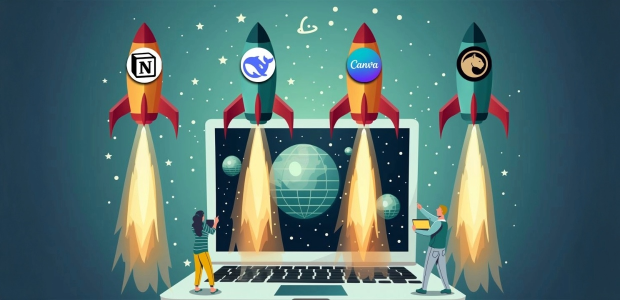
The emergence of DeepSeek, an artificial intelligence (AI) startup, has shocked the IT industry. With its extremely cheap AI solutions, DeepSeek has challenged the dominance of tech giants and exposed an inefficiency in the way large corporations approach product development. If DeepSeek’s model becomes the norm, the entire IT sector could see a dramatic reduction in costs, making technology more accessible.
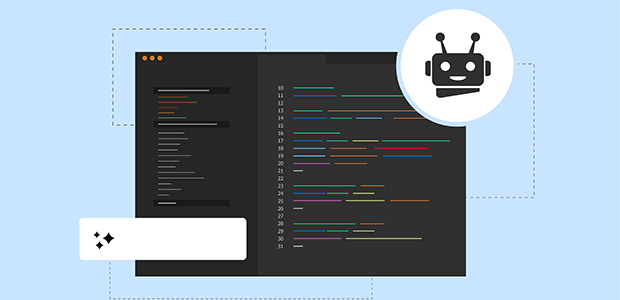
AI-driven automation is transforming industries, but reliability, scalability, and transparency remain major obstacles. Maisa, an Agentic Process Automation (APA) platform, aims to overcome these challenges with its deterministic ‘Chain-of-Work’ approach, ensuring traceability and accountability in AI-driven processes.

For nearly 40 years, discussions about women in business, finance, and entrepreneurship have felt like they’re on a loop. We talk about diversity, increasing female hires, and closing the funding gap. Yet, we rely on the same data and measurements – and unsurprisingly, we see the same results. This narrative makes it seem like we’re constantly falling short when, in reality, we may not be looking at the numbers the right way.

Growing a business in the UK is thrilling, until you hit the tax maze. With evolving regulations and financial hurdles, startups must be sharper than ever to keep their books in order and their cash flow intact. Compliance is not just about ticking boxes; it is about staying ahead of the game and avoiding unnecessary financial headaches.
The field of finance has long been known to have a predominantly male presence, and when fintech came along, it hadn’t done much to change this state of things. Despite being built on the idea of innovation, gender diversity remained something that fintech struggled with.

With International Women’s Day approaching, the internet will soon be flooded with posts about its significance. But in many countries, this global celebration of women has only fairly recently become a major calendar date. For many of us, therefore, it’s not entirely clear how best to celebrate it.

“First they say you’re crazy, then they fight you and then all of a sudden, you change the world.” So said Elizabeth Holmes, the Theranos entrepreneur whose vision of a finger prick blood testing revolution ended up with investors losing millions and her imprisoned on an 11-year sentence for fraud.
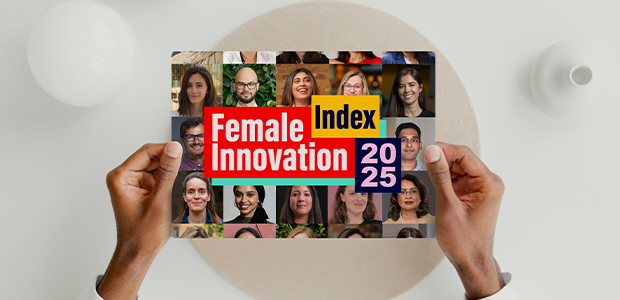
On the 3rd March 2025, Female Foundry officially launched its Female Innovation Index 2025, at an event hosted at Google. The event saw insightful panels, discussions around the stats that were uncovered in the report, and plenty of female founders in the room discussing what innovation meant to them.