In 2018, I sold my telehealth company, Advance Medical, to Teladoc. It was the culmination of over 15 years building a global healthtech company, and the beginning of the next stage of my career. Today, as a General Partner at Nina Capital, a specialist VC focused on healthtech, I work on the other side of the table. With constant discussion about what it means to be a VC that adds value – I often find myself wondering how best to draw on my founder experience as an advisor to the companies we invest in.
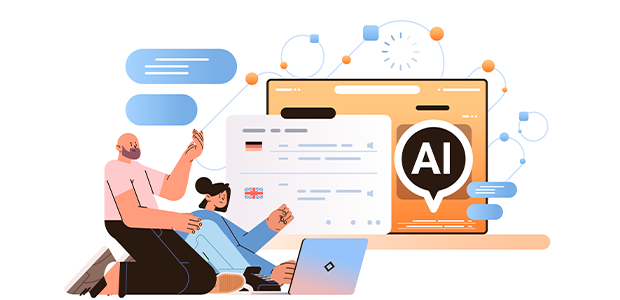
DeepL has announced several updates to its live speech translation solution, DeepL Voice, including expanded language support and advanced meeting productivity features, with Zoom Meetings integration coming soon.

Mistral AI and NTT Data have announced plans to jointly sell and deploy safe and private enterprise-grade AI solutions that are able to foster strategic autonomy for clients.

Digital transformation specialist PTC has launched a new startup programme to help early-stage companies bring new products and innovations to the aerospace and defence market faster.

Employment Hero’s Work That Works report has revealed that, while AI is already reshaping how many people work, overall adoption among small and medium-sized enterprises (SMEs) remains surprisingly low, with nearly a third (32%) of professionals reporting they never use AI at work.

University Startup Entrepreneurs (USEs) possess the scientific knowledge and institutional support necessary to build and sustain high-tech ventures. But why are they not as successful as Corporate Startup Entrepreneurs (CSEs)?

team.blue, a digital enabler for businesses and entrepreneurs, has announced the launch of its first report exploring small and medium-sized enterprises’ (SMEs) sentiment toward data hosting across Europe.

Naples is truly enjoying a golden age, soaring to new heights across multiple fronts. Widely seen as one of Europe’s pivotal cities – and affectionately known as the ‘Capital of Southern Italy’, it is undergoing an extraordinary surge in terms of economic, cultural, and social growth.

Korra Ventures is an impact-investment angel syndicate backing underrepresented founders to create the next wave of £100 million+ companies and has launched with a mission to deploy £50 million of capital to support these founders over the next decade.

The story of humankind is a tale of overcoming adversity. Of constant evolution and relentless struggle to improve. In the past two centuries, the world has experienced an unprecedented shift that reshaped a population with 90% of its inhabitants living in rural areas in 1800 into one where over half of us now reside in cities. This urban transformation is one of the most significant changes in human history – and it is far from over.

Startup life is messy. Calendars? Even messier.

You need to bring in diverse talent from the outset, and not in the way that you might think.

In its third annual Work from Anywhere Barometer, International Workplace Group (IWG) has named Tokyo as the world’s leading workcation city for 2025, overtaking strong competition from the likes of Rio de Janeiro and last year’s winner, Budapest. 60% of hybrid workers are more likely to extend a holiday to work remotely than this time last year.

IFZA has announced the launch of Scale360, in association with Plug and Play. Scale360 is a startup accelerator dedicated to bridging the gap between international startups and leading international corporates.

Despite the ongoing return to office movement, hybrid and remote roles are still in high demand. In fact, our data at Flexa shows that demand for hybrid roles has increased by 50% since the start of the year. This means that startups offering these types of flexible working arrangements will have a competitive edge when it comes to attracting talent.

The working day in London looks different now. It’s no longer about a packed tube, nine hours at a desk, and a limp sandwich at your computer. Instead, there’s a new rhythm emerging. One where business owners travel across town for a lunch that doubles as a strategy session or signing that new client, and where pedestrianised high streets like Sicilian Avenue are fast becoming the new power spots for the city’s entrepreneurs.

Have you got a ‘work wife or husband’? These amusing terms have appeared across platforms like TikTok alongside amusing videos about how we have replica ‘families’ at work. Here, mental health expert Noel McDermott looks at how they in fact point to a deep truth and may explain many of the dynamics at work that can baffle, frustrate, annoy us or in the case of these videos make us laugh in identification.

It’s a well-known saying for a reason: dogs are a man’s best friend. The companionship that comes with having a pet dog is like no other. But what about the companionship of a robot dog?

Fuse Energy, one of the UK’s fastest-growing electricity suppliers, has recently announced its entry into the domestic gas market, marking a significant milestone as the company seeks to provide a seamless, all-in-one energy experience.

A study has revealed the key challenges facing female entrepreneurs in the UK in 2025, with disparities in childcare and funding opportunities persisting.