Surgeons must look beyond the operating theatre and tackle three major challenges with the most potential to reduce major causes of death and improve access to surgical care, according to an international group of experts.

The emergence of exponential technologies, with Generative Artificial Intelligence being a major reference, has brought with it endless opportunities for business competitiveness, but it has also opened the door to new threats. Cyber-attacks are registering an increase in cases globally, with a total of 1,248 attacks per week, an increase of 7% compared to the first quarter of 2022. In this regard, and according to Google’s ‘Current Cybersecurity Landscape in Spain’ report, the consequences of these cyberattacks can be very negative. For example, European SMEs, 60% of which disappear within six months of receiving the attack because they cannot afford the losses.

NASA will award funding to more than 200 small business teams to develop new technologies designed to protect the health of astronauts, lower risk of collision damage to spacecraft, and more. The new awards from NASA’s Small Business Innovation Research (SBIR) and Small Business Technology Transfer (STTR) program invests in a diverse portfolio of American small businesses and research institutions to support NASA’s future missions.

EcoSend, the first ever provider of environmentally conscious email marketing solutions, has launched a partnership with Treeapp, a B Corp organisation dedicated to restoring forests and ecosystems.

The impact of Generative Artificial Intelligence in the business ecosystem, the disruptions that will affect the future of organisations, such as the use of data, or the opportunities that sustainability brings to the business are some of the challenges that are marking the agenda of international leaders. In fact, market reports reveal that half of the companies in Europe are already incorporating AI, and that more than 40% of managers understand that there is a real commitment to move towards compliance with ESG (Environmental, Social and Governance) criteria as an added value.

Employee share schemes give businesses a way to share company ownership with their employees.

Bristol based, global small business software development company BaseKit has announced today its certification as a B Corporation (or B Corp), joining thousands of companies reinventing business by pursuing purpose as well as profit.
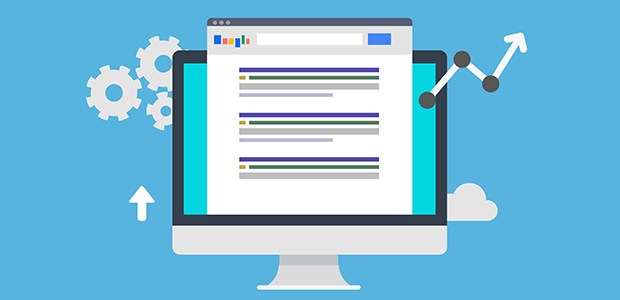
With Universal Analytics being completely replaced by Google Analytics 4 (GA4) on the 1st of July 2023, time is running out to make the transition before being thrown in the deep end. Many, like us, have made the switch to GA4 already and are noticing the various mini updates happening ahead of the deadline.

From 2020 to 2022, Apple has rejected 958,000 applications from appearing on the App Store due to privacy violations, recent findings by Atlas VPN reveal.

Working for a startup can be a very exciting experience. There are so many rewards to being surrounded by motivated, innovative, and creative individuals, but working for a startup can also introduce a number of challenges … particularly for employees focused on building their professional portfolios and advancing in their careers.

The pandemic hit many industries in very different ways and insurance is among them. On one hand, COVID-19 brought excessive deaths among policyholders causing claims to reach a staggering $5.5 billion in the first nine months of 2021. On the other hand, insurers jumped in on the digitisation race: the 2020 KPMG CEO Outlook surveyed insurance executives and 85% stated that due to the pandemic, they invested more effort to create a seamless digital customer experience.

Tracxn, a global SaaS-based market intelligence platform, has released its Tracxn Feed Report – Environment Tech.

British fintech payments company PayFuture is announcing it has been granted an agent Electronic Money Institution (EMI) licence by UK regulator, the Financial Conduct Authority (FCA). With this licence, PayFuture is poised to deliver a comprehensive suite of localised payment products and methods, designed to offer convenience and efficiency in an increasingly digital world. The company’s advanced technology platform, combined with its deep understanding of online merchant’s needs, will enable businesses to access untapped markets effortlessly.

Every week at Digital Catapult we meet several early-stage companies who come to our FutureScope investment team office for support with their venture capital (VC) fundraising plans.

In today’s digital age, the convergence of e-commerce and live-streaming technology has given birth to a new phenomenon: live e-commerce. This innovative approach to online shopping allows businesses to engage with customers in real-time, providing interactive experiences and seamless purchasing opportunities.

Startups across the UK are facing an uphill struggle in the current economic climate. Global VC inflows were down 44%-54% in Q1 2023 year on year. On top of this, the pressure (and inclination) for SMEs is no longer simply to survive, but also to operate within the realms of environmental responsibility, with research suggesting that 50% of SMEs intend to invest in sustainability in 2023.

The cost of living crisis – in addition to the uncertainty of the last few years – has had a significant impact on employees’ financial, mental and emotional wellbeing that’s affecting both their professional and personal lives. 57% of UK employees say that the cost of living crisis is negatively impacting their work and over two in five frequently experience burnout.

Startups Magazine and The Hustle Awards are delighted to announce Maisie Adam as the host of the Hustle Awards taking place on 20th July at Steelyard, London.

More companies than ever expect – and even demand – that employees adopt an entrepreneurial mindset. A close look at current job descriptions reflects this trend: About half of all ads for jobs emphasise that applicants demonstrate an entrepreneurial mindset. The pandemic likely intensified this trend. Samantha Dewalt, Managing Director of the Lehigh@NasdaqCenter, and Anh Dinh, Research Fellow at Lehigh@NasdaqCenter and Head of Accreditation at the University of Hohenheim, discuss what an entrepreneurial mindset is, and how to put it into action.

Brand new inclusive dating app Bonkers has launched, putting the fun back into dating and the safety of its users – both on and off the app – at the heart of its mission.