Features

Starting a business involves many important decisions, and for sectors like tech, manufacturing, or food production, selecting the right industrial cooling system is one of them.

Romanie Thomas is the CEO of Chatsie. Chatsie was founded by ex-Tide founder George Bevis and led by CEO Romanie Thomas. The company offers premium smartphones and mobile network services designed specifically for seniors. Chatsie aims to enhance the quality of life for seniors while strengthening intergenerational connections in an increasingly digital world.

According to a report by CB Insights, 35% of startups fail due to not solving significant market problems. Consequently, resources are spent on products that do not meet real consumer needs or, in simpler terms, are not wanted by anyone.

Helsinki is currently one of the most prominent hotspots for deeptech innovation. Whether it’s deeptech startups operating in the city or the innovative developments happening within larger organisations, Helsinki has become synonymous with deeptech expertise.

Lloyd’s Lab, situated in the heart of London, represents a pioneering initiative by Lloyd’s of London to champion innovation within the global insurance sector. Established in 2018, this hub is designed to incubate and accelerate the development of cutting-edge technologies that can potentially transform the traditional insurance models and practices.

Access to financing is critical for small and medium-sized enterprises’ survival. It’s been a challenge for years, with lenders less likely to risk significant sums on businesses with less of a track record or fewer assets for collateral.

Startups often face rapid changes and resource limitations. To grow, and in many cases grow fast, they increasingly rely on external expertise to bridge the gap between in-house capabilities and specific, high-demand skills. Think of trying to build a plane while flying it! This is where freelancers come in.

As an industry analyst and thought leadership advisor, I find that most startups share a form of purposeful myopia – a belief in the inevitability of a product or service. If only buyers and investors understood the vision, they would put their money behind it.

There’s little doubt that electric vehicles are becoming very popular and that every business or private individual who swaps their petrol or diesel van or car is helping the UK become more sustainable. But we need far, far more public chargers if EVs are going to a practical option for most.

With 51,017 new tech businesses registered in the UK last year, Britain has emerged as a leader of innovation in Europe. In fact, government data from 2021-2022 positions our country as the second-leading nation for startups, preceded only by the US and potentially, by China.

Engine specialises in AI and machine learning. Founded by Kieron White with a vision to revolutionise business use of AI, Engine provides solutions that enhance customer service with intelligent chatbots together with deep data analytics for strategic decisions.
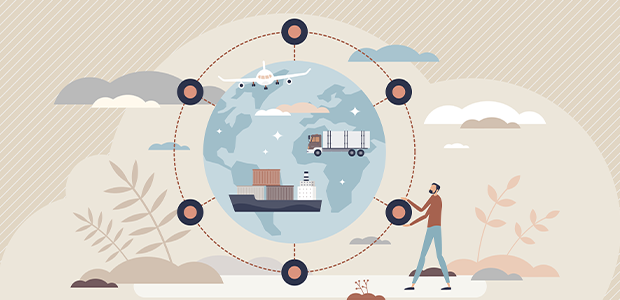
The UK business landscape has a significant number of small and medium-sized businesses. They may not be household names, but they are the invisible hand driving growth, innovation, and productivity. Why, then, do they often miss out on the opportunities offered by global markets?

Integrating financial services into digital applications is inevitable as the relentless pace of digitisation continues to transform every area of human activity. The idea of seamlessly incorporating financial processes within non-financial applications, now popularly called embedded finance, has already generated an estimated €20–€30 billion in revenue in Europe in 2023 and is expected to surpass €100 billion by the end of the decade, according to reports from McKinsey.

The market has rapidly shifted towards digital and contactless transactions. This means that choosing the right payment solution has become essential for small businesses. SumUp and LoPay are two prominent contenders, each providing versatile tools tailored to support various industries, including retail, hospitality, and freelance services.

Trust makes up the core building blocks of every relationship, however this doesn’t stop many of us telling the odd white lie. A study by Raja Group found that 69% of workers have lied in the workplace, with 47% saying they tell up to five lies every working day.

Inventions in fields such as vaccines or mRNA research, materials science, or advances in laser technology, all owe their existence to university research. A new report published by the European Patent Office (EPO) has found that patent applications for inventions originating in European universities have been on the rise over the past two decades, and now account for 10.2% of all patents filed at the EPO by European applicants.

Software companies are on a hot streak in Germany. It’s home to SaaS unicorns like Celonis and Personio, Europe’s second-largest software market, and responsible for 20% of total SaaS sales in Europe (as of 2022) – a figure that is expected to rise above 30% by 2025.
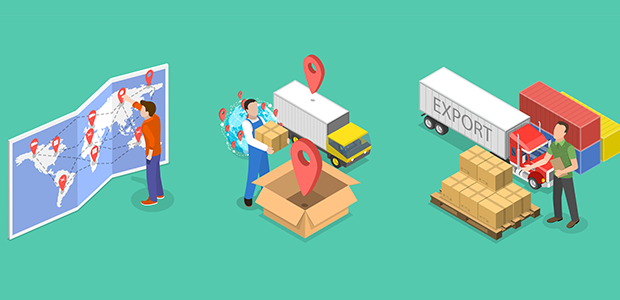
Starting a B2B business can be an exciting yet challenging endeavour, especially when it comes to managing logistics. For any new business dealing with physical goods, transportation is a crucial aspect that can impact costs, efficiency, and customer satisfaction.

Healthcare professionals face growing demands, and the resulting paperwork leads to clinician burnout and affects patient care quality. While electronic health records (EHRs) and digital documentation promised to make things better, they often made the problem worse, making clinicians spend more time looking at screens instead of helping patients.

Last month, the first wave of “Covid babies” started school – children whose earliest years were shaped by lockdowns, closed playgrounds, and virtual playdates. Born into a world defined by social distancing and isolation, these children faced limited exposure to life beyond their immediate household during some of their most crucial development years. As a result, experts have raised serious concerns that they may experience noticeable developmental delays – including limited social skills and a lack of independence.