Features

In today’s fast-paced work environment, supporting employees’ diverse needs is paramount for fostering a culture of inclusivity, wellbeing, and productivity. One often-overlooked aspect of this support is providing dedicated resources for working parents, particularly breastfeeding mothers. In the tech industry, where innovation and employee engagement are key drivers to success, addressing these needs is vital.

Do you keep hearing people boast about their latest £20,000 month, or about how many clients they have on their books, or about how many things they’ve sold?

Last month, the first wave of “Covid babies” started school – children whose earliest years were shaped by lockdowns, closed playgrounds, and virtual playdates. Born into a world defined by social distancing and isolation, these children faced limited exposure to life beyond their immediate household during some of their most crucial development years. As a result, experts have raised serious concerns that they may experience noticeable developmental delays – including limited social skills and a lack of independence.

This November, the UK’s biggest and most influential business event, The Business Show 2024, returns to ExCeL London on the 13th and 14th. Marking its golden 50th edition, this year’s show promises to be larger and more impactful than ever, celebrating over two decades of fostering entrepreneurship, supporting small businesses, and promoting innovation.

Once a startup has validated its offering and its value to the market, it comes time to start thinking about building a strong foundation of processes to ensure unhindered growth as they capture market share. Many of these processes should be underpinned by financial metrics and goals, which financial specialists can help in a variety of ways.
Starting a fintech company isn’t always the most difficult part. You’ve got the idea. Check. You’ve got the funding. Check. Congratulations, now you need to actually run the thing. This is a fiercely competitive industry; not only do you need to outperform your peers, but you also need to do it while staying on the right side of regulation.

NVIDIA has expanded its collaboration with Microsoft to support AI startups worldwide, initially targeting the healthcare and life sciences sectors.

AudioStack is an end-to-end enterprise solution for AI audio production. Its proprietary technology connects AI-powered media creation forms such as AI script generation, text-to-speech, speech-to-speech, generative music, and dynamic versioning. This allows enterprises to build complex audio production workflows faster than real-time. AudioStack unlocks cost and time efficient audio that is addressable at scale, without compromising on quality.

Amid ongoing global economic uncertainty, the UK and other nations are prioritising efforts to drive growth. Central to these efforts are SMEs, which play a crucial role in driving job creation, fuelling economic development, and serving as the backbone of our community.

Imagine yourself, a passionate entrepreneur, building your dream company from the ground up. You’ve poured your heart and soul into it, navigating the treacherous waters of the startup world. After years of relentless effort, you’re finally approaching an exciting milestone: the exit.

Business leader, tech entrepreneur, and sustainable investor, Jordan Brompton is the Co-Founder and CMO of myenergi – a global leader in eco-smart home energy technology. Alongside forging fundamental business relationships, Jordan is responsible for driving the day-to-day corporate strategy and fuelling long-term international expansion.

Based on research within our partner network, 90% of founders want to make an exit in the five to 10 years from their company creation.

NVIDIA Corporation, founded in 1993 and headquartered in Santa Clara, California, has established itself as a leading designer of graphics processing units (GPUs) for the gaming and professional markets. Renowned for its pioneering work in AI and deep learning, NVIDIA has expanded its reach beyond gaming into various sectors, including automotive, data centres, and healthcare. The company’s GPUs are integral to the development of high-performance computing and advanced visualisation technologies, making it a critical player in the evolution of the tech industry.

Hiring international team members can help startups grow quickly and cost-effectively, but navigating international laws can be challenging and often leads to compliance mistakes. Many startups struggle with managing payments and onboarding, especially when using multiple tools, which increases the risk of errors. A lack of proper compliance processes can harm investor confidence and damage the startup’s employer brand.
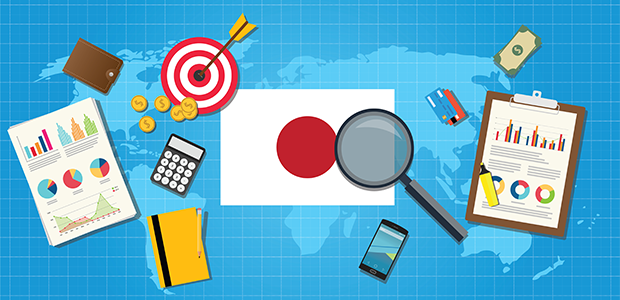
There are many reasons why the idea of striking a deal with an investor from Japan may feel like a bridge too far. There’s the language barrier, and the cultural differences, not to mention the sheer distance involved. It’s natural, then, that many consider working with such an investor only as part of exploring the Japanese market itself.

In a world where a single tweet can launch a brand or a viral TikTok can transform a small shop into a global phenomenon, digital literacy is the difference between SMBs thriving or falling behind. Today, entrepreneurs are faced with a new reality: digital hesitancy is just as – if not more – important than understanding business cash flow or generating sales.

The race to net-zero is no longer an aspirational goal – it’s a global imperative. As we surge forward, significant technological gaps stand in the way of realising this ambition. According to the International Energy Agency (IEA), a striking 35% of the technologies required are still in early development or pilot phases, not yet commercially available.

As taxation is set to rise, is it killing your business? Is tax making it hard for you to turn a profit? At least, a meaningful profit that makes all the risk and hard work worth it.
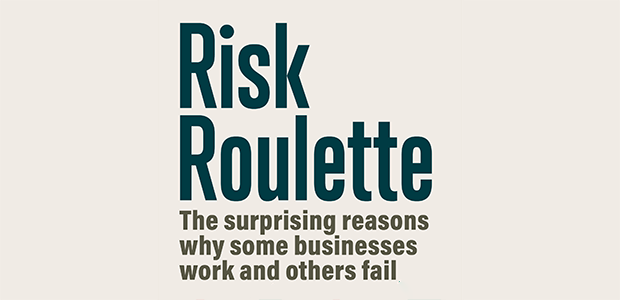
“The model of the lone entrepreneur – the poor boy with a brilliant business idea who rises single-handedly from poverty; the isolated scholar scribbling brilliant ideas in a garret or country village – is largely mythological.” That was what John Kay and Sir Mervyn King, the former governor of the Bank of England, wrote in their book Radical Uncertainty.
Gartner forecasts that by 2028, three out of four enterprise software engineers will use AI code assistants – a significant increase from less than 10% in early 2023. AI and Generative AI are challenging the traditional software development process, but the integration of this rapidly advancing technology is imminent.