Features

2024 was a year of seismic change with a new government coming into power and a UK budget that will undoubtedly impact the UK’s small to medium-sized enterprises (SMEs) in 2025. So, as we look ahead to next year, what technology trends will lead?

In 2024, AI unsurprisingly continued to take the business world by storm – with 72% of businesses integrating this technology into at least one business function. From AI chatbots to AI coding assistants – the possibilities of AI are endless, and businesses are grasping the opportunities it has to offer with both hands.

The healthcare system is under strain: overloaded doctors, mounting administrative burdens, and patient care pathways stretched to breaking point. As demand on services continues to grow, digital solutions are becoming more critical in transforming how healthcare is delivered. But what are the startups doing to address these real-time challenges?

January can be about resolutions, but really, it should be about goals if you want to achieve anything.
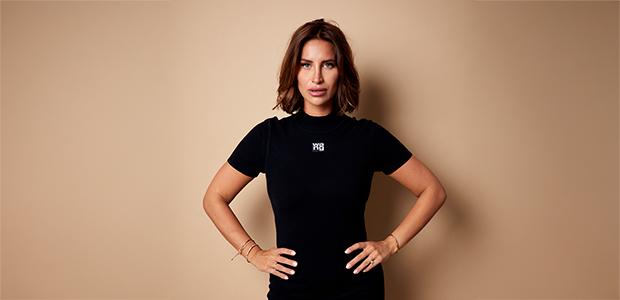
As the Co-Founder and Chief Operating Officer at Shoorah, Ferne McCann is a familiar face on UK television, known for appearances on popular shows like ITV’s I’m a Celebrity…Get Me Out of Here!, Channel 4’s SAS: Who Dares Wins, and BBC’s Celebrity Best Home Cook. However, life in the spotlight is not without its challenges.

The VTT LaunchPad is a business incubator established by VTT Technical Research Centre of Finland.

The days where people had a “job for life” are those of the past as people are changing jobs now more frequently than ever. PWC reported that a quarter of UK workers are expected to change jobs in the next 12 months which is often due to career changes and seeking out new challenges. With 468,000 new businesses started in the UK in 2024, January is a popular time for these new year’s business ventures.

Over the past two years, rising interest rates, and inflation in the UK have forced many businesses to scale back operations. Recent tax increases outlined in the Budget have further compounded the issue, prompting almost half of businesses to plan workforce reductions and almost two-thirds scaling back hiring.

Sustainable packaging is becoming an increasingly important aspect of product design for any modern business. It involves using materials and methods that have a minimal impact on the environment, such as recyclable, biodegradable or renewable materials.

In my experience, there is one habit in a co-founder partnership that consistently sets them up for conflict. This New Year I invite you to commit to the resolution that avoids that.

For ages, founders have strived to create products so innovative that they spawn entirely new business categories. As a founder though, I believe that attempting to create new business categories from scratch is much more arduous, and potentially disastrous, than focusing on building great products that disrupt existing ones.
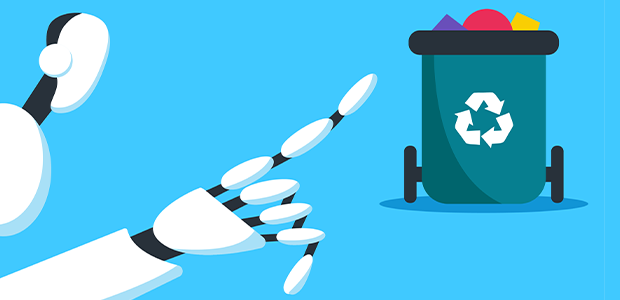
Every day, recyclable materials that could be recycled are thrown into general waste bins, destined for landfills or incineration. In the UK alone, over half of households admit to doing this. And even when items do make it into recycling bins, 80% of them are “wishcycled” – put there with hope, rather than certainty, about whether they belong.

As technology continues to evolve, the potential for digital health will only grow. Moving into 2025, the healthtech sector is poised for transformative growth, driven by breakthroughs in AI, advanced data insights, and a shift toward predictive, personalised care.

Ideas fuel innovation, leading to continual developments throughout the technological landscape and redefining what is possible in the modern world. Yet, for too long, the flow of ideas has been limited to select teams or individuals, often stifling the full potential of creativity within organisations and wider society. Democratising ideas – creating equal opportunity for idea generation, deployment, and evaluation – resolves this issue.
Given how fast-paced the world of startups is, keeping an eye on the newest market trends and staying ahead of them isn’t just smart play – it’s an essential element of success and survival. In the US alone, there are roughly 4.7 million businesses that launch every year. Globally? It’s hard to even begin counting.
During October 2024, Amazon Web Services’ (AWS) GenAI Loft in London became a hub of activity, sparking collaboration and experimentation to accelerate the transformative power of generative AI. Through engaging startup demos, insightful expert panels, and educational sessions, the Loft showcased how founders are harnessing cutting-edge technologies, such as large language models (LLMs), to drive innovation across industries.

From developments in AI tech to global economic uncertainty, business environments are rapidly changing. For business students, it’s no wonder why they may be facing uncertainty about their futures in the business world. That’s why it is so important to foster innovation and resilience in these students, who will need to continue to adapt to further technological disruption and workplace changes.

People – whether employees, customers or stakeholders – are the only reason any business exists. After all, it’s people who create companies to fulfil human needs and desires.

Gone are the days when Environmental, Social, and Governance (ESG) accountability fell only on the big corporations. Today, we see increasing regulatory demands, evolving consumer preferences and intensifying climate concerns. All of these place ESG principles as not just a moral imperative, but a strategic business necessity for startups and SMEs alike, helping them drive growth, resilience and profitability.

Small-to-medium sized enterprises (SMEs) and micro-SMEs are the backbone of the economy, driving innovation, employment, and growth. But these businesses often operate on tight margins and face numerous challenges, from economic uncertainty and rising costs to evolving risks.