Features

In a recent webinar, Jon Burt, Head of Enterprise Architecture at Manchester City Council, and Rick Goud, Co-Founder and Chief Innovation Officer at Zivver, discussed what is meant by ‘right-sizing’, how it impacts the risks of data loss, and how to build a security-conscious culture across the entire organisation

Women founders consistently deliver higher returns on investment compared to male founders. This has been proven repeatedly through data-driven research. A 2019 BCG report revealed that for every dollar of funding, female-founded startups generated 78 cents, while male-founded startups produced only 31 cents. So basically, women generate 2.5X on a dollar.
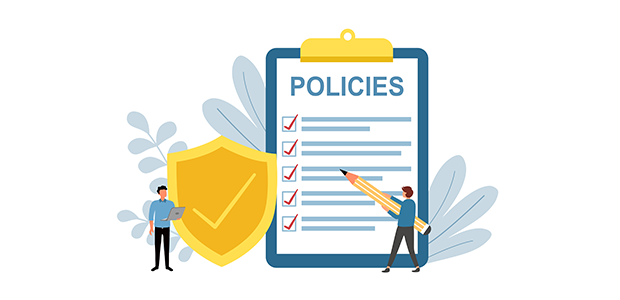
It’s easy to get lost in the excitement of finally launching your dream business. However, policies must be laid out formally to ensure its success and protect its future.
Since October 2020, Soumya Dinesh has been Managing Director and Co-Founder of Atula Technologies – a Buckinghamshire based business specialising in bespoke software solutions for SMEs.

This article is a high-level overview of the key considerations when launching a brand and product in the US and Canadian markets.

Today’s workforce is increasingly global, and many startup leaders are interested in hiring more international workers. That approach expands the talent pool, giving companies access to significantly more candidates, including those with specialised skills, diverse backgrounds, and desirable experience.

Outsourcing software development can be a smart way to get around problems and increase your chances of success if you’re building a tech company.

Scaling a startup is an exciting and often overwhelming journey. As a founder, you’re tasked with transforming an idea into a thriving business, navigating through the inevitable challenges of rapid growth.

Two years after the launch of ChatGPT, more and more small and medium-sized businesses (SMBs) are concluding that they need to leverage generative AI (GenAI) to stay competitive.

The Employment Rights Bill, set to roll out this year, will have a significant impact on the UK’s economic landscape. Businesses need to be prepared for these changes – particularly small and medium-sized enterprises (SMEs) and startups.

Imagine a market that adds as many new digital consumers each year as the entire UK population – creating unparalleled business opportunities for tech companies.

For startups navigating the trials and tribulations of fundraising, understanding what makes a good deal can make or break their trajectory. To explore this topic, I spoke with Kimberley Waldron, Founder of Started PR, and Susanne Chishti, Chair and Founder of FINTECH Circle.

The year 2025 will not be a revolutionary one, it will be evolutionary, with developments coming into effect that were necessitated by events and happenings in 2024, and solutions to address these events reaching maturity levels that allow an appropriate, comprehensive response.

The hype surrounding AI remains prevalent in healthcare but is particularly strong in radiology. If you remember the early days of computer-aided design (CAD), it’s quite impressive how far the technology has come. A native of ChatGPT would perhaps contend that much work needs to be done before AI can reach its full potential in this field. Both views are correct. This article will examine why it is so difficult for AI to detect things, how its role is changing, and what trends to watch in 2025 and beyond.

Every new year we have the excitement of a fresh start and new possibilities and that can be the fuel for many business owners. It is the time to reset, plan, and take stock of the goals for the year. But let’s be honest, by mid-February (if not before) that initial energy starts to decrease as the reality of running a business sets in, priorities shift, workloads intensify, and anxiety starts to creep up quietly like a ghost in the background leading to the unwanted burnout.

In the high-stakes world of entrepreneurship, humility often feels like an endangered virtue. We often see the media glorifying the bold, self-assured visionary – the one who beat odds and sticks steadfastly to their grand idea. However, this narrative overlooks a crucial truth: humility is not a weakness but a strength, particularly when navigating the uncertainty and complexity of building something new.

The Hustle Awards offer a golden opportunity for startups, and those within the startup ecosystem, to celebrate their achievements, gain industry recognition, and showcase the fantastic work they’re doing. As the entry portal is open already, here is why you should enter the Hustle Awards 2025!

The construction industry is known for its high overhead costs. It is one of the major challenges for startups in the sector. The project demands change which further modifies the labour costs, equipment needs, and several other things.
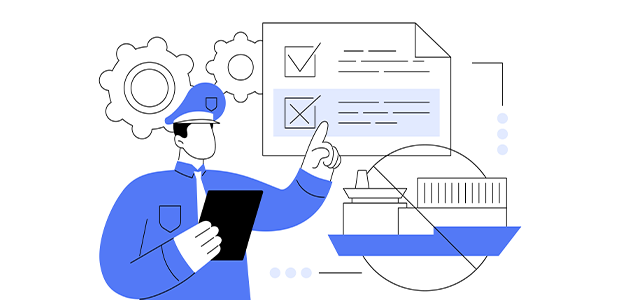
From 31 January, businesses moving goods from the European Union (EU) to Great Britain (GB) will need to comply with new UK safety and security declaration requirements.

Recently, in one of my Connect networking groups, one of our lovely members (naming no names) said she needed more inspiration, before proceeding to then reel off alllllllllllllllllll the things she was currently working on. And, as someone diagnosed with ADHD, this sounded so familiar…