Features
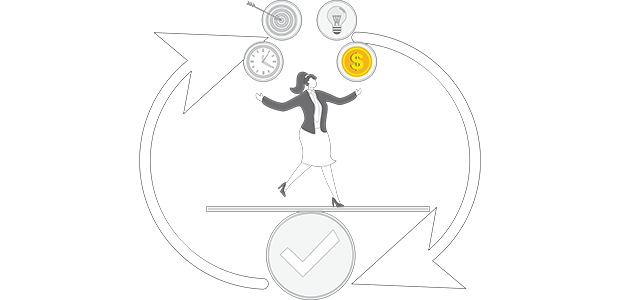
Habits shape our daily lives – from the ones we’re proud of to those that come naturally, and yes, even the ones we keep quiet about. A well-known habit is the famous “5 AM club” of business leaders. Back in 2013, The Guardian reported that most CEOs were indeed early birds, springing out of bed at 5 AM without hitting the snooze button. However, research from the University of Westminster suggests that early risers (those up between 5:22 AM and 7:21 AM) actually show higher levels of stress hormones compared to their more leisurely-waking counterparts.

In the run-up to the Autumn Budget, UK business sentiment plummeted to its lowest figure since November 2023. This was a sure sign of how much businesses expected filling the UK’s ominous £22 billion fiscal hole to fall on their shoulders. And the subsequent tax hikes won’t have done much to change that.

Startups often begin with one person, one vision, and an overwhelming workload. The instinct? Try to do everything yourself. But let’s be clear: one person isn’t a business – it’s a job. One of the biggest mistakes founders make is cutting corners on talent, thinking they’re saving money, when in reality, they’re holding back growth, efficiency, and credibility.

Taiwan is known for its natural beauty, culture, and its many beautiful attractions such as Sun Moon Lake, Rainbow Village, and Taroko Gorge. However, looking at Taiwan through a tech lens, the country is most known for its semiconductor industry, which is the biggest in the world. According to The Economist, Taiwan makes 65% of the world’s semiconductors and roughly 90% of the world’s most advanced computer chips.
Growth is every new business’s dream. Expanding market share, increasing customer numbers, boosting revenue, and driving profit are ambitions that drive entrepreneurs. But in the quest to achieve these milestones, many businesses focus heavily on acquiring customers – any customers – because it feels rewarding and tangible.

When money is cheap, we want AI to be more human, or even more than human. Capitalists may even secretly dream of replacing their meddlesome employees with bots while claiming otherwise.

In the rapidly evolving landscape of sustainability, startups face unique challenges and opportunities. The UK government has intensified efforts to decarbonise the nation’s electricity system through substantial investments in low-carbon infrastructure. Here we discuss the opportunity for startups to gain access to this investment.

The creator economy has recently become a very promising field, and by 2030, it is predicted to reach a half-trillion worth. Given this, it becomes unsurprising that many startups are willing to enter this dynamic area. However, it is quite different from the other sectors, with a tailored approach as a top requirement for working with creators and ensuring their trust.

Rachel Jones, Founder of leading anti-counterfeiting organisation SnapDragon Monitoring, gives her top tips to businesses on how to protect intellectual property from criminals.

Crafting and executing a robust operational strategy can be the difference between a promising startup and a thriving, sustainable business. Operational strategy is not just a buzzword but the backbone of efficiency, scalability, and long-term success. Whether in the early stages or scaling up, having a well-defined approach to operations is essential.

The account freezing order (AFO) is a legal power that UK authorities can use to hold and recover funds that they believe are connected to criminal activities. When authorities believe that certain funds are the proceeds of a crime, or may be intended for use in committing a crime, they can secure an AFO to restrict access to these funds. The AFO will freeze a bank or building society account and prevent any access to the funds within, and this can last for up to two years while investigators work to determine their source or purpose.

A little over a decade ago, the APAC payments market was lagging behind its US and European counterparts, predominantly due to a greater reliance on cash transactions and lack of payment infrastructure. Now the APAC payments landscape is undergoing a renaissance, driven by technological advancements, strong government support for real-time payments, efforts to integrate unbanked citizens into digital finance, and adaptive regulatory changes.

It may have been 5 years since the pandemic wreaked havoc, but we are still feeling its ripple effects and will do so for the foreseeable. As a businesswoman, I know how resilient founders can be when facing economic adversity, but the challenges remain, and knowing how to weather the storm and thrive in unpredictability is not a given.

The trickle down of environmental, social, and governance (ESG) requirements to small and medium-sized entities (SMEs) can represent as much of an opportunity as a burden if properly managed under a robust and scalable internal framework.

Exactly Payment Specialist, Saran Talasila, shares insights on how startups and SMEs can drive value through an efficient payment processing strategy and provides best practices for selecting the right payment solution provider.
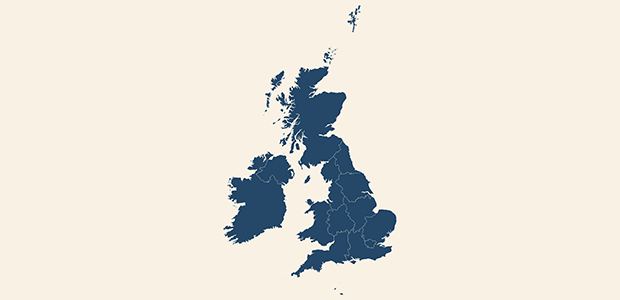
A new analysis by iwoca reveals that among major economies, SMEs believe that the UK offers the least support for businesses and performs the worst at creating wealth.

As the world continues to turn up the dial on digital transformation, businesses need faster, more agile, and secure solutions to support evolving operations. Traditional legacy infrastructures are increasingly inadequate, as organisations integrate new technologies and roaming identities into existing networks, creating complex, layered architectures that expose them to new security risks. Combined with the rising costs of maintaining traditional networking, these systems are becoming increasingly unsustainable.
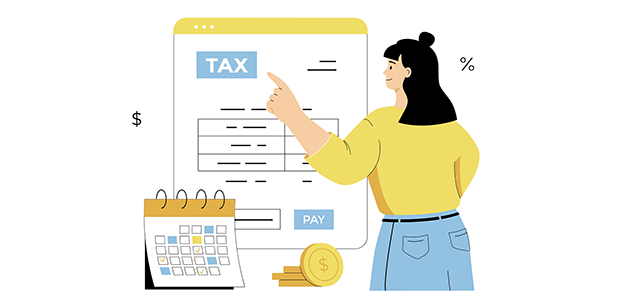
The Self Assessment tax return deadline is looming, and millions of people are yet to file their return and risk fines. Here, Jodie Wilkinson, Head of Strategic Partnerships, takepayments – the small business digital payments specialists – proves six top submission tips.

The latest ONS figures offer little comfort for UK businesses. Unless December’s data delivers significant – and surprising – expansion, the economy will have contracted in the final quarter of last year.

In a recent webinar, Jon Burt, Head of Enterprise Architecture at Manchester City Council, and Rick Goud, Co-Founder and Chief Innovation Officer at Zivver, discussed what is meant by ‘right-sizing’, how it impacts the risks of data loss, and how to build a security-conscious culture across the entire organisation