Just 15% of UK SMEs think the Government is creating an economic environment in which they are encouraged to innovate, according to new research by GovGrant, the R&D and IP specialists.

A new study, commissioned by business bank, Allica Bank, shows that an SME’s attitude and approach to innovation is the clearest indicator of whether that business will be successful. As such, the Bank is urging all businesses to be open to improving their products and services, as the British economy works to recover post-COVID.

A deep-tech company predicting and optimising the global economy called causaLens has released the first causal Artificial Intelligence (causal AI) enterprise platform. Businesses no longer have to rely on curve-fitting machine learning platforms unable to handle the complexity of today’s world. They are invited to join the real AI revolution with a platform that understands cause and effect.

Tech Nation has announced the 31 tech companies that have been selected to join the Fintech Cohort 3.0, in conjunction with revealing new data that shows the UK is leading fintech in Europe.

Ceryx Medical, a bioelectronics startup working towards the world’s first curative therapy for heart failure, has secured a £575,000 seed round.

An organisation supporting underrepresented Founders in London and connecting them with opportunities in tech called OneTech is expanding its efforts to support and diversify London’s entrepreneurial community. Addressing systemic racial and economic barriers to entrepreneurship highlighted by the COVID-19 pandemic, in collaboration with JPMorgan Chase.

UK-based social media and creative boutique for women, WE ARE F is celebrating the launch of its sister agency, WE ARE FEMALE ATHLETES. This powerhouse of female talent and global stars will represent, manage, and fight for, the underrepresented athletes at the forefront of the women’s sporting movement.

More than 11 million UK working adults have taken time off work for poor mental wellbeing, costing businesses an estimated 40 million working days each year, according to new research from not-for-profit healthcare provider, Benenden Health.

The UK Government’s announcement of increased restrictions will drive many companies to the brink, according to the latest ‘Coronavirus – The Impact on Business’ from the Data & Marketing Association (DMA).

Bounce Back loans, the most popular HM Treasury support measure, used by SMEs are running low, finds the latest insights1 from fintech business lender, MarketFinance. These SMEs are aware they can get more HM Treasury support by applying for larger loans through the Coronavirus Business Interruption Loan Scheme (CBILS) but did not know the deadline was end of this month.
Online payment orchestration innovator, BRIDGE, has been shortlisted in four award categories, including Payment Startup of the Year and Most Disruptive Payments Technology, at the highly regarded, international annual Payment Awards.
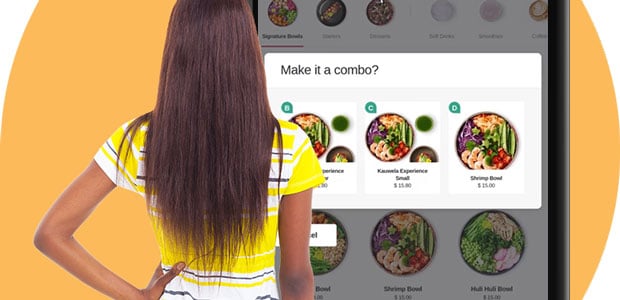
Israel’s Touchless.ai has started to deploy a voice solution that turns any interactive kiosk into a voice-activated touch-free interface. The solution was specifically designed to overcome the problems of commercial environments: accuracy in noisy conditions, complexity for users, and significant cost and time needed to adapt for each business.
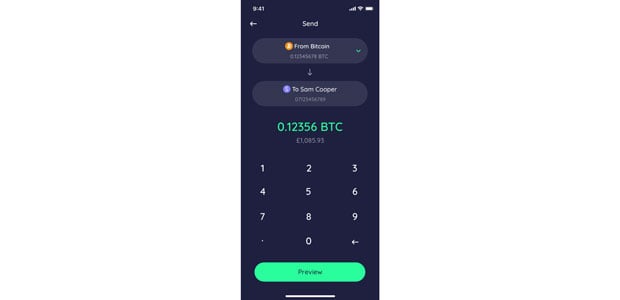
Ziglu, the challenger and fully FCA authorised Electronic Money Institution, have opened their crowdfunding round to the public today.

Just when the lockdown period seemed to be drawing to a close, cases of Coronavirus took a sharp upwards turn and local lockdowns were enforced. Already, almost ten million people in the UK have been confined to their homes once again. Nationally, too, restrictions have tightened and fears of a second lockdown period are circulating as Health Secretary Matt Hancock refuses to rule out the possibility of another strict set of restrictions being brought in.

As we carry on focusing on female founders and women in tech ahead of our next issue, we decided to catch up with Lindsay Gledhill, a partner at UK law firm, Harper James Solicitors. Lindsay heads up the Intellectual Property (IP) team. She has specialised in IP exploitation and dispute resolution since 1997. It has made Lindsay the go-to lawyer for IP-rich firms who wish to protect and exploit their proprietary technology in fast-growing and international markets.

A post-COVID-19 Great Digital Catch Up – to support 4.5 million people to cross the digital divide – is presented as the solution to fix the UK’s digital divide in a new report by digital inclusion charity, Good Things Foundation.

Alternative SME credit specialist, Caple has helped Cloudbooking, a cloud-based room, desk and visitor booking software firm, to access multimillion-pound unsecured funding, contributing to an estimated 50% growth for Cloudbooking.

Aiways has started taking online orders for its U5 all-electric SUV. German customers can now order a U5 from the Aiways website, and become among the first in Europe to own an all-electric 410km range SUV from Aiways.

The Government’s furlough scheme has saved an estimated two million jobs and helped protect tens of thousands of startups and SMEs from closure. However as the clock ticks down to the end of October, the point at which the scheme will end, many businesses are now understandably concerned about what will come next once this provision is taken away.
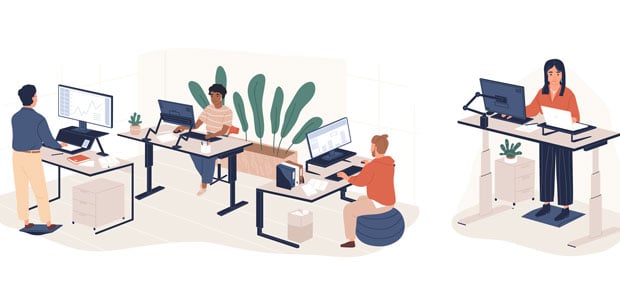
Boris Johnson and his government have been pushing for employees to return to their offices in a bid to get the economy back up and running; but figures from the Office for National Statistics show that in the last week of August, only 50% of workers are back in the office.