Anyone that has started their own business, and even those that have thought about it but not made the jump as yet, or indeed decided not to do so in the end, all recognise that it is a big decision. A very big decision. And as such, it is a decision that is often deliberated over for a long time before it is acted upon. Certainly, a lot of research and clear thinking needs to be done before committing.

It has often been said that cash is king. This does not of course mean cash itself, but the phrase refers to a company’s cash flow and how it manages the flows of payments into and out of the business. Ultimately, turnover, and even profitability, are secondary in importance to cash flow.

Sometimes in business, and indeed in life itself, it is very easy to miss the obvious or, put another way, not to realise that some very basic truths or something that should be expected is not always immediately realised. These points are easy to see with more experience or with the benefit of hindsight, but for those starting out in business that is not always easy.

Of all the areas of starting and scaling a business that most founders are unsure of it is raising finance. For some, the questions are more basic, whilst for others the questions can be more detailed. Perhaps two of the reasons why there are always so many questions about raising finance is that it is so important for the future growth of the business and indeed that it is such a complex area.

Green comes in many colours. Environmental. Eco. Ecological. Circular economy. ESG (environmental, social, governance). Carbon offset. Carbon neutral. Carbon positive. And many, many more. But sadly, by far the most common is either greenwash or only partially thought through and implemented.

Pitch decks and business plans. Every early-stage business with any thought of expansion, even if only modest expansion, should have them. And every founder of a start-up should prepare them. A very common mistake made by many entrepreneurs is that these two documents are seen as only being necessary if you are intending to raise finance; but that is simply not true.

In any aspect of life, each of us will have different dreams and aspirations, and what we wish to achieve. This is no different for entrepreneurs and business founders. And why should it be? It can often be wrongly assumed that all founders are looking to scale their business as quickly as possible and to grow it to be as large as possible.
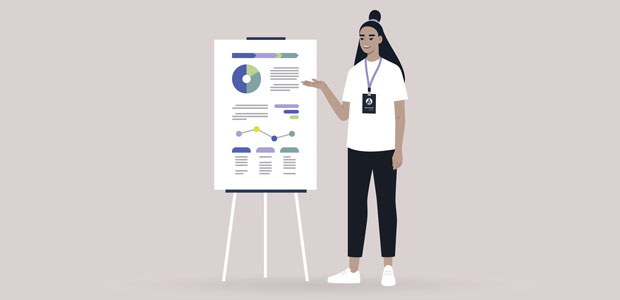
Having decided whether to start your entrepreneurial journey as a sole founder or as a co-founder you will then be able to properly develop your idea and your business. Whatever your business plans and structure, and whatever your ultimate aims are with regard to scaling your business, there will always be many different tasks to be attended to and the smaller the business and the fewer the resources the harder this can be.

Welcome to a new series of articles aimed at helping entrepreneurs and founders to start and scale a business. In this series we will be going back to basics and examining some of the questions and areas of concern that many founders or would be founders have. Whilst ‘basic’, nevertheless these topics can be fundamental to setting an early-stage business on the right track for success.

It is true that many people do not like change and shy away from it. But it is equally true that periods of change bring much more opportunity for innovation and for businesses to adapt and pivot and supply products and services to fulfil needs that have opened up or changed in some way. In times of rapid change as we have seen over the last few years then the opportunities are both bigger and more abundant.

Starting a business is not always easy. But scaling a business, any business, often brings many more challenges than actually starting one. A typical small business is quite simple, bat as that business grows it becomes more complex and has more moving parts which become ever more complicated to coordinate.

One of the most effective ways of telling your story is by building your network. As any business scales it will inevitably deal with an ever-increasing number of customers and suppliers, as well as partners or enablers such as providers of all the myriad of services that will be required.

Starting and scaling a business requires founders to undertake many different roles; many of which they will do themselves initially but other tasks they will inevitably require some assistance with. But whatever the business, any founder looking to scale must ensure that they tell a good story, and they tell it well. But what does this actually mean?
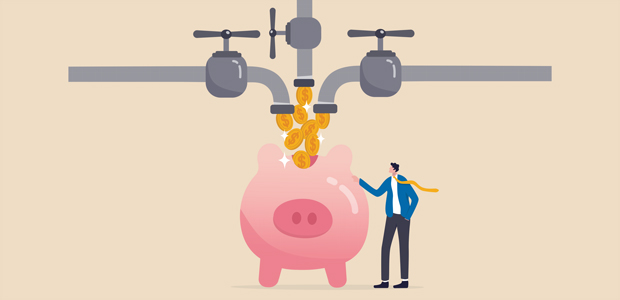
When it comes to considering how best to raise pre-seed or seed finance for your business, one of the most commonly asked questions is whether getting investment from business angels or crowdfunding would be better. It could be argued that business angels are just much wealthier versions of people that invest on crowdfunding platforms. As such, in reality it is more a case of a small number of angels can replace a much larger crowd.

Having decided that you want to scale your business and that you need more money to do this properly, you will then need to carefully consider all the different options available and make sure that you get the best funding and from the best source.

The majority of businesses that are looking to scale in any meaningful way will look to raise funding at some point. As well as the other steps already discussed in this series and in my new book, there are two very specific actions that need to be undertaken; valuing your business and embarking on a fundraising campaign.

From the time of your initial idea, you will have been thinking of all the very many steps necessary of turning your vision into reality. One of the first steps when starting up is to consider how you will build your market, and as you scale this will remain at the forefront of all that you need to do.

This article could have been entitled ‘data and financials’ but so many of you would not have got even this far. But the truth is that data and your financials are not just numbers, as without a clear understanding of both of these then nothing else stands much of a chance. Data needs to be properly collected and analysed, and any assumptions and financial forecasts are then driven from this data.

Having decided that the entrepreneurial life is for you, it is then necessary to think about how you will actually make that best happen. The specific legal structure that you choose is only the vehicle used to transform your ideas into reality, and your theory into sales and profit.

For anyone starting a business there is that delicious and intoxicating mixture of excitement tinged with fear. Both these are driven by stepping into the unknown and doing something new. Doing anything new or different will always present new challenges, and the further outside of your personal experience or comfort zone any new enterprise is, then potentially the larger those challenges will be.