As countries in Europe begin to ease some of the Coronavirus-related restrictions, the UK government has announced it will begin to follow suite. From Wednesday, the national population can take unlimited exercise outside and people who cannot work from home should return to the workplace, avoiding public transport.

SharkNinja although known for producing vacuums, have been doing some very different work during the COVID-19 crisis, as they had some more time on their hands, and wanted to help. We spoke to Mohammad Hatia, SharkNinja Prototype Lead Workshop Manager and asked him a few questions as to what SharkNinja have been up to.

After weeks of lockdown, start-ups across the UK are beginning to ask: ‘What next?’ As many prepare to return to workplaces and look to bring back employees back to work this is likely to be one of many questions they have. Here, in a special feature, Harper James Solicitors’ provide the answers to nine problems many start-ups may be facing as they look to the future.

Global efforts to combat climate change have been stifled recently, with an unprecedented crisis shifting the focus of governments, businesses and consumers away from the plight of the planet. We’re engaged in a war against an invisible enemy; and COVID-19’s dire importance has placed many environmental initiatives on hold.

How hard can it be to design a logo? Simply draw a shape, choose a font, type in the company name and that’s a job well done, right?

As part of its ‘back to work’ strategy, the UK government is allowing businesses to return to their premises when they cannot work from home. It will be essential that all returning employees are kept safe at all times on the return to their workplaces.

As investors look beyond the pandemic, Clim8 Invest – the app that offers everyone the opportunity to have a positive impact on climate change through sustainable investment – has reached £1.35m in pre-launch crowdfunding from 1,200 investors. This exceeds its crowdfunding target by more than 300% and makes it one of 2020’s most successful raises on the Crowdcube platform.
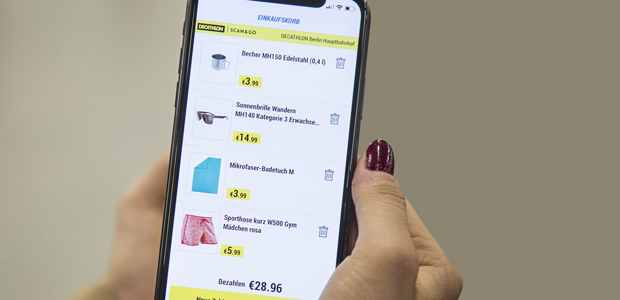
Decathlon has announced it is rolling out MishiPay’s mobile self-checkout solution across its 81 German stores. The innovative technology is already live in Decathlon Deutschland stores in Berlin (Berlin Hauptbahnhof), Munich (Munich Connect), Cologne (Marsdorf), Schwetzingen and Plochingen, with more locations being added every week

During his training, Dr Maroof Ahmed saw the significant impact smoking had on patients and wanted to do something about it.

Tokio Marine is to use an AI solution to process auto damage across its insurance operations in Japan, to help drivers recover more quickly from car accidents.
As we are all starting to hope that the end, or at least a temporary reprieve, is in sight, thoughts are starting to turn to how we and our businesses can bounce back. In fact, another week and another acronym.

A workplace analytics solution that provides office utilisation intelligence for corporate real estate leaders and managers, Locatee has announced that it has secured $4m in Series A funding.

Most people don’t tend to let dehydration get to the point of medical attention. Older people however, are more vulnerable to dehydration.

In a bid to help create the carbon neutral home, Schneider Electric has partnered with Sustainable Ventures, a UK-based cleantech hub that offers entrepreneurs workspaces, accelerator programs, and support to develop their businesses.

Are there specific entrepreneurial attitudes and motivations that influence business success? For investors, founders, business leaders and boards alike this is the million or even billion-dollar question.

The model and motivations are in alignment and all bodes well for the energy company’s collaboration with a startup. Excitement is high, as are expectations. There is one thing left to attend to though: the environment you create. Will it be a space where collaboration can thrive? Or where it will wither on the vine?

Tech trailblazers, Gapsquare have been selected alongside the UK government, to be part of the Equal Pay International Coalition.

Throughout history there have been several significant events which have led to mass deaths defining the course of civilisation. Among these are World Wars, plagues, pandemics, and epidemics including the black death, flu pandemic of 1889-1890 and more recently Swine flu, Ebola, and our present challenges with COVID-19. They are all examples of major historical outbreaks that have taken lives and steered the course for public health development, social and medical innovations some which still being used today.

Small business owners are used to tackling the unexpected, but coronavirus has presented startups across the UK with a challenge on a scale they could never have planned for.

Sage has released the first edition of the SMB Tracker, highlighting the latest weekly sentiment from businesses across the UK. This week the Tracker finds that a greater proportion of the UK’s small and medium sized businesses may have either applied or intend to apply for the Coronavirus Job Retention Scheme (JRS).