
Cambridge Photon Technology (CPT), a deeptech spin-out from the University of Cambridge, has raised £1,556,000 in new funding to accelerate the commercialisation of its photon-multiplier technology. The pre-Series A round combines £926,000 in equity investment with a £630,000 grant from Innovate UK’s Investor Partnerships: Clean Energy and Climate Technologies programme.

Most founders and business leaders in the UK tech scene will be familiar with the Enterprise Management Incentive (EMI) scheme. For years, EMI has been the gold standard for enabling ambitious companies to offer meaningful equity upside to top talent, balancing both employee reward and employer affordability. It’s become fundamental to how high-growth businesses attract and retain the best people, particularly in fast-moving sectors like AI and technology.
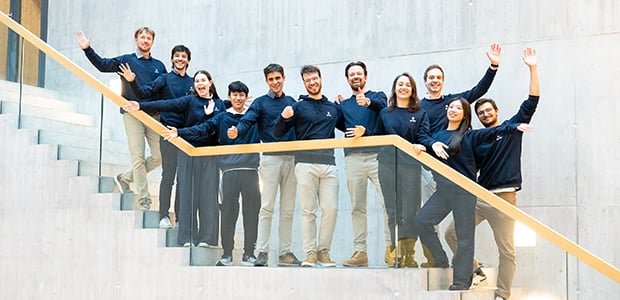
Swiss battery startup BTRY AG has raised $ 5.7 million in an oversubscribed seed round. The funds will accelerate the industrialisation of its ultra-thin solid-state batteries – a new category of energy storage combining fast charging, extreme temperature stability, and intrinsic safety in one of the world’s thinnest formats.

UK scaleups are failing to adequately prioritise board-level gender diversity, according to a new study from global growth consultancy Think & Grow.

A lack of confidence in sales and marketing is the biggest hurdle for aspiring entrepreneurs in the UK, preventing many from launching their dream businesses, according to the Start Gap Report.

Legal complexity is one of the biggest hidden barriers to growth for UK startups and SMEs. GitLaw, founded by UK entrepreneur Nick Holzherr, has raised a $3 million pre-seed round to power the launch of its agent – part of GitLaw’s platform built for startups and small businesses, not law firms – that helps teams draft, review, and negotiate contracts in minutes, for free.

A slowdown in cost increases across Western Europe, alongside rising prices in parts of Eastern Europe, is creating a more varied picture of affordability for expats and remote workers, according to bunq’s latest findings from the Working Abroad Index 2025. With the global digital nomad community now exceeding 40 million, borderless living has become an established part of modern work life.

In today’s venture world, deals move at lightning speed, but what if founders could match that pace in the way they pitch?

Bumblebee Power, an Imperial spinout pioneering next-generation wireless charging, has been awarded funding support by the UK Space Agency for a project with MDA Space, a trusted mission partner to the rapidly growing space economy, to advance the use of wireless power in space.

LambdaVision, a biotech innovator leveraging microgravity to manufacture its investigational protein-based artificial retina to help patients regain sight lost to retinal degenerative diseases, has closed a $7 million seed funding round co-led by Seven Seven Six and Aurelia Foundry Fund, with additional support from Seraphim Space, providing runway into 2027.

Fashion technology startup Fit Collective, founded by Savile Row-trained designer Phoebe Gormley, has raised £3 million in pre-seed funding, marking the largest round ever raised by a solo female founder in the UK.

As startups scale remotely, the real challenge isn’t productivity. Often, it’s trust, cohesion, and clarity across distance. Leading a team you may never meet, spread across time zones and cultures, demands more than digital tools. It requires founders to intentionally design cultural practices and shared norms that sustain collaboration over time.

It’s been a bruising few years for the global dealmaking market. Between trade wars, political upheaval, and ongoing economic turbulence, businesses have faced strong headwinds in the past five years, and the economic forecast isn’t looking much calmer.

Anna Jordan builds AI systems to help highway operators improve how roads function, and has been supported by three accelerator programmes led by Connected Places Catapult.

Early-stage venture consultants, Think Partners, have issued an open letter to Chancellor Rachel Reeves, calling on the UK Government to take urgent action to close the gender gap in business investment – a move that could unlock £250 billion in additional economic growth.

As International Stress Awareness Week takes place, new research from global hiring platform Indeed highlights a significant gap between UK employees’ aspirations for workplace happiness and their current experiences of work wellbeing.

A UK-wide roadshow celebrating the nation’s favourite small businesses kicks off today, marking the start of the countdown to Small Business Saturday on 6th December 2025.
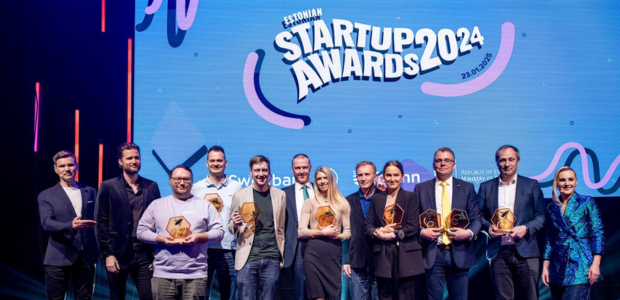
For the seventh year in a row, the Estonian Startup Awards will celebrate the success and growth of Estonia’s vibrant startup ecosystem. This year, the Estonian Startup Awards 2025 is seeking nominees in 11 impactful categories.

Marketing success has traditionally favoured big budgets and large teams. With the right strategy, small and midsize businesses can now build powerful, data-driven marketing engines that grow with them, using AI effectively to operate at scale. Valuable marketing starts with thinking, not tools. In this piece, Stephen Rumbelow, fractional CMO at The Marketing Centre, explores what this looks like in reality.

Since the launch of Vision 2030, Saudi Arabia has been shaping one of the world’s most ambitious entrepreneurial transformations.