Every month, Zubr Capital publishes a report on the European venture capital industry, examining everything from surface-level developments to emerging trends and maturing signals.

Catalyst, Northern Ireland’s science and technology hub, has announced a new partnership with Ulster University that will embed entrepreneurial thinking and innovation into the academic experience of more than 450 second and final-year students across the Faculty of Computing, Engineering and the Built Environment.

Entrepreneurship is at the heart of Britain’s ambitions for the future, but a lack of support could threaten the next generation of business leaders. That is according to new research from Young Enterprise, released today ahead of Global Entrepreneurship Week.

Swish Solar, a cleantech company based at Velocity, the University of Waterloo’s startup incubator, has closed an oversubscribed $1.5 million pre-seed round. The new financing will accelerate market adoption of its self-cleaning solar technology that helps make renewable energy more efficient and sustainable.

Entrepreneurs around the world rank the UK as one of the most popular countries to conduct business, with only Singapore ranking higher in term of appeal.
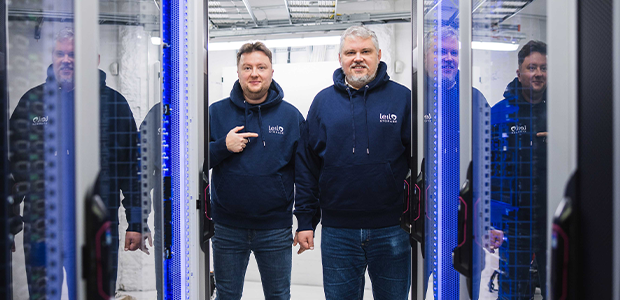
Leil Storage, a specialist data storage-infrastructure software company, has raised €1.5 million in seed funding to help organisations store enormous datasets more cost-efficiently and with lower energy use. The round was led by Karma Ventures, with participation from Specialist VC.

In B2B marketing, email is still one of the most powerful channels we have, yet it’s also one of the easiest to get wrong. And when it goes wrong, it can actively damage your brand, unsettle prospects, and push valuable leads further away.

A Midlands-founded healthtech scaleup has landed £1.4 million in new funding from two leading venture capital firms. Securing cheques from both the Borski Fund and Future Planet Capital Regional, Rem3dy Health’s latest funding has reaffirmed growing investor confidence in the region’s innovation ecosystem, whilst also highlighting the impact and importance of cross-border investment relations.

arcoris bio, a Swiss life science research tools and in vitro diagnostics company, has secured CHF 6.3 million in an oversubscribed seed financing round to advance the development and commercialisation of its breakthrough MUSE biomarker detection platform. The round was co-led by Ventura Ace and ZEISS Ventures, with participation from Zürcher Kantonalbank (ZKB) and both existing and new private investors.

If you’re looking to connect with people who matter most to your business, LinkedIn is the place to be. With over 1.2 billion members globally and 1.8 million feed updates viewed every minute, it’s not solely a social platform. It’s where business happens. For marketers, paid LinkedIn ads offer something other platforms can’t. Access to high-value, professional audiences with targeting based on the likes of job title, industry, seniority, and even company size.

Commercial success for any startup requires more than a neat idea. Yes, great technical skills and a cool idea are an excellent start. However, you need a solid business plan and the drive to turn your vision into a reality. And it helps if you also have the right interpersonal skills to help bring your ideas to life for investors, customers, and your team. This is true for all new ventures. But it’s particularly true for tech startups and any business built on technology. Why? Because these so-called ‘soft skills’ help translate technology into real-world value.

In my recent article published by Startups Magazine – India: the global deeptech launchpad – I described how India’s deeptech ecosystem is booming and opening immense prospects for innovators around the world.

UK businesses have increased the number of proposed mass dismissal programmes by 5% over the past year, as companies restructure ahead of the upcoming Employment Rights Bill and the growing adoption of AI.

Aquark Technologies has announced it has been awarded a £1,409,702 contract by Innovate UK. The contract will facilitate the future deployment of Aquark’s cold atom-based atomic clock, AQlock, at a major telecommunications site in the UK.

Cizzle Biotech, a British biotech company has signed a Letter of Intent (LOI) that could lead to a transformational partnership in delivering how lung cancer is diagnosed across the NHS.

Balnord, an early-stage investor for the Baltic Sea Region, has announced that it has oversubscribed its €70 million fund target and is well on its way to achieving a final close of €100 million by mid-2026.

DeepL, a leading global AI product and research company, announced two major business innovations for knowledge workers – DeepL Agent and Customisation Hub.
During its annual conference, DeepL Dialogues, the company unveiled the general availability of DeepL Agent, an autonomous AI coworker designed to streamline and automate a broad range of tasks for knowledge workers. DeepL also announced continued innovations in Language AI with the release of Customisation Hub and the announcement of over 70 new languages to the platform.

Most UK ecommerce retailers are failing to get AI right, despite consumers becoming increasingly accustomed to AI in online shopping, according to new research commissioned by ecommerce agency Quickfire Digital.

When you’re building a business or entering into a property deal, you often start from a place of trust. You want to believe in people, especially those who promise growth, and who your vision as you do. But trust without verification can cost you dearly.

UK scaleups are failing to adequately prioritise board-level gender diversity, according to a new study from global growth consultancy Think & Grow.