Features

What is leadership? Is it a gift or a skill you can develop? Can you learn how to be a leader, or is it a natural way of working? These are the questions I asked myself when I stepped into a managerial position for the first time. But after working with different types of people, I realised that the title of the position has nothing to do with leadership. I met brilliant leaders who were engineers or designers, and I also came across terrible managers at the C-level who had no idea how to build or inspire a team.

Workspaces today require to be right-sized, adaptable space that foster community, collaboration, and flexibility.

A recent study by ISC2 reveals that 73% of Chief Information Security Officers (CISOs) in the US reported experiencing burnout over the past year. According to this Voice of the CISO report 61% of CISOs said they face excessive expectations from their employers. Additionally, owing to the cyber security skills gap, many CISOs must continue to defend their companies with incredibly stretched resources and a mounting list of tasks that fall at the CISO’s feet.

Very few founders go into business wanting to learn more about legislation. And yet, understanding your legal commitments is a huge part of the role, particularly in the early days. Whether it’s employment law or regulatory considerations, knowing where to start to stay ahead – or even meet compliant standards – can be a challenge.

The workplace has undergone significant transformations in recent years. If we think back to 2020, the pandemic’s impact on remote working disrupted traditional norms forever. Now, its impact lives on, through hybrid working models and the popularisation of work life balance. Now in 2025 approaches, workplaces will continue to evolve, leading organisations to rethink how they balance employee expectations with business priorities.

While women-led startups are gaining more attention, those that focus on impact often miss out on crucial opportunities. Studies show that women drive more impact-driven projects than men, prioritising the social impact of their businesses and communities over revenue. For many VCs, this is a red flag against backing such initiatives.

At now 81 years old, I’ve learned a thing or two about business and entrepreneurship along the way. My career to date has taken me from the engineering workshop, through delivering training and seminars to teams across the world, to even now taking on new projects in my ninth decade.

In 2024, cybersecurity breaches and attacks were a significant issue for UK businesses, with approximately 50% of organisations reporting incidents. Government data reveals that 58% of small businesses, 70% of medium-sized businesses, and 74% of large businesses experienced cyber threats.

In 2024, AI unsurprisingly continued to take the business world by storm – with 72% of businesses integrating this technology into at least one business function. From AI chatbots to AI coding assistants – the possibilities of AI are endless, and businesses are grasping the opportunities it has to offer with both hands.

The healthcare system is under strain: overloaded doctors, mounting administrative burdens, and patient care pathways stretched to breaking point. As demand on services continues to grow, digital solutions are becoming more critical in transforming how healthcare is delivered. But what are the startups doing to address these real-time challenges?

January can be about resolutions, but really, it should be about goals if you want to achieve anything.
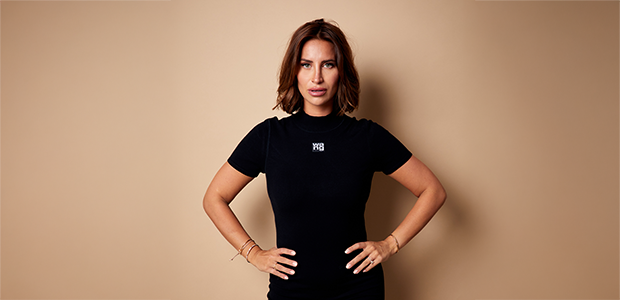
As the Co-Founder and Chief Operating Officer at Shoorah, Ferne McCann is a familiar face on UK television, known for appearances on popular shows like ITV’s I’m a Celebrity…Get Me Out of Here!, Channel 4’s SAS: Who Dares Wins, and BBC’s Celebrity Best Home Cook. However, life in the spotlight is not without its challenges.

2024 was a year of seismic change with a new government coming into power and a UK budget that will undoubtedly impact the UK’s small to medium-sized enterprises (SMEs) in 2025. So, as we look ahead to next year, what technology trends will lead?

The VTT LaunchPad is a business incubator established by VTT Technical Research Centre of Finland.

The days where people had a “job for life” are those of the past as people are changing jobs now more frequently than ever. PWC reported that a quarter of UK workers are expected to change jobs in the next 12 months which is often due to career changes and seeking out new challenges. With 468,000 new businesses started in the UK in 2024, January is a popular time for these new year’s business ventures.

Over the past two years, rising interest rates, and inflation in the UK have forced many businesses to scale back operations. Recent tax increases outlined in the Budget have further compounded the issue, prompting almost half of businesses to plan workforce reductions and almost two-thirds scaling back hiring.
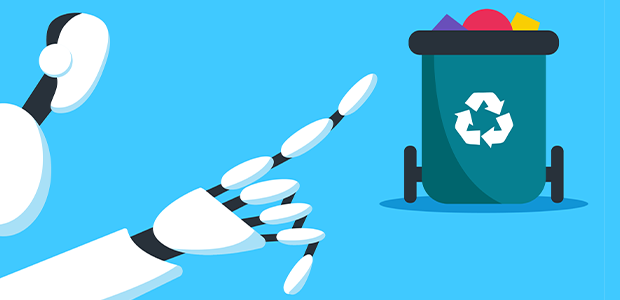
Every day, recyclable materials that could be recycled are thrown into general waste bins, destined for landfills or incineration. In the UK alone, over half of households admit to doing this. And even when items do make it into recycling bins, 80% of them are “wishcycled” – put there with hope, rather than certainty, about whether they belong.

As technology continues to evolve, the potential for digital health will only grow. Moving into 2025, the healthtech sector is poised for transformative growth, driven by breakthroughs in AI, advanced data insights, and a shift toward predictive, personalised care.

Ideas fuel innovation, leading to continual developments throughout the technological landscape and redefining what is possible in the modern world. Yet, for too long, the flow of ideas has been limited to select teams or individuals, often stifling the full potential of creativity within organisations and wider society. Democratising ideas – creating equal opportunity for idea generation, deployment, and evaluation – resolves this issue.

Sustainable packaging is becoming an increasingly important aspect of product design for any modern business. It involves using materials and methods that have a minimal impact on the environment, such as recyclable, biodegradable or renewable materials.