
Runna, the running coaching app, has launched the start of internationalisation on the platform. The app is now available in seven new languages, unlocking access to personalised running training plans for millions of new runners worldwide.

BoobyBiome, a London-based biotechnology company advancing the science of breast milk and the microbiome, has raised £2.5 million in seed funding for its infant feeding solutions. Founded in 2019 by a team of female scientists-turned-entrepreneurs – Dr. Lydia Mapstone, Dr. Sioned Jones, and Dr. Tara O’Driscoll – BoobyBiome plans to tackle the rising rates of infant health issues by harnessing the power of the breast milk microbiome.

Skylark Lasers, a diode-pumped solid-state (DPSS) laser specialist, has appointed international business development consultancy Intralink to accelerate its growth in China.

DeepL, the global AI product and research company most known for its AI-powered translation tools, has unveiled an autonomous AI agent for businesses.

UK artificial intelligence (AI) companies attracted a record-breaking £2.9 billion in investment last year, solidifying Britain’s position as a global leader in cutting-edge technology.

In an era defined by economic uncertainty and rising operational costs, small and medium-sized enterprises (SMEs) are increasingly turning to artificial intelligence (AI) to drive efficiency and innovation. Business lending platform Funding Circle, which has supported over 110,000 UK SMEs, reveals how AI can help small businesses grow smarter, not just faster, in 2025 and beyond.

Throxy, an outbound growth partner for companies selling into traditional industries, has announced a $6.2 million seed round led by Base10 Partners with participation from Y Combinator.

Aonic, a global group of tech and gaming companies, has acquired research technology firm Prime Insights for a total transaction value in excess of $250 million.

ArcaScience, the AI healthtech startup setting a new standard for benefit-risk evaluation to make better, safer drugs, has announced a $7 million seed funding round led by The Moon Venture, with participation from Pléiade Venture, Plug&Play Ventures, Bpifrance, and AKKA Technologies.

LineWise, the US-based AI-powered “virtual engineer” for manufacturers, has raised $1.1 million in pre-seed funding from A2D Ventures, Y Combinator, Exitfund, REMUS Capital, SBXi Fund, and Team Ignite Ventures. The funding will accelerate LineWise’s mission to eliminate two of the most expensive problems in manufacturing: unplanned downtime and yield loss caused by defects.

The UK government may be celebrating favourable tariffs with the USA and new trade deals with countries outside the EU, but the vast majority of UK small businesses are now focused on the domestic British market to secure growth over the next 12-months, according to new research from Novuna Business Finance.

More than half of businesses have no formal policy in place to govern the use of AI tools in the workplace, leaving them vulnerable to data risks, compliance issues, and uncertainty over accountability.

MEGA, the AI voice agent platform purpose-built for order-to-cash (O2C) management, has announced a $2 million pre-seed funding round led by Spintop Ventures, a Nordic early-stage venture capital firm with 15 years of experience scaling software-based technology companies.

Kerbo Charge has acquired one of its competitors in the EV charging space, Charge Gully.

IQM Quantum Computers has raised a $320 million Series B funding round, marking the largest ever Series B fundraise in the quantum space outside of the US. This latest funding round boosts IQM’s funding total to $600 million.

Anthropic has completed a Series F funding round totalling $13 billion. This investment reflects Anthropic’s continued momentum and reinforces its position as one of the leading intelligence platforms for enterprises, developers, and power users.

Technology Secretary Peter Kyle is set to announce a £2.7 million government fund to support UK regulators in piloting AI systems to keep Britain at pace in the global race for tech leadership.
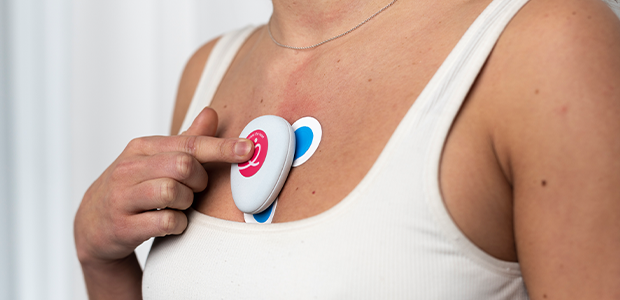
Erik Rask is the Founder and CEO of MedBeat, but before founding the startup, he was a medical doctor at the Children’s Heart Centre in Lund, Sweden.

In the May/June 2025 issue of Startups Magazine, we introduced four startups that we believe are the ones to watch in the medtech space.

Camera Intelligence, the startup building an AI-powered camera system for content creators and businesses, has closed its $2 million Seed funding round, which will accelerate the development of its integrated AI-native camera and content editing solutions.