Born from 2010 onwards, Generation Alpha is the first to be raised entirely in the 21st century. They’ve never known a world without smartphones, AI, or social media. They understood ‘Skip Ad’ before they could read, were using global gaming platforms before they became teenagers, and they’ll begin entering the workforce from next year.

The project manager stares at the spreadsheet in disbelief. What started as a $200,000 software development initiative has ballooned to $340,000, and they’re only 70% complete. The client is furious, the team is demoralised, and the company’s reputation hangs in the balance.

The health and wellness space is undergoing a huge transformation. Scrolling through Instagram and TikTok yields a whole host of advertisements from influencers flogging the latest supplement that promises a variety of miracles.

Qunova Computing, a developer of software applications designed with the goal of bringing quantum advantage to the chemical, pharmaceutical, and industrial engineering sectors, has raised a $10 million Series A funding round.

Maven Capital Partners has invested £2.6 million in PowerPhotonic, a provider of precision optics for high-power laser systems.

Medtech is an exciting industry, with constant innovation that will genuinely change the lives of humans as we know it as we will see in the this issue of the magazine, startups are at the forefront of changing the medical landscape. From surgical robots, advancements in diagnosis, and the creation of semiconductors for neural implants, advanced technologies are overhauling traditional healthcare.

The USA is a hub of startup activity, and according to Startup Genome’s Global Startup Ecosystem Ranking (2020-2024), nine out of the top 20 startup ecosystems globally can be found in the USA, and Boston ranks sixth worldwide.

London FinTech Summit, part of Fintech Week London, has announced strategic partnerships with Grow London (London & Partners), the London Stock Exchange, and The Global City – three of the most influential institutions driving London’s financial and business leadership. The partnerships position the newly launched Summit as a key moment for the UK’s FinTech sector and a powerful platform for global engagement.

Most founders manage time like a resource. But here’s the real differentiator: how you manage your energy.

Founders are watching two very different AI stories unfold. Some teams rocket to big revenue almost overnight; others compound steadily with better margins and retention. Both paths exist – but what separates durable growth from flash-in-the-pan isn’t raw speed. It’s vector: speed in the right direction.

What if the secret weapon of Wall Street was suddenly in your hands? Every big bank and hedge fund guarded algorithmic trading, fast and powered by mountains of data, for decades. If you weren’t on the inside, you didn’t stand a chance.

Efficiency vs effectivity is a distinction every founder should understand early on. When building a startup, it’s tempting to measure success by how quickly things get done or how many tasks are completed in a day. Yet speed and activity are not the same as progress.
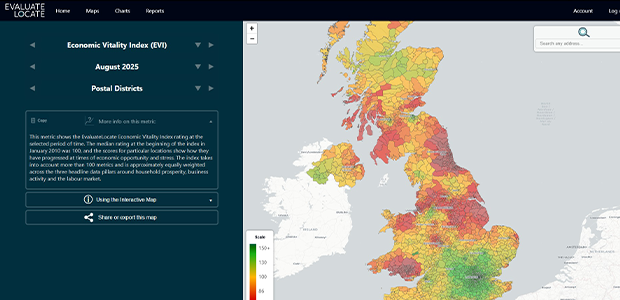
Geospatial AI startup, EvaluateLocate, has completed a £300,000 seed investment round at a valuation of £2.75 million. The company is also simultaneously bringing to market its subscription app for the UK, the first territory in a planned global roll-out.

Four in five (81%) UK CISOs believe DeepSeek – the China-based AI chatbot raising global security concerns due to its data handling practices and vulnerability to misuse – must be urgently regulated by the UK Government before it sparks a full-scale national cyber crisis, according to Absolute Security’s UK Resilience Risk Index Report.

The Norrsken Foundation has announced that Norrsken Evolve has completed an oversubscribed first close of a €57 million fund. The fund will be spearheaded by three General Partners: Johan Attby, Alex Bakir, and Rebecka Löthman Rydå.

Innerworks, innovators of Synthetic Threat Intelligence, has announced the completion of a $4 million seed funding round to scale their platform approach to delivering the world’s most effective immune system for the internet, led by AlbionVC.

A new type of technology is being trialled on the Tonbridge to Hastings railway line to help keep trains running in hotter weather, and more reliable journeys for passengers and freight customers.

When Transreport was founded, the concept was driven by a simple but powerful vision: to connect the world by unlocking access to travel and experiences for everyone, everywhere.

If you run or manage a small business, chances are you didn’t get into it for the admin.

As always, businesses and inventors are at the forefront of innovation and contribute to the development of technologies. However, all progressive innovations, whose popularity grows rapidly, require regulation. The true revolution in artificial intelligence (AI) is proof of this truth. Despite the great potential of AI, its rapid development also presents an important question of how we can ensure safety, ethics, and the protection of rights in this new technological reality.