
As always, businesses and inventors are at the forefront of innovation and contribute to the development of technologies. However, all progressive innovations, whose popularity grows rapidly, require regulation. The true revolution in artificial intelligence (AI) is proof of this truth. Despite the great potential of AI, its rapid development also presents an important question of how we can ensure safety, ethics, and the protection of rights in this new technological reality.

Healthtech is booming big time. But once you build a good-to-go MVP and land your first users, you have a horde of challenges to tackle.

A long-term and potentially critical development is underway in the world of AI – the emergence of AI browsers. Recently launched products from the likes of Perplexity AI and The Browser Company, along with rumours of an OpenAI competitor, have put the topic of AI browsers on the agenda. This matters because, if executed correctly, AI browsers have the potential to become a linchpin development in the shift to agentic AI.

Marketers may never feel they’ve fully cracked search, but just as strategies were starting to settle, along comes AI to quietly disrupt search completely. A drop in brand website search traffic later and we’re no longer experimenting with AI search – we’re right in the thick of a transition period.

New research by Ipsos and American Express Global Business Travel explores the key strategies of high-performing small and medium-sized enterprises (SMEs), offering insights into the characteristics that differentiate the strongest-growing companies.

Picture a glossy glass-walled office in the city.
Everyone’s impeccably dressed, their lanyards swinging as they head to meetings, their conversations filled with deals, strategy, and … Oxbridge anecdotes.

At the intersection of neurotechnology and artificial intelligence, one of the most promising tech frontiers of the next decade is rapidly taking shape. According to Grand View Research, the global market for brain-computer interfaces (BCI) is valued at over $2.4 billion today and projected to grow to $6.5 billion by 2030. Once limited to research labs and clinical institutions, BCIs are now becoming accessible to indie developers, startups, and even hobbyists — thanks to non-invasive EEG headsets, Bluetooth protocols, and open-source machine learning tools.

Collaboration tools have revolutionised how teams and companies work together, but when it comes to families — the most personal and enduring “teams” in our lives — technology still hasn’t caught up.

Better Medicine, a startup developing AI-powered diagnostic tools for radiology, has raised €1 million in a pre-seed funding round led by Soulmates Ventures, with participation from Specialist VC, UT Ventures, and several angel investors.

Consumer trust is essential for startups looking to achieve successful online sales. However, new companies lack established businesses’ brand awareness and proven track record. A website is often a customer’s first impression of a business, so it had better provide all the essential information they must know about an unfamiliar brand.

Founded in London in 2016 as Engineer.ai by Sachin Dev Duggal, Builder.ai aimed to make custom software development as simple as ordering a takeaway. The proposition was straightforward: a non-technical customer could describe an app or website they wanted, and Builder.ai’s platform would assemble it from pre-built feature blocks, with human oversight and AI guidance.

With cost-saving still top of the agenda, and hiring plans remaining curtailed, new Robert Walters’ data reveals how professionals are working extra hours just to keep up.

StartUpNV, a nonprofit statewide incubator and accelerator for Nevada-based startups, is again sponsoring the Las Vegas edition of Startup Week, Wednesday, 17-20th September.

Every founder knows the feeling. An investor update is looming. The numbers are solid (ish), the story feels messy, and you’ve rewritten the deck twelve times trying to make it all make sense.

July in European tech didn’t follow familiar playbooks. From polarising deal sizes and sector shakeups to grant funding stepping into the spotlight and regulators breaking seasonal patterns, the month revealed a handful of market anomalies that deserve a closer look.

AI startup Perplexity has made an unsolicited all-cash takeover offer of Google’s Chrome internet browser for $34.5 billion.
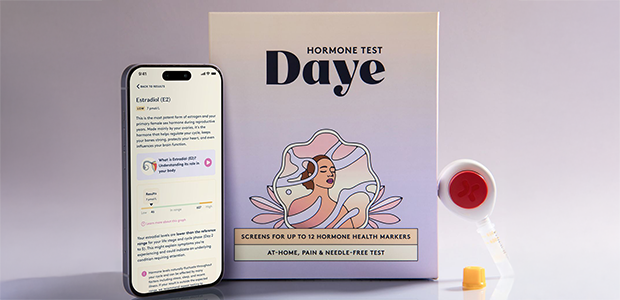
In response to growing interest in hormonal health, female health platform Daye has announced the launch of its comprehensive at-home hormone testing service. The service features an innovative, pain-free blood collection method, designed to make the process of testing much simpler and more intuitive.
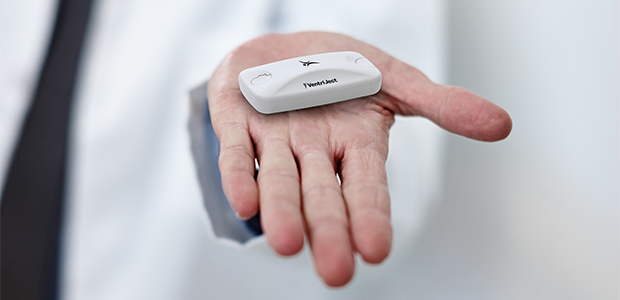
A Danish medtech startup behind a technology that accurately measures cardiorespiratory fitness (CRF) has just closed a €1.7 million funding round following expansion into several European markets.

NineSixteen Studios is the latest venture launched from cocreatd. Founded with Ben Kaluza, one of the UK’s leading tech content creators (900k followers), and serial entrepreneur Jono Fereday, NineSixteen Studios helps tech companies produce premium creator content that people actually want to watch.

Oxford Ionics has announced that it has delivered and installed a full-stack quantum computer, called Quartet, to the UK’s National Quantum Computing Centre (NQCC).