South Summit Industry & Energy returns to Bilbao on 26th – 27th November 2025, to celebrate its fourth edition. Co-organised by South Summit and the Provincial Council of Bizkaia, the event will once again bring together leading experts, corporations, investors, and startups in Industry 4.0, the Energy Transition, and Mobility sectors at the BAT – B Accelerator Tower.

HyET Solaris, the Dutch innovator in ultra-lightweight solar foils, announced it has entered into agreement with UK-based investors Aequitas Carbon Ltd and Abbeydale Partners LLP to fund the company with €60 million growth capital. The investment will finance the development of a new 50megawatt modular production facility in the Netherlands, with test production set for mid-2026 and full commercial output of flexible perovskite PV modules expected by Q4 2027.

Most customers don’t judge products on their own. Instead, they follow what others desire, a psychological driver known as Mimetic Desire. When people see something is popular, it doesn’t just reflect quality; it creates belonging and status.

Mimica has announced a $26.2 million Series B funding round led by Paladin Capital Group, with continued backing from Khosla Ventures, LGVP, and Entrepreneurs First.

IW Capital has invested £4 million into Navigator, a fast-scaling digital advertising platform that is redefining how brands reach millions of travelling consumers in a privacy-first world.

An estimated £3.7 billion was lost by UK businesses due to internet failures in 2023. So, for SMEs relying on Cloud tools, VoIP, and remote work, unreliable internet isn’t just frustrating – it’s costly.

When Google switched on AI Overviews for more than a billion users, it sent a shockwave through search. Publishers saw traffic collapse overnight, with lawsuits already challenging Google’s new model, writes The Verge. For brands, the reality is just as stark: you’re either cited inside machine-made answers or erased from the conversation.

Over £4 million funding has been awarded to British businesses developing next-generation aviation technology, with winners announced today (29th September 2025).
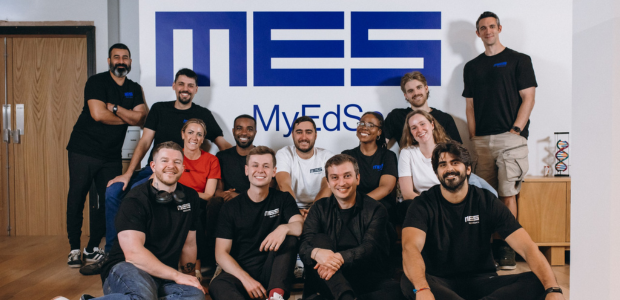
MyEdSpace, the leading online education platform, announces today (29th September) that it has raised $15 million in Series A funding.

UK military veterans are shaping Europe’s defence tech boom as venture backing reaches record levels
Defence tech startups are booming, led by an influx of former UK armed forces personnel, but critical venture capital funding gaps remain, according to a new report from Dealroom and Resilience Media. The report highlights that despite the overall trend of increasing investment in defence technology, failure to match the US on key technologies, including space tech and semiconductors for AI, could impact future growth and security in the region.

OXCCU, the Oxford University spin-out developing a one-step process to convert waste carbon into SAF, has raised £20.75 million ($28 million) in an oversubscribed Series B funding round. The round includes new investors Orlen VC, Safran Corporate Ventures, IAGi Ventures (the dedicated corporate venturing arm of the International Airlines Group (IAG), Hostplus, and TCVC, alongside continued support from existing backers Clean Energy Ventures, IP Group/Kiko Ventures, Aramco Ventures, Eni Next, Braavos Capital, and the University of Oxford.

The founder of cybersecurity giant Mimecast has invested £3 million ($4 million) in Glasgow-based global recruitment technology platform Willo as the company accelerates development of tools designed to help employers automatically verify candidate credentials amid a surge in AI-generated job applications.

GoodFit, the AI-driven data platform redefining how companies go to market, has raised a $13M Series A led by Notion Capital, with participation from Salica Investments, Inovia Capital, Robin Capital, Common Magic, and Andrena Ventures.
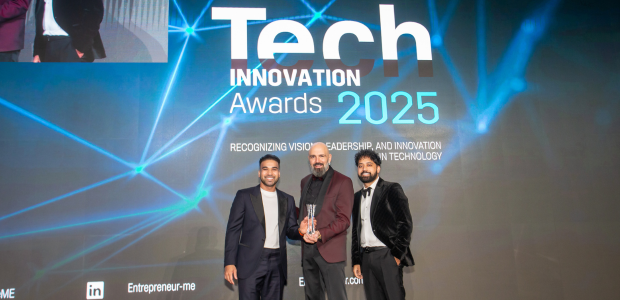
SageMaster, co-founded by brothers Moyn Islam, CEO, and Ehsaan Islam, CTO, has been named the winner of Best Trading Solution at the Entrepreneur Middle East Tech Innovation Awards 2025, held in Dubai last night.

When our CMOs work within startups, one of the most common things we hear is: “We need to set a marketing budget, but don’t know where to start.” Too often, the budget becomes a rear-view mirror exercise (what was spent last year) or a guessing game (what feels affordable). Done properly, though, your marketing budget isn’t just an overhead, it’s a powerful, strategic driver for growth.

The UK has set ambitious goals for innovation, positioning itself as a hub for science and technology on the global stage. But while the appetite for R&D remains strong, the reality for many businesses is that their ability to claim R&D tax relief now hinges less on ambition and more on compliance.

We live and work in unprecedented times. As a founder of a high-growth business that specialises in work team transformation, I see first-hand how this impacts the organisations and teams that we partner with.

New analysis from Sustainable Ventures has examined the potential for AI to accelerate growth in climate tech startups, who play a key role in the race to meet net zero targets. The research has found that AI-related climate tech investment in startups is bucking the market downturn. Whilst wider climate tech funding has flatlined, capital has instead flowed into AI-focused startups. However, the response to AI in the climate tech community is uneven – with the vast proportion of this investment going into software-based climate tech startups. Hardware developers who are critical to solving 80% of global emissions are potentially being left behind by the current investment ecosystem.

For many founders, selling a startup is the ultimate milestone – an opportunity to turn years of hard work into a well-earned reward. But while the headlines often highlight valuations and buyouts, the reality is more complex. Exiting a company is not just about numbers. It is a legal process that demands foresight, discipline, and meticulous preparation.

Pleo recently unveiled Pleo Embedded, a new solution that empowers businesses managing large networks of SMB customers to offer real-time financial intelligence via spend and cash management capabilities directly from their own platform.