55 North, the dedicated quantum technology venture capital fund, today announced the first close of its €300 million inaugural Fund I at €134 million, establishing its position as the sector’s largest pure-play quantum VC.

OXCCU, the Oxford University spin-out developing a one-step process to convert waste carbon into sustainable aviation fuel, has raised £20.75 million ($28 million) in an oversubscribed Series B funding round.

Clarifeye, the platform enabling organisations to build expert AI agents at scale, has announced that it has raised a €4 million pre-seed round led by EQT Ventures. The round also includes participation from Drysdale Ventures, Olivier Pomel (CEO and founder Datadog), Jean-Luc Robert (ex-CEO Kyriba), Alexandre Berriche (Fleet), and other prominent angel investors.

For many startups, “going global” used to be an aspiration saved for later stages of growth. But today, ambitious young companies are thinking differently. They’re building globally distributed teams from the outset, treating international hiring not as an expansion strategy, but as a foundation for growth.

Property management software Hospitable announced it has raised over $1.5 million in funding directly from its own customers and employees.

NGP Capital announced the results of its third, annual data-driven deep dive into the DACH startup ecosystem’s investment landscape. Comparing data from the 1 July 2024 to 30 June 2025.

Love Finance, the SME lender and broker, has secured £45 million in its first debt financing arrangement, enabling the company to expand its loan book and support more UK SMEs with fast and flexible business loans. The funding package comprises a £35 million Revolving Credit Facility (RCF) from FTSE 250 specialist lender, Paragon Bank, and a £10 million junior Medium-Term Note (MTN) programme from LGB Capital Markets.

A new report from MIT recently sent shockwaves through the AI world: 95% of enterprise generative AI pilots deliver zero return on investment. Companies are moving fast with AI; some argue too fast. A wave of products are rushing to bolt on generative models, often with the same pattern: “Look what it can do!” But rarely: “How is this improving customer experience?”

For decades, clinical trials have driven medical innovation. Yet behind every breakthrough lies a persistent problem: the process is often slow – it can take up to 10-15 years to complete all phases. Fragmented technology, inefficient coordination, and outdated systems can create delays, introduce errors, and make participation for patients stressful.

Beyond Aero has reached Technology Readiness Level 6 (TRL6) for its hydrogen-electric powered aircraft. This achievement is validated by a full-scale propulsion system test campaign in a representative environment, a critical milestone moving Beyond Aero from laboratory promise to real-industrial viability.
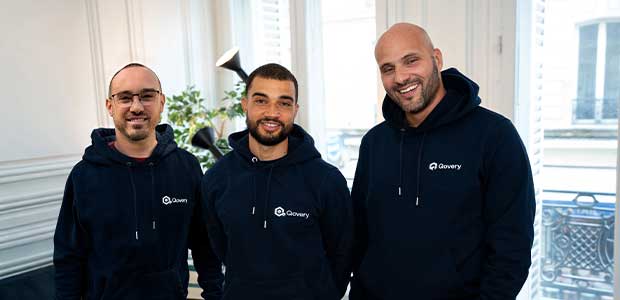
Qovery, a SaaS platform that automates DevOps and makes application deployment effortless on any cloud, has raised $13 million (€11.3 million) in Series A funding.

The British Business Bank’s Debt Funds programme has made a positive impact on the UK debt market and finance ecosystem, according to an independent evaluation published today.

The recent UK–US Tech Deal is a welcome vote of confidence in the UK’s technology sector. But if Europe is going to compete globally in AI, the decisive factor won’t be new policies or government partnerships. It will be how quickly startups can attract, cultivate, and retain the right talent.

Cyber Runway, the largest cyber accelerator in the UK, is back and bigger than ever. The entrepreneurship support programme returns for its fifth edition as part of the Cyber Growth Action Plan – a component of the wider Plan for Change.

There’s no doubt that small and medium-sized enterprises are the heartbeat of Europe’s economy; powering our communities, and our economies.

This autumn, Vienna will once again become a global epicentre where culture and technology join forces to bring positive societal changes. From 22nd – 23rd October, the CultTech Summit returns for its highly anticipated second edition. Set in the Aula der Wissenschaften, the Summit will transform this historic venue into a high-energy hub for startups, investors, and innovators at the cutting edge of culture and technology. Following last year’s sold-out debut with over 650 attendees, the 2025 edition will host 1,000+ participants ready to explore how emerging technologies are reshaping the creative industries – and how startups can lead the charge.

This October, Vienna will once again become a global hub where culture and technology join forces to bring positive societal changes. From 22nd – 23rd October, the CultTech Summit returns for its highly anticipated second edition, building on the success of last year’s sold-out debut, which gathered over 650 pioneers from across the cultural and tech sectors.
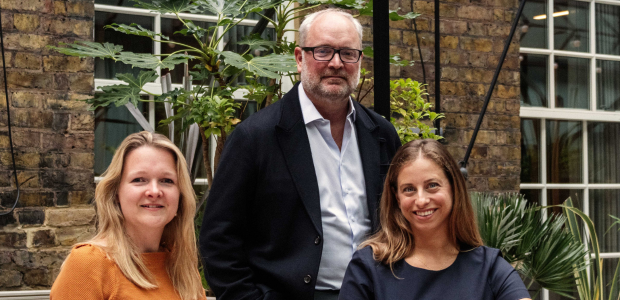
Notion Capital (“Notion”), Europe’s leading venture investor in business software and fintech, has announced the close of its new $130m (€114m) growth fund, Notion Capital Opportunities III SCSp (“Growth Opps III” or “the Fund”). The successful fundraising is a testament to Notion’s strategy, past performance and strong base of supporters, as well as the ongoing resilience of the European tech sector.
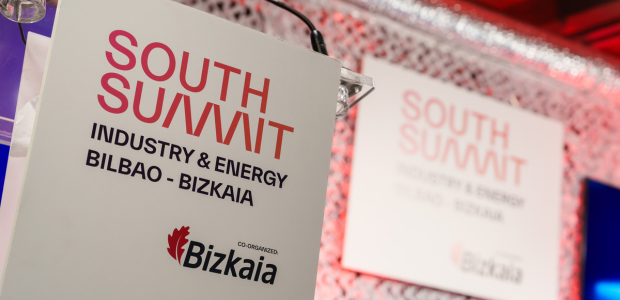
South Summit Industry & Energy returns to Bilbao on 26th – 27th November 2025, to celebrate its fourth edition. Co-organised by South Summit and the Provincial Council of Bizkaia, the event will once again bring together leading experts, corporations, investors, and startups in Industry 4.0, the Energy Transition, and Mobility sectors at the BAT – B Accelerator Tower.

HyET Solaris, the Dutch innovator in ultra-lightweight solar foils, announced it has entered into agreement with UK-based investors Aequitas Carbon Ltd and Abbeydale Partners LLP to fund the company with €60 million growth capital. The investment will finance the development of a new 50megawatt modular production facility in the Netherlands, with test production set for mid-2026 and full commercial output of flexible perovskite PV modules expected by Q4 2027.