
The world has changed dramatically since the pandemic and the way we work has been completely reimagined. As we continue to face new challenges brought on by the urgent need for decarbonisation, it’s crucial to adapt and acquire the skills necessary to thrive throughout the net-zero revolution.

Every day, hundreds of patients receive the life-altering news that they’ve been diagnosed with a chronic neurological condition. Right now, a colossal 14 million Brits are living with Dementia, Parkinson’s and Alzheimer’s Disease, and statistics show that 1 in 6 people will be affected over the course of their life. The high prevalence of these conditions means that most of us know someone – a friend, colleague or family member – with a brain disease, and we’ve seen the devastating impact first-hand.

Tech Nation, the growth platform for tech scaleups, has today published its final Tech Nation Report: How to build a scaleup, to shine a light on the state of UK tech and to provide a critical resource to an ecosystem facing a turbulent global economy, uncertainty and change.

Ludovica De Pieri grew up figuring out recipes and alternatives to meals for her mother who suffers with severe food allergies. This is where she realised the possibility of catering inclusively, the potential for it to become profitable and the requirement for it to become the norm.

10 UK net zero startups pitched their technologies for up to $1 million investment and entry into an accelerator programme for green startups.

Beauty Buddy is designed to put the power of beauty in the consumers hands. Users of the app can search or scan the barcode of a beauty product to access reviews from friends, influencers, and other members of the community.

The Elite Business 100 (EB100) Awards Evening, held on Friday, 17th March, at the Tower Hotel, London, was a night of celebration for the top-performing SME businesses of the year. This prestigious event recognised and honoured the EB100 top-performing SMEs from a wide range of industries.
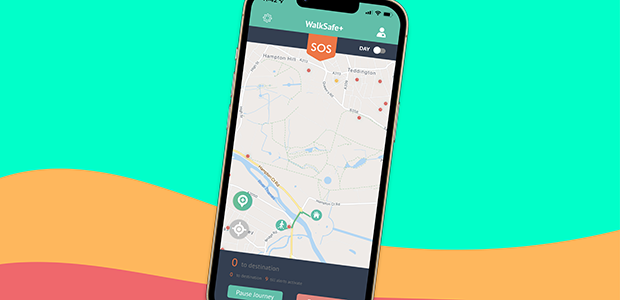
Everybody has the right to feel safe, wherever they are and in any situation. Born off the back of wanting to make change, WalkSafe was founded in 2020 with the aim of giving users as much information about their surroundings as possible.

Amidst economic turmoil and an era of polycrisis, Bloom announces this year’s top startups – celebrating some of the UK tech businesses who are triumphing against all odds.

Nominations for the Tech4Good Awards 2023 are now open. Created by UK disability tech charity AbilityNet in 2011, these inspiring awards celebrate people and organisations using tech to make the digital world a better place.

The unpredictability of the UK economy continues unabated, with today’s unexpected rise in inflation to 10.4% alongside further casualties in the banking system. This all shortly after Jeremy Hunt, Chancellor of the Exchequer, delivered his inaugural Spring Budget with the intention of delivering stability, certainty and calm.

According to a report from Alight, a leading cloud-based human capital technology and services provider, workplace benefits play an important role in attracting, engaging and retaining talent – yet employees do not always see value in their existing benefits, while employers generally overestimate them.

Casual games have proven to be the “Trojan Horse” of user engagement and adoption of new technologies and platforms. When the iPhone first launched, the popularity of gaming on the device caught Apple by surprise. It was (and is) the number one app category. Hyper-casual games have dominated the app game charts for years. When Facebook launched to a wider audience than college campuses, it was casual and social games that helped them breakthrough to wider audience demographics that became crucial to their future.

Viva Technology, Europe’s biggest startup and tech event, is back for its 7th edition from 14 to 17 June at Porte de Versailles in Paris.

Research from BenchSci has revealed new insights into the attitudes and preferences of AI, machine learning, and data professionals in the UK when looking for new employment opportunities.

Thanks to the latest developments in Generative AI, by the end of the year marketers could find themselves in a position where their campaigns, blogs and even emails can virtually write themselves. The consensus too is that this marks an initial step in the journey to a much wider industry shift towards AI-based functionality. But what exactly does this mean for the future of key marketing? Here, Alistair Dent, Chief Strategy Officer at Profusion explores this evolving development and some of the key pros and cons to consider.

Stix Mindfulness, a startup founded by father and son duo John and Liam, has launched an innovative solution to support children’s mental health & wellbeing through interactive technology.

Technology is intertwining between business and personal lives and is changing exponentially. It’s crucial that businesses have an effective digital transformation strategy to achieve long-term goals, satisfy customers and spearhead growth. This involves adopting digital technology to digitise non-digital products, services or operations. By 2025, global digital transformation spending is forecast to reach $3.4 trillion.

If you ever worked with Office 97, you’ll remember Microsoft’s iconic assistant Clippy. The animated AI-based paperclip would pop up in your document and offer to help you format whatever you were working on. Clippy would analyse and structure words in your document and help you format it according to what you were working on. For example, if anything vaguely resembled a resume, you would be prompted with “It looks like you’re writing a resume! Perhaps a resume template will help?”.

Something crazy happened last week in northern California that has impacted the entire world. If you guessed the Silicon Valley Bank shut down, you get a cookie.