
TVC Technology Solutions, part of Bolton-based TVD Group, partnered with Kindred Concepts, a brand-new global venture created to develop experiential leisure concepts, on behalf of Formula 1.

As Chancellor Jeremy Hunt announced measures intended to lift the UK economy in the Spring Budget, data from iwoca highlights what small businesses were most worried about as they entered 2023.

Colorintech, a non-profit organisation that supports diversity and inclusion in the tech industry, has announced its largest UK metaverse programme today, ‘100 Worlds in 100 Days.’

The term ‘worker wellbeing’ appears to be trending these days as more employers switch on to the fact their workforce is their greatest asset, especially in the current workers’ jobs market.

Research from STX Next, Europe’s largest software development company specialising in the Python programming language, has found that 32% of programmers say an ability to think logically, critically and analytically is the key to becoming a great Python developer.

Permia Sensing, the agricultural tech solution that’s transforming palm plantations with precision farming, has secured £250,000 in a pre-seed round led by early-stage focused venture capital firm Jenson Funding Partners.

twentyone has become the latest exciting startup to call Manchester home. The B2B financial services provider’s decision to launch operations in the thriving tech hub signifies the continued forward momentum of the city’s fintech scene.

Logpoint today announced the new release of capabilities to its cybersecurity operations platform, converging SIEM, SOAR, UEBA, endpoint security, and Business-Critical Security (BCS) technologies.

“I never felt different from my male colleagues until I got pregnant. When I went on maternity leave, I felt guilty about not contributing to my former business’s targets – and coming back to work was even worse. It made me feel angry for being a woman,” shared one of Sweep’s employees at our gender parity workshop on International Women’s Day.

It’s no secret that embracing digital is essential for businesses that want to stay relevant and competitive. That’s why, by 2021, 89% of all companies had already adopted a digital-first business strategy or planned to do so.

Investing in Britain’s most promising young businesses has become increasingly popular, resulting in record years for venture capital fundraising.

As international leader in time display, time and audio systems synchronisation as well as energy price display, Bodet Time provides a true innovation by developing the first eco-designed solar clock: the Profil 930 L, an analogue clock providing a fully autonomous energy supply.

The latest research by property purchasing specialist, House Buyer Bureau, has revealed that homebuyers looking to purchase in today’s market are paying as much as 60% more on the monthly cost of repaying a mortgage when compared to those who purchased in December 2021 when interest rates first started to climb.

On Thursday March 23 2023 the British Nutrition Foundation curated a panel discussion chaired by Sarah Mukherjee MBE, CEO of Institute of Environment Management & Assessment (IEMA) & former BBC Environment Correspondent.

Singapore-based Mystifly, a leading vertical SaaS & marketplace provider for the airline industry announced today the conclusion of Pre Series B funding with CSVP (Cornerstone Venture Partners) bringing the total of this round to $8 million combined with earlier investments from RSI Fund I. LLC (a subsidiary of Recruit Co. Ltd.), Jenfi & Crusade Partners among others.

For decades, we’ve imagined a future where artificial intelligence gives everyone superpowers. Now it’s finally here, it’s up to us to figure out how to use it for good.
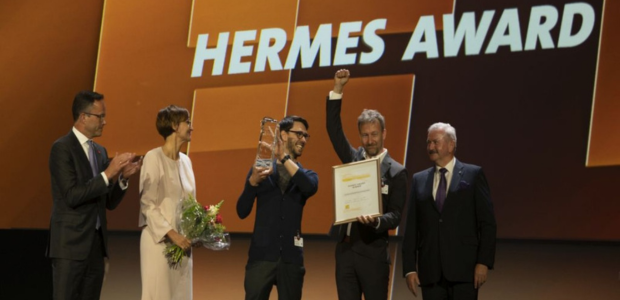
An independent jury of high-caliber experts from government, business, research, and society at large, chaired by Prof. Dr.-Ing. Reimund Neugebauer, President of the Fraunhofer Society, has narrowed down a large field of submissions to nominate three companies for the HERMES AWARD: ACS, Beckhoff, and Bosch Rexroth (in alphabetical order). The winner will be announced at the opening ceremony of HANNOVER MESSE on 16 April, in the presence of German Chancellor Olaf Scholz. The award will be presented by Bettina Stark-Watzinger, Federal Minister of Education and Research.
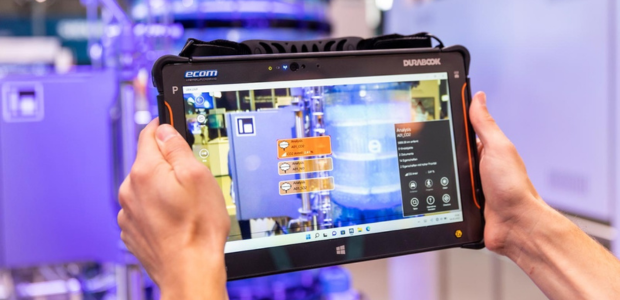
Industrie 4.0 and HANNOVER MESSE are closely intertwined. More than ten years ago, the term “Industrie 4.0” celebrated its premiere at the Hannover-based tradeshow. Since then, the topic has developed and evolved. But what’s next? Visitors to the show can find out – in Hannover, from 17 to 21 April.

The way in which health and wellbeing support is communicated has undergone a dramatic change recently, as research1 released by Towergate Health & Protection reveals.
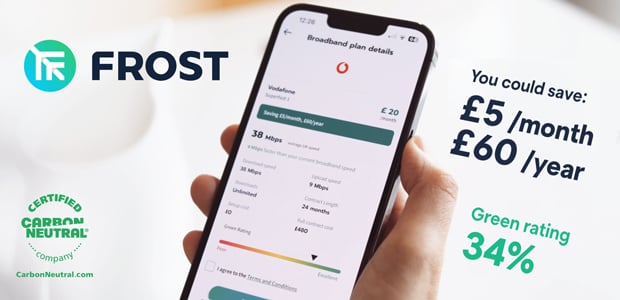
Frost, is a Manchester-based Fintech which is helping to tackle Britain’s escalating cost-of-living crisis.