
As organisations continue to move their businesses to the cloud for scalability, reduced costs and improved performance, the idea of ‘digital sovereignty’ is becoming increasingly important.

Strategy gets a bad rap, and in many cases, it’s self-inflicted and has earned that reputation. You may have had your fingers burnt, wasted money on it, or just have perceptions of it being a misdirection of your precious resources, completely impractical or unrealistic due to the realities of a fledgling business.

The Leeds-based startup IMAGINaiTION has achieved recognition in Insider Media Yorkshire’s 42 Under 42 awards and has been shortlisted as a finalist in two categories of the North East, Yorkshire & the Humber final of the StartUp Awards.

Cybercrime is a significant issue for businesses of all sizes in the UK. Although we usually hear more about cybersecurity incidents impacting large businesses, smaller businesses are also a target.

Economic instability, marked by hiring freezes and cost-cutting measures, has led to a downturn in the job market, with recruitment analysts noting a significant and ongoing drop in permanent job placements.

Hokodo, a provider of digital payment terms solutions, has unveiled a new €100 million debt facility from Viola Credit, a worldwide credit investment manager dedicated to fostering growth within the innovation economy.

Octopus Investments, an investment manager investing in the people, ideas and industries that will change the world, has today announced the appointment of Sian Roberts as Head of UK Institutional Distribution.

Atom bank, the UK’s first app-based bank, is boosting Durham University’s Women in Technology programme with two new scholarships aimed at prospective female students from low-income backgrounds.

The University of Salford Business School’s Centre for Sustainable Innovation (CSI) merges the worlds of academia and industry, to allow businesses to access tailored support to help them grow and thrive by working alongside the institution’s expert academics.

Digital Catapult has launched an accelerator programme with Northern Ireland’s Department of Agriculture, Environment and Rural Affairs (DAERA) to support the region’s net zero ambition.

Mindstone, a global community dedicated to the practical application of AI, and NexGen Cloud, the provider of sustainable Infrastructure-as-a-Service, announced a partnership designed to spur innovation in AI development through advanced technology.

On the 6th April, the work landscape in the UK will be undergoing a big change. The date marks the introduction of the Flexible Working Bill.

Recent research by Intuit QuickBooks uncovers UK small businesses’ strategies for the upcoming tax year beginning on 6th April. An overwhelming majority (99.6%) of surveyed small businesses intend to alter their operations in the new tax year, with 41% forecasting significant changes.

The UN General Assembly recently adopted a landmark resolution on the promotion of “safe, secure and trustworthy” artificial intelligence (AI) systems that will also benefit sustainable development for all. The resolution, backed by more than 120 Member States, highlighted the “respect, protection and promotion of human rights” in the design, development, deployment and use of AI.

Aircall announced the expansion of its Aircall AI capabilities to include French, German, and Spanish, building on its significant AI enhancements introduced in October last year.
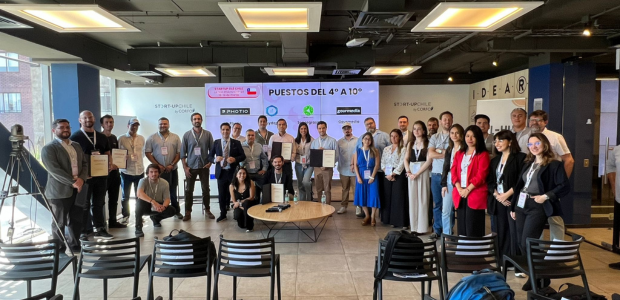
The sixth edition of the doyen European event on entrepreneurship and technological innovation in Latin America will take place in Santiago de Chile on 9 April. It will be attended by startups, investors, corporations and other representatives of the country’s entrepreneurial ecosystem.

Sara Davies MBE, a distinguished businesswoman and TV personality, is set to energise UK Construction Week London (ExCeL, 7th-9th May) as the latest keynote speaker announced for the event in the built environment sector.

Last year was a punch in the face for many startup founders. Not only did investor appetite dry up, but client buying behaviour did too.
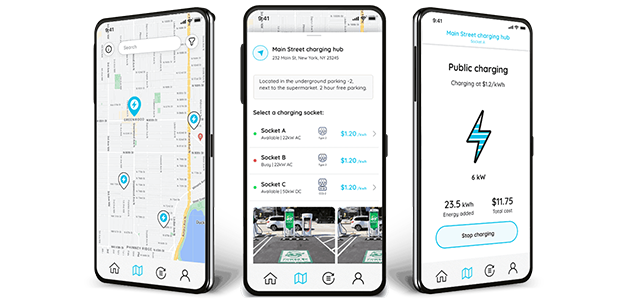
SolarEdge Technologies, an innovator in smart energy solutions, has unveiled the successful acquisition of Wevo Energy’s entire share capital.

Whether you call it; a quick pitch, an elevator pitch, a concise summary, a 30-second pow-wow intro, or a vision/mission statement… introductions are super important.