
WeeFin, the sustainable fintech that helps financial institutions manage their sustainability strategies, has announced a new round of financing totalling €25 million.

How often have you said yes to something that didn’t feel right just to avoid discomfort? And what has that cost you? Your wellbeing, your work, or the impact you set out to create?

In a market increasingly defined by a “rush to quality,” venture capital firms are finding it harder than ever to win the most competitive deals. With fewer standout startups raising money and those that do often commanding sky-high valuations, VCs are under pressure to evolve.

Companies across the Technology Channel are tackling a complex landscape when it comes to Diversity, Equity and Inclusion (DEI) initiatives. Recent political and social pressures, particularly in the USA, has meant that some companies are scaling back their efforts. It is promising to see, however, that over 75% of UK companies are doubling down on their DEI initiatives despite the ongoing pressures.

Pophouse, the global entertainment and music investment firm co-founded by ABBA star Bjorn Ulvaeus, has hit a high note with the closure of its debut fund, Pophouse Fund I, securing over €1 billion. This achievement saw the firm reach its hard cap, positioning it among the largest first-time private equity funds raised in Europe in the past decade.

Scaling a startup and building out an executive team can be a daunting process. As a business grows, so does the complexity and pressure, and this is where a Chief of Staff can make a significant impact. So, what is a Chief of Staff? What do they do? And how do you know if your startup needs one?

Photonic chip accelerator PhotonDelta has established a strategic collaboration with Silicon Catalyst, the world’s only incubator and accelerator focused on the global semiconductor industry. Over the last five years, PhotonDelta has raised close to $1.5 billion to accelerate the commercialisation of the photonics industry.

Fiberdom, a pioneer in wood fibre material innovation, has secured €3.5 million in funding to accelerate the development and scaling of its patented technology and its high-performance, 100% plastic-free material. Fiberdom’s mission is to replace non-essential plastics with scalable, circular solutions.
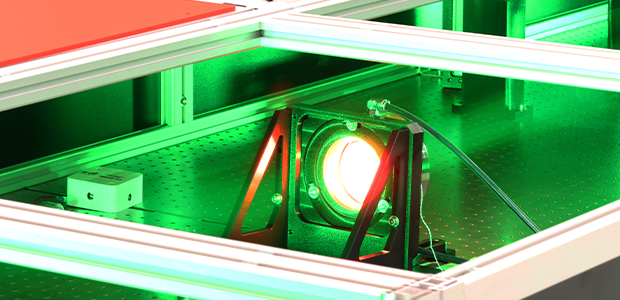
Marvel Fusion, the European fusion energy company, has announced the extension of its Series B funding round by €50 million, bringing the total round to €113 million. The extension includes new investments from EQT Ventures, Siemens Energy Ventures, and the European Innovation Council (EIC) Fund, marking their first fusion energy equity investment.

Launching a new product or service is the culmination of countless hours of work, research, and ambition. It’s a thrilling moment, one that entrepreneurs dream about, yet often fear in equal measure.
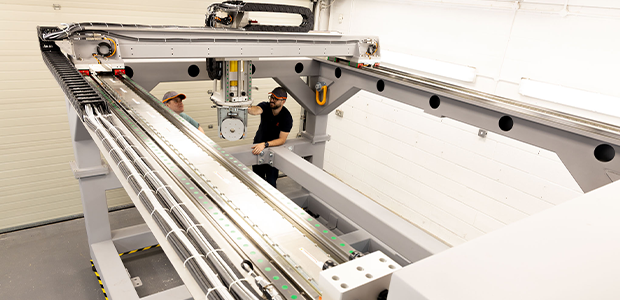
Q5D Technology, pioneers of hardware and software tools for robotic wiring harness manufacture, has taken delivery of the core structure of frame and drives for its latest and largest to date wire harness automation robot at its Bristol headquarters in the UK.

As soon as we log onto the internet, we’re immediately bombarded with content. Just 30 seconds on Instagram can expose you to dozens of images and ads – it’s overwhelming.

Confidence in retail investing is on the up, with the value of funds in UK stocks and shares ISAs increasing by £209 billion in the last decade, according to analysis from investment platform Lightyear.

Launching a startup? Congratulations, I’m so excited for you! Now, buckle up because this journey is likely to be fast, unpredictable and like nothing you’ve ever known.

Verley, a French biotech startup specialising in sustainable food solutions, has launched the world’s first portfolio of functionalised precision fermentation dairy proteins, designed to overcome the limitations of both traditional and plant-based alternatives.

Lloyds Banking Group has partnered with edtech firm, Cambridge Spark, on a bespoke six-month training programme to further strengthen AI capabilities across its senior management teams.

CyberWhiz, a team of experts in embedded, mobile, and cloud cybersecurity has set up a UK office in Cheltenham, UK.

Geovation, an Ordnance Survey initiative, in collaboration with the Ministry of Housing, Communities and Local Government’s (MHCLG) Digital Planning Programme has announced the launch of a new £1.2 million PropTech Innovation Challenge.

Phlux Technology, a UK startup in infrared sensor technology, has announced a £9 million Series A funding round. BGF led the round with funding from existing backers including Octopus Ventures, Northern Gritstone, and Foresight.

Scaling a business is one thing. But retaining a sense of community amongst customers and users as the business grows – something which their continued custom and loyalty relies on – is another thing entirely.