Features

The project manager stares at the spreadsheet in disbelief. What started as a $200,000 software development initiative has ballooned to $340,000, and they’re only 70% complete. The client is furious, the team is demoralised, and the company’s reputation hangs in the balance.

Medtech is an exciting industry, with constant innovation that will genuinely change the lives of humans as we know it as we will see in the this issue of the magazine, startups are at the forefront of changing the medical landscape. From surgical robots, advancements in diagnosis, and the creation of semiconductors for neural implants, advanced technologies are overhauling traditional healthcare.

The USA is a hub of startup activity, and according to Startup Genome’s Global Startup Ecosystem Ranking (2020-2024), nine out of the top 20 startup ecosystems globally can be found in the USA, and Boston ranks sixth worldwide.

Scaling a business is one of the most exciting milestones on any entrepreneur’s journey. But it’s also a common point where things can start to unravel. The truth is, what gets you to one level of success rarely takes you to the next. And that can include your team.

Founders are watching two very different AI stories unfold. Some teams rocket to big revenue almost overnight; others compound steadily with better margins and retention. Both paths exist – but what separates durable growth from flash-in-the-pan isn’t raw speed. It’s vector: speed in the right direction.
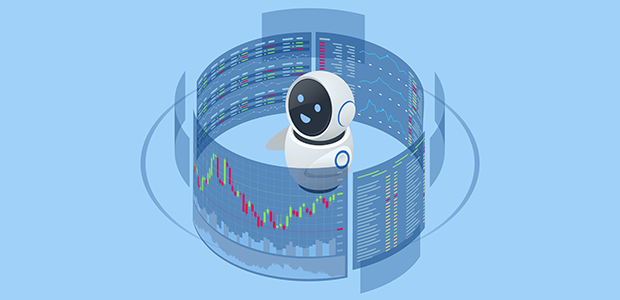
What if the secret weapon of Wall Street was suddenly in your hands? Every big bank and hedge fund guarded algorithmic trading, fast and powered by mountains of data, for decades. If you weren’t on the inside, you didn’t stand a chance.

Efficiency vs effectivity is a distinction every founder should understand early on. When building a startup, it’s tempting to measure success by how quickly things get done or how many tasks are completed in a day. Yet speed and activity are not the same as progress.

As always, businesses and inventors are at the forefront of innovation and contribute to the development of technologies. However, all progressive innovations, whose popularity grows rapidly, require regulation. The true revolution in artificial intelligence (AI) is proof of this truth. Despite the great potential of AI, its rapid development also presents an important question of how we can ensure safety, ethics, and the protection of rights in this new technological reality.

Healthtech is booming big time. But once you build a good-to-go MVP and land your first users, you have a horde of challenges to tackle.

A long-term and potentially critical development is underway in the world of AI – the emergence of AI browsers. Recently launched products from the likes of Perplexity AI and The Browser Company, along with rumours of an OpenAI competitor, have put the topic of AI browsers on the agenda. This matters because, if executed correctly, AI browsers have the potential to become a linchpin development in the shift to agentic AI.

Productivity growth in Europe is uneven and slowing – a trend that shows no signs of improving. As hybrid work becomes the norm and economic pressures intensify, many organisations are asking a fundamental question: why isn’t productivity keeping pace with expectation?

As a founder in a business built on human connection, the rapid rise of AI can feel overwhelming. Without AI, could our businesses become obsolete? Does my human-centric approach still have value in an increasingly tech-driven world?

Across Sub-Saharan Africa, Micro, Small, and Medium sized enterprises (MSMEs) are responsible for nearly 50% of the region’s GDP. Yet, despite their economic importance, access to capital remains a persistent challenge. For many of these companies, the financial tools needed to scale and innovate remain unjustly out of reach.

American author and cultural critic, Neil Postman, once observed that even if the available technology of an age means you can do something, it doesn’t necessarily mean you should do something. Fundamentally, his argument asks whether progress for progresses’ sake is actually always beneficial to society.

In the latest episode of The Cereal Entrepreneur podcast, Startups Magazine Editor, Anna Wood, speaks with Shirley Baumer, Co-Founder and CPO of DreamTeam.

Discover how eco-conscious startups are reducing costs and emissions with smarter packaging, tech-led warehousing, and efficient delivery strategies.

Global healthcare systems are at a breaking point. A global pandemic, economic volatility, and global political shake-up have created an environment where healthcare cannot thrive. Adding to this, we are facing a large aging population that is being cared for by a shrinking workforce, creating huge fiscal tension.

In the evolving landscape of digital entrepreneurship, few stories resonate as powerfully as that of Amman Ahmed, Leeds-born founder of Music For Pets. Launched in Manchester, UK, Ahmed’s journey began with a simple mission: to transform pet wellness through audio.

When Russia’s full-scale invasion of Ukraine began in 2022, engineers, farmers, and tech entrepreneurs turned their tools to defence, scrambling to convert drones, develop electronic warfare (EW) systems, and build agile technologies fit for the battlefield. But whilst the urgency of war can fast-track innovation, it rarely makes for a stable business model.

From the very first day my co-founder Jorge and I founded Abacum back in 2020, we knew unequivocally that the US market was our K2, which needed conquering. Today, more than half our revenue stems from here and it’s our fastest growing market.