

Meet the innovator making construction sites run smoother

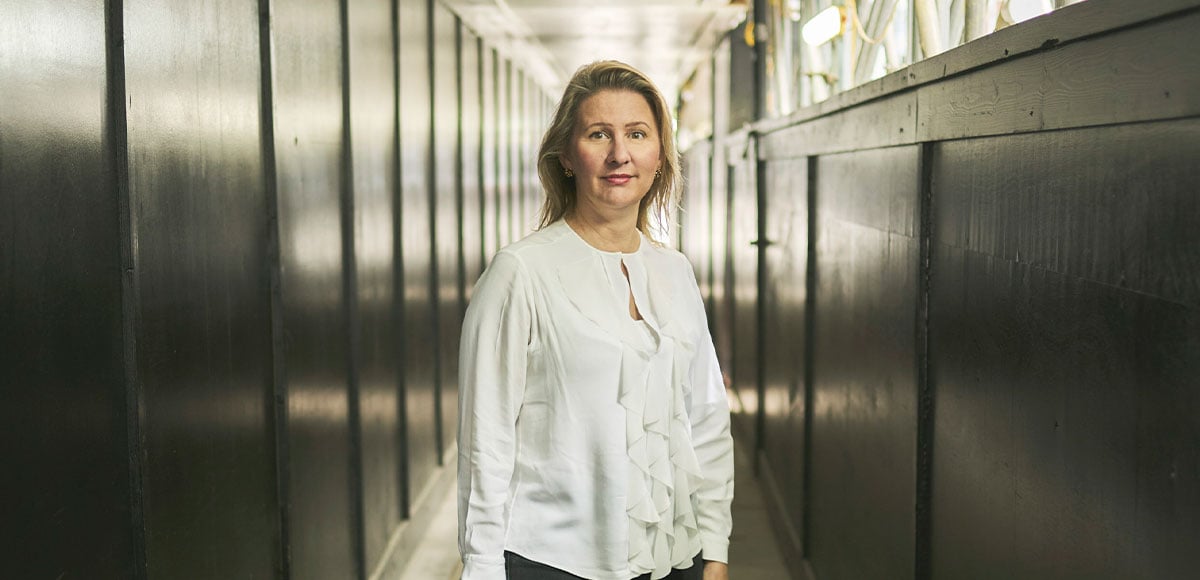

Shelley Copsey created tech to reduce downtime on construction sites, and her company FYLD recently secured £32 million of investment after taking part in two Connected Places Catapult-led programmes.
The Australian founder of FYLD (pronounced ‘field’) has developed an AI platform which converts short videos, audio notes and SMS texts gathered by operatives working in the field into intelligence to inform future project delivery.
Five years ago, the company participated in the HS2 Innovation Accelerator and last year it took part in the Department for Transport’s ‘AI in Transport: Enhancing Passenger Experience’ programme – both delivered by Connected Places Catapult.
Earlier this year, FYLD received £32 million from two investors (Energy Impact Partners and the Partech Growth Fund) to expand operations into America. The scaleup firm, which employs 50 staff, saw its annual revenue increase by 80% last year and aims to generate £100 million of revenue by the end of the decade.
“Construction professionals should not simply accept that 30% of time spent on site can be unproductive,” says Shelley. “Data lets you reimagine where and when plant and labour are deployed, and become more proactive.”
“Before the first boot goes into the field, our AI algorithms identify operational risks so managers can intervene early and drive a day’s operations to a safe completion. Our mission is to be the global reference platform for frontline intelligence.”
Trial partners become clients
Off the back of the HS2 Innovation Accelerator, the firm was introduced to Ferrovial and Kier – both now clients. “I pinch myself when I look at the companies who are choosing our technology,” says Shelley.
Funding received last year from the AI in Transport competition allowed FYLD to develop a business case and market strategy for its platform to be used for rail maintenance activities. The innovation gives rail teams real-time visibility of upcoming jobs, to help reduce blockages to work progress and the late hand back of completed track sections.
“Our work with Connected Places Catapult has helped validate FYLD in new markets,” says Shelley. “I was a bit of an outsider to the industry in the UK, and the HS2 programme in particular gave me the chance to build networks.”
Intelligence gathering made simple
FYLD’s platform encourages operatives to use handheld devices to gather intelligence about site progress throughout the day.
Once a large volume of data has been interrogated, the platform can schedule where and when plant and labour should be allocated in the coming days. Likely problems on the horizon can be highlighted to trigger an intervention, and managers can track site progress immediately to provide advice from afar. It is claimed the system can predict two hours ahead when sites are likely to experience idle time.
Logging site progress with mobile devices removes the need for operatives to complete forms by hand, or commit to memory the need to speak with a supervisor about issues later.
“The infrastructure world largely runs on paperwork and guesswork,” says Shelley. “There has to be a better way.”
Other clients making use of FYLD include gas company SGN, Yorkshire Water, and highway contractor Colas to better manage works and reduce time on site.
Asking operatives to use new technology can sometimes be difficult, but Shelley is confident her platform is accepted by many people because it makes their lives easier.
“They are often out in harsh environments with the sun beating down or in the rain, and some speak English as their second language; so why ask them to fill out 30 pages of paper before starting a job?”
She adds that some operatives are very keen to document the quality of their work in short video clips. “All of a sudden, field workers become more ‘visible’ in the organisation, and senior members of staff can provide positive feedback.”
Developing an aptitude for digital systems
Shelley grew up in Adelaide and studied commerce and finance at university, and joined accountancy firm KPMG’s graduate programme where she “learnt how to follow the money” while advising customers from family wineries to oil mining companies.

Shelley was poached by PWC and was appointed group commercial director in Sydney to explore how data products might change the nature of the company’s operations.
“I came to realise that if I could learn more deeply about technology, I could build a future in the infrastructure sector, which I love. That’s how I began the move towards what I do now.”
Eleven years later she joined consultant Data 61 – set up to help Australian industry navigate data technology – and took on a role leading new ventures and working with 900 PhD researchers involved in disciplines from cyber physical technology to AI.
“This was about learning by doing. I got to work with people and technologies that were really forward-looking and helped researchers to commercialise their work through a venture fund,” she adds. “It was about sharing ideas and helping others learn; and they were very generous with me.”
Shelley then went to work with one of Data 61’s spin-out companies GeoSLAM, based in the UK, and she relocated to Nottingham to help the firm to map infrastructure with pinpoint accuracy using robotics. She then joined the board of a tele-health company called Coviu Global to develop bio-vision technology for persons with sight loss.
Shelley joined FYLD in the summer of 2020 after receiving a call from an infrastructure investor asking her to develop technology for the emerging SME. “There was a little nugget of an idea of using video to change work in the field, and I ran with it; helping turn the company into what we do today,” remembers Shelley.
“One thing that’s common among many of the projects I’ve been involved in is technology making people’s lives better.”
Shelley is keen to help the next generation of entrepreneurs show bravery and launch or join emerging companies. “If a startup fails, it doesn’t matter; find some friends and join another one. Failure is not seen in the same light as it was 25 years ago.”
For more startup news, check out the other articles on the website, and subscribe to the magazine for free. Listen to The Cereal Entrepreneur podcast for more interviews with entrepreneurs and big-hitters in the startup ecosystem.
