

Bin there, weighed that: smart bins cleaning up food waste

Editor of IoT Insider and Automation News
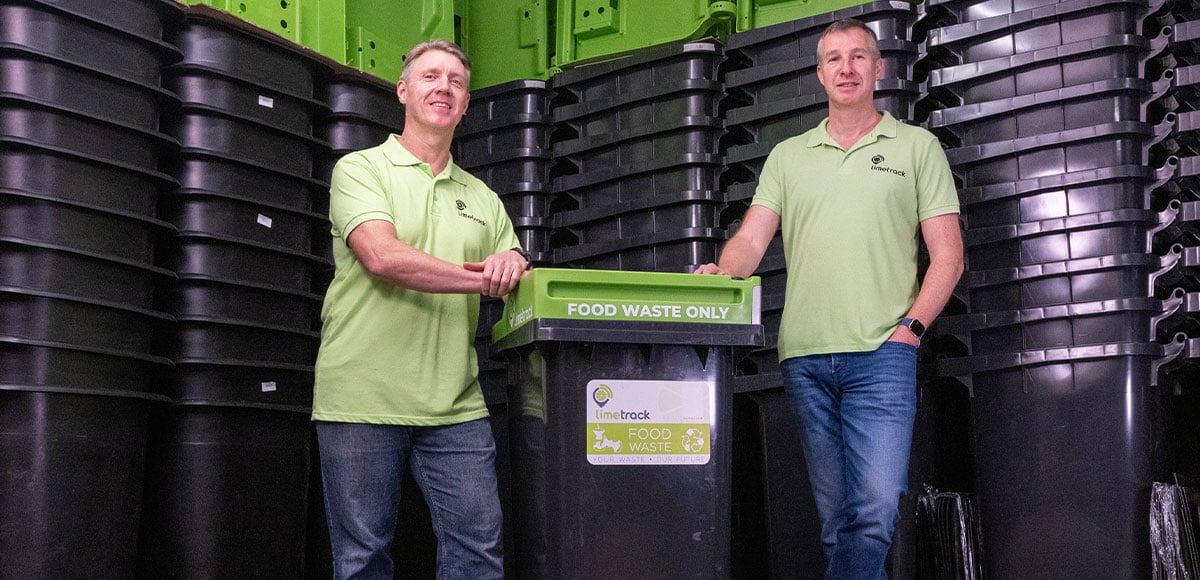
Where there’s muck there’s brass, and carbon emissions too. That’s the premise behind LimeTrack, a UK-based startup pioneering the use of so-called ‘smart’ bins which aims to help businesses measure exactly how many potato peelings, carrot tops, and chicken bones they are throwing away in real time.
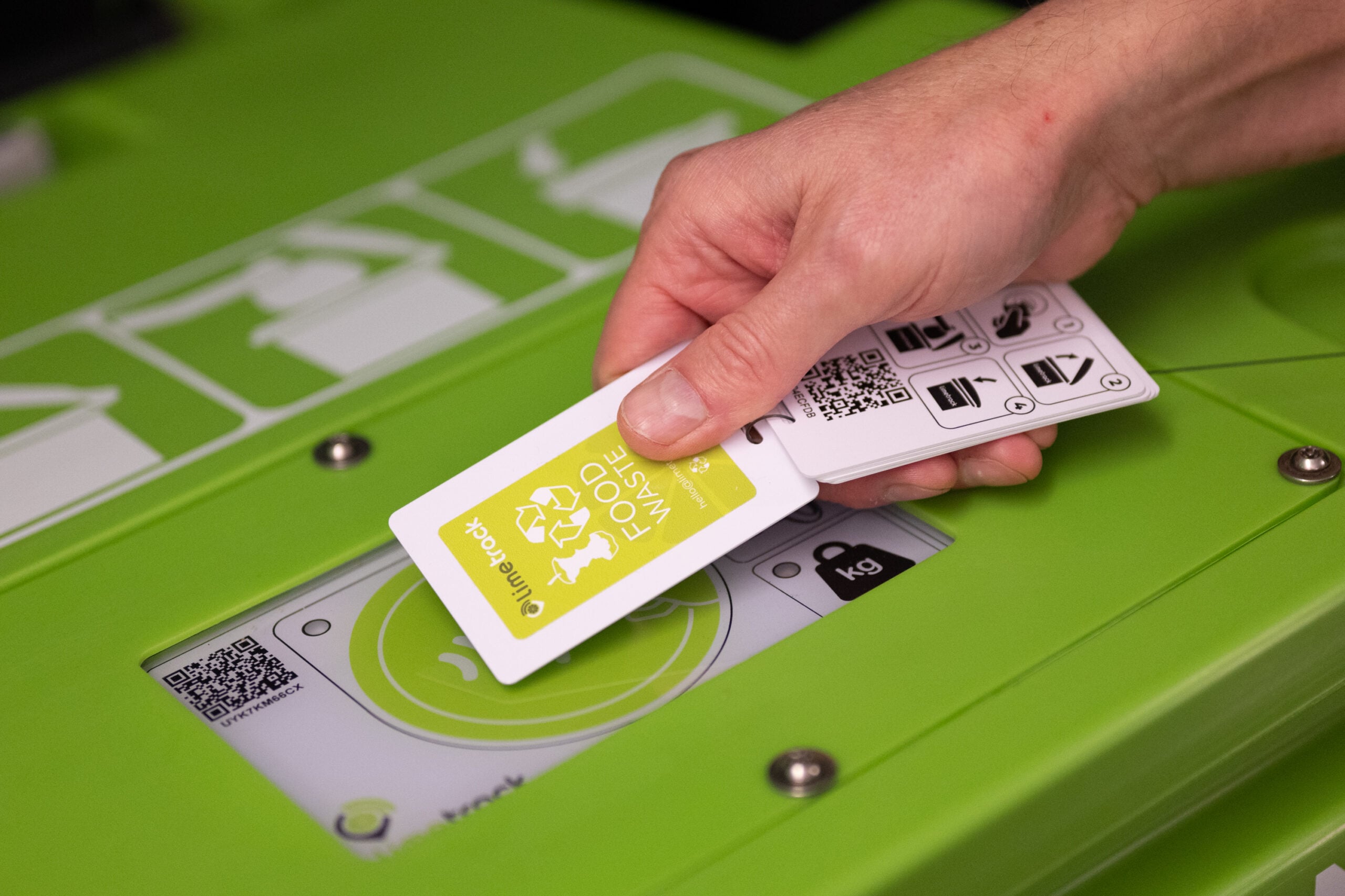
Whilst not perhaps the most glamorous of tech enabled gadgets, the standard 240-litre wheely bin is equipped internally with connectivity, weight sensors, and an RFID-enabled smart lock, giving restaurants, hotels, schools, and hospitals the ability to monitor what food waste they are binning in granular detail.
The company was founded in 2021 by serial entrepreneur Andy King and software engineer Cord Schneider in an attempt to both tackle a growing global problem and to help customers navigate new rules requiring organisations to separate and keep tabs on waste.
Last year the UK government introduced new laws requiring businesses with 10 or more employees to separate their waste into four categories for recycling: food waste, paper and card, dry recyclables, and residual waste. The rules are set to be extended to all UK businesses in 2027. Failure to comply is likely to result in hefty fines.
“Food waste is a massive problem globally so tackling it is a quick win for everyone in terms of the environment,” says King. “But for our system to really make a difference it’s got to be adopted widely. If it’s really good but only three people use it then it won’t make that difference. It needs to provide customers a cost saving and then they’ll adopt it. Then they’ll get the environmental benefit as well.”
Certainly, food waste is a growing problem for governments around the world.
According to the United Nations, every year around 25-30% of all food produced – some 1.6 billion tonnes – is wasted, amounting to around a billion meals per day. Scientists in the US have calculated that food waste uses up to 21% of fresh water, 19% of fertiliser, 18% of cropland, and 21% of landfill volume.
Nonetheless, King says that until recently, food waste has been overlooked as area for innovation or even measurement because, unlike expensive aluminium tins or even newspapers, it has little financial value.
“Food waste is a poor country cousin to most waste streams because it’s generally the cheapest to get processed,” says King. “So, if you’ve got food waste that goes to anaerobic digestion, you’ll be looking at anywhere between plus and minus £20 a tonne – so there wasn’t a big driver from the waste industry to measure it, sort it or do anything else with it really. It’s a customer problem, not a waste management problem.”
Yet if food waste is separated from other types of rubbish, it can suddenly become far more useful, he says. Whilst frequently put on compost heaps by gardeners, waste disposal companies are increasingly using anaerobic digestion (a process of breaking it down without oxygen) to produce biomethane which can be pumped back into the electricity grid as clean energy. Food waste processed in this way usually ends up costing half as much to dispose of as general waste, King says.
Spotting an opportunity, King and Schneider set up LimeTrack initially as a purely digital solution, built around an app that would allow customers to record food waste manually. But the company soon discovered that the flaw in that approach.
“We thought it would be brilliant,” says King. “But in our first engagement with the food and hospitality industry we soon found they haven’t got time to do anything additional, and they don’t like anything different. Hence, we had to create the smart bin to capture that data on our behalf without anyone having to get heavily involved with it.”
At the heart of LimeTrack’s system is weight-based measurement.
Unlike many smart bins that focus on fill levels or lid movement, LimeTrack’s bins use load cells to measure the weight of food waste deposited. King says this is because weight is the metric that matters for both cost and carbon reporting, and it underpins regulatory compliance across multiple sectors.
The bins also include RFID access control on the lid. This allows waste to be attributed not only to a site or organisation, but to specific users, tenants, or waste categories. This enables reporting against mandated food waste classifications such as preparation waste, plate waste, spoilage, and unserved food.
Each deposit is timestamped and linked to a specific bin and location. Data is stored locally and transmitted several times a day via Wi-Fi or 4G LTE to LimeTrack’s platform, giving customers near real-time visibility without constant connectivity or high-power consumption.
The bins are built to operate autonomously in challenging environments. Powered by standard batteries with a lifespan of up to four years, they transmit data only during short windows, keeping energy usage extremely low. While hardware failures do occur, as with any equipment used in waste environments, bins can be swapped out quickly and reconfigured digitally in minutes.
“We’ve got the load cells that provide a reading to a microcontroller which are our own custom designed PCB and that PCB also has Bluetooth but at the moment we only use that during set up,” says King.
“For commercial bins, about 20% to 30% of them are actually under cover in basements so there’s no mobile phone reception. So we either need Wi-Fi to connect it, which we prefer because it’s lower energy usage, or mobile phone signal that we can use as well. If it’s got neither of those we’re a little bit scuppered getting the data out.”
King says the company looked at other connectivity solutions including LoRaWAN but found that they were not widespread enough for their uses.
“So much infrastructure now has Wi-Fi connectivity built into it that it’s easy to get a little port or Wi-Fi unit that anyone can use so it’s not usually a problem,” he adds.
The company says that LimeTrack’s technology has been designed to integrate seamlessly into existing waste operations. Waste management companies collect the bins in exactly the same way as traditional wheelie bins, either emptying them on site or swapping them out for cleaning at depots. The majority of food waste collected through LimeTrack bins is sent to anaerobic digestion, where it is converted into biogas for energy and digestate for agricultural use.
But how secure are smart bins and could criminals use them as a way of hacking into customer networks? King says that the chances are low.
“We only generally have a kind of guest access, so we are not connected to customer servers whatsoever,” he says, adding that everything on the bins is encrypted and transmissions, only occur for about 20 seconds every six hours. Customers with any concerns about Wi-Fi connectivity also have the option to choose to connect via mobile phone signal.
LimeTrack says it currently has a fleet of around 200 bins in operation around the country, some of which have been operating for around a year.
The company operates on a subscription model, with bins priced at £13.95 per month, including hardware and data services. Customers scale deployment according to need, with larger organisations such as NHS trusts rolling out multiple bins across sites.
King says that, by putting food waste into dedicated bins and having it processed using anaerobic digestion which is more cost effective than having it collected as general waste, many of his customers have already made big financial savings.
“We’ve had restaurants that have reduced their food waste by five to 10% we’ve had we’ve had one hotel that we managed to reduce their collection costs by 50% after six weeks. And we’ve had a market where it’s a fresh food market, including your fruit and veg sellers. Because we’ve allowed them to know who’s putting food waste in the food waste bin and who isn’t. They’ve saved several 100 pounds on their food waste collection, on their kind of waste collection costs, because it’s moved from general waste to now food waste.”
And King says the data collected by the bins themselves is also proving useful to customers and helping to change the way they operate.
“We provide a weekly waste report which charts how much waste was generated in each category at each meal, breakfast, lunch, and dinner, Monday to Sunday. It will say it’s Thursday lunchtime where your problem is with plate waste. What were you serving? So, it’s helping navigate through the data, which we’ve now collected, which they never had before.”
He says the company is now integrating waste data with EPOS systems, linking waste patterns to menus and covers served. Over time, this will enable increasingly automated recommendations, helping businesses understand not just where waste occurs, but why.
As with many startups, King says that the largest challenge the company has faced so far has been raising funds.
“The landscape for raising equity investment has been very difficult,” he says. “The biggest challenge is to get enough funds to get the business to carry on surviving, but also to get us on our growth path of what we need to do. You know, we worked hard getting our Innovate UK loan approved, which was an eight month process, but now that’s done, we can really focus on getting the cost of our products right down, which then appeals to other customers, and then appeals to other investors. It’s a very nice business model that can grow quite quickly without consuming a huge amount of cash.”
This article originally appeared in the January/February 2026 issue of Startups Magazine. Click here to subscribe
