

The wearable technology helping heavy industry workers avoid dangerous exposure

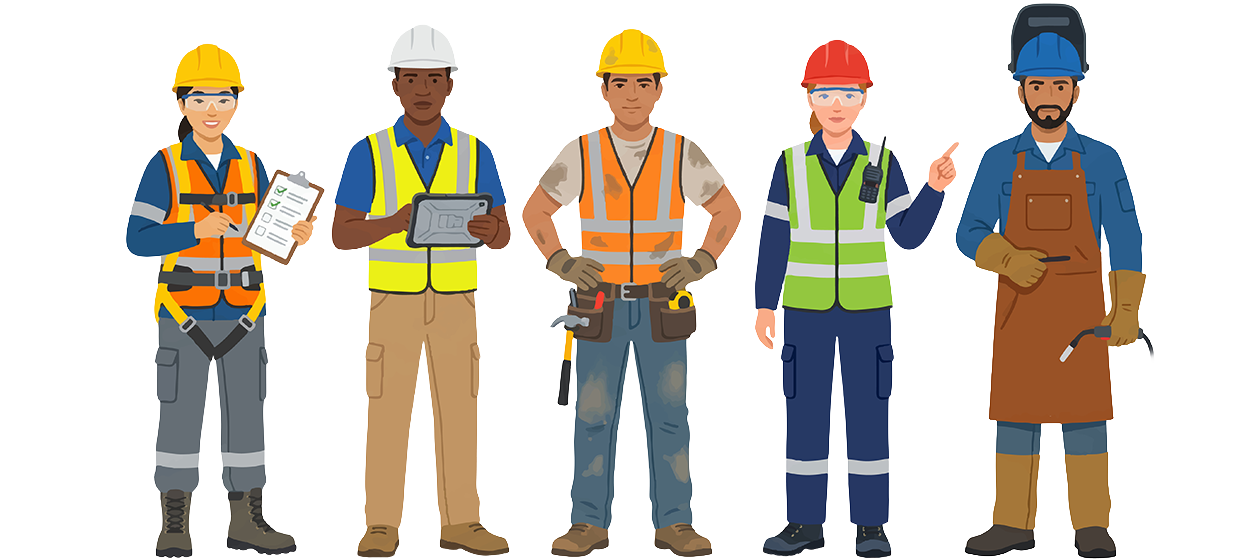
Heavy industry workers are frequently exposed to occupational hazards that lead to a high level of preventable injuries, illness, and fatalities.
The construction sector, for instance, has the second-highest prevalence of noise exposure among all industries, with around 56% of construction workers suffering from poor hearing by the time they retire.
In response, the industry has called for more measures to improve safety including investing in wearable technology to monitor safety.
SpaceBands, a UK-based safety wearable startup, is developing this type of technology to promote in these environments.
The startup has made a safety wearable that acts like a smart warning device for workers. The wearable senses vibrations, loud noises, and dangerous proximity to machines or restricted zones.
It then gives instant alerts through vibrations, flashes, and beeps, so people can move away or stop their action before injury.
Ronan Finnegan, Co-Founder, breaks down the technology in more detail: “The wearable device falls on the wrist for end users, primarily on construction sites, infrastructure sites, railways or manufacturing sites that are dealing with heavy duty materials,” he says.
“The user arrives at the beginning of their work shift, and they pick up a device in the same way they would pick up their protective equipment for the day and they simply wear the device. The workers are protected from these hazards,” he says.
The device works offline, requiring no internet connection or data. Finnegan says that once the device goes on charge is when the data is sent to the startups dashboard.
“Our charging station has a Wi-Fi connection, and then all of the data from that day is given to health and safety teams so they can make better decisions about keeping their staff safe,” he says.
“The dashboard will receive an alert to say that an individual user has breached the regulatory threshold for noise, for example, and then maybe the next day they will give them better hearing protection,” Finnegan adds.
The startup says its technology has already helped reduce workers’ exposure to certain hazards. A company case study found that one customer reported an 80% reduction in vibration exposure after one year of using SpaceBands.
How the startup differs
Finnegan says that the technology stands out from its competitors because SpaceBands works automatically.
Their competitors use tool-tagging which means users have to manually update the device on what they are doing, which leads to more inaccuracies in safety reporting.
“Most of our customer base are users who have trialed our competitors technology and later have moved to us. They end up using our products because it’s so easy to use, the device just has to be turned on, and then you can access it,” he says.
A well-renowned founder
Finnegan has been a serial entrepreneur since the age of 17, and his experience led him to launch SpaceBands in 2020.
“It was six weeks after the pandemic. Myself and a friend from school sat down to build a contact tracing wearable,” he says.
Finnegan’s friend was Harry Kimberley‑Bowen, the startups other Co-Founder.
“Contact tracing was in all of the headlines on the papers. People were unsure how social distancing was going to be implemented and how contact tracing was going to be tracked, so we built a wristband device that would alert users when they broke a two-metre distance and store contact tracing information,” he says.
The wearable allowed business to stay open, according to Finnegan, and by the end of 2021 they had sold 20,000 devices.
Once the lockdown restrictions had come to an end, the device was no longer needed. This incentivised Finnegan to turn to its customer base to see if they can tweak their device for a certain issue or industry.
“Big organisations told us that health and safety is often a sector that is left behind by technology. They told us that it’s hard to uncover the long term exposure to certain hazards for individuals,” he says.
Benefits and growing recognition
For Finnegan, the benefits of his wearable are fairly obvious for workers as they can avoid the repercussions of these hazards.
“Workers don’t lose their hearing, they don’t develop white finger or arthritis, or they avoid getting run over by the forklift,” he says.
Finnegan says that the device is the most affordable solution on the market, costing £25 per month, making it less than a pound a day to keep staff safe.
“The regulatory fines, investigations, insurance claims, and all of these other costs that are associated with damages or accidents way surpass the cost of our devices,” he says.
With its benefits comes growing recognition. The startup has now started working with companies such as Network Rail and other undisclosed manufacturing organisations.
Finnegan also says that they have won the most innovative product in Wales by the Welsh Government.
“We’ve also raised investment. We’ve raised over £2 million since 2022, and we are supported by US investors, UK investors, and some private individuals,” he says.
Overcoming setbacks
Finnegan says that despite the growing success, the company has experienced setbacks like any other startup.
Though the product is not working and stable, Finnegan says it took them a long time to achieve that.
“It took us two and a half years to build this product. In that process, we effectively threw away a whole product and started again after having 18-months of wasted development time because the product wasn’t as accurate and reliable as we wanted it to be,” he says.
“To overcome this, there were lots of clever things happening behind the scenes in the software and the firmware departments to ensure that the product is accurate and reliable,” he says.
The future
Finnegan shows no signs of slowing down the success of SpaceBands, with a vision to service the largest construction companies in Europe.
He also says that there are plans underway to launch a new product mid-2027. “This product will improve the coverage that we have for hazards in industrial settings. We haven’t yet released what those features are going to be, but the product will effectively cover all injury accident claims on a construction site,” he says.
“We’re confident that there’s kind of nothing that can go wrong in the business at that stage,” he says.
For more startup news, check out the other articles on the website, and subscribe to the magazine for free. Listen to The Cereal Entrepreneur podcast for more interviews with entrepreneurs and big-hitters in the startup ecosystem.
