

Kumulus Water: turning air into water

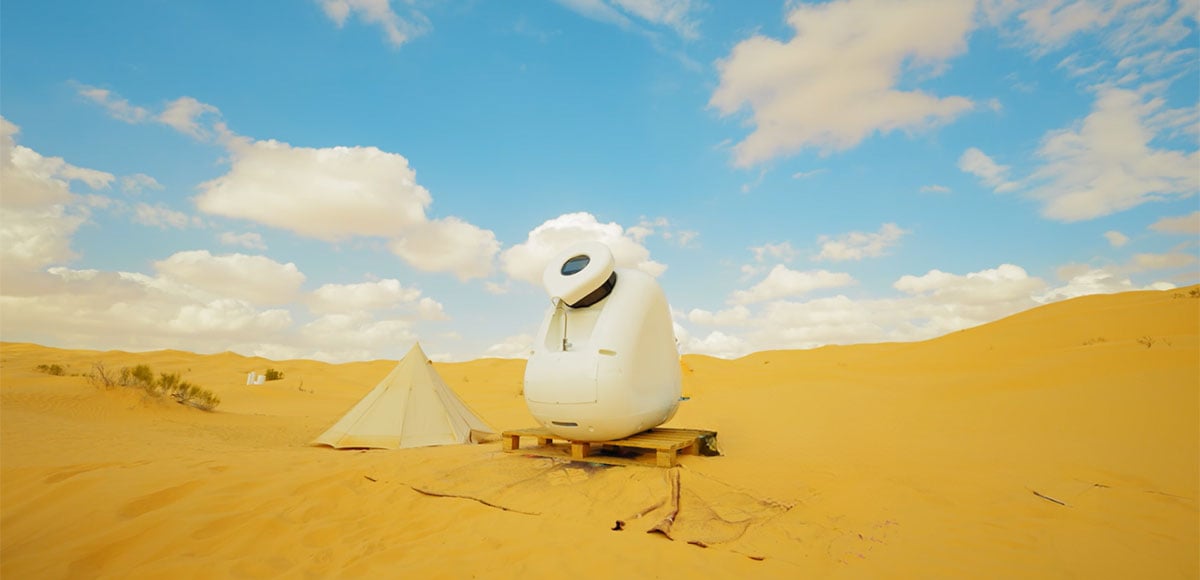
The concept of being able to create water out of thin air sounds like magic, but what if I told you, it’s already a reality?
Driven by a mission to revolutionise access to drinking water by making it more sustainable, more local, and easier to access, co-founders Iheb Triki and Mohamed Ali Abid created Kumulus Water.
The inspiration for Kumulus came from a trip the founders took through the Tunisian desert. “In a place far from infrastructure, the only option was transporting and consuming water in dozens of plastic bottles. That contrast – something as essential as drinking water being dependent on heavy logistics and plastic – stayed with me. Kumulus was born from the question: what if water could be produced locally, from the air, without the supply chain?”
KUMULUS WATER
Kumulus Water is building atmospheric water generators: machines that turn the humidity in the air into fresh drinking water.
Discussing the business with Iheb Triki, Co-Founder and CEO, Kumulus Water, he explained: “We provide a local, reliable alternative to bottled water and complex logistics, especially in places where water access is constrained, costly, or inconsistent.”
Kumulus is primarily focused on B2B use cases – serving off-grid sites, such as construction sites, solar farms, factories, and industrial sites, as well as public spaces – with a model designed to make adoption simple and predictable.
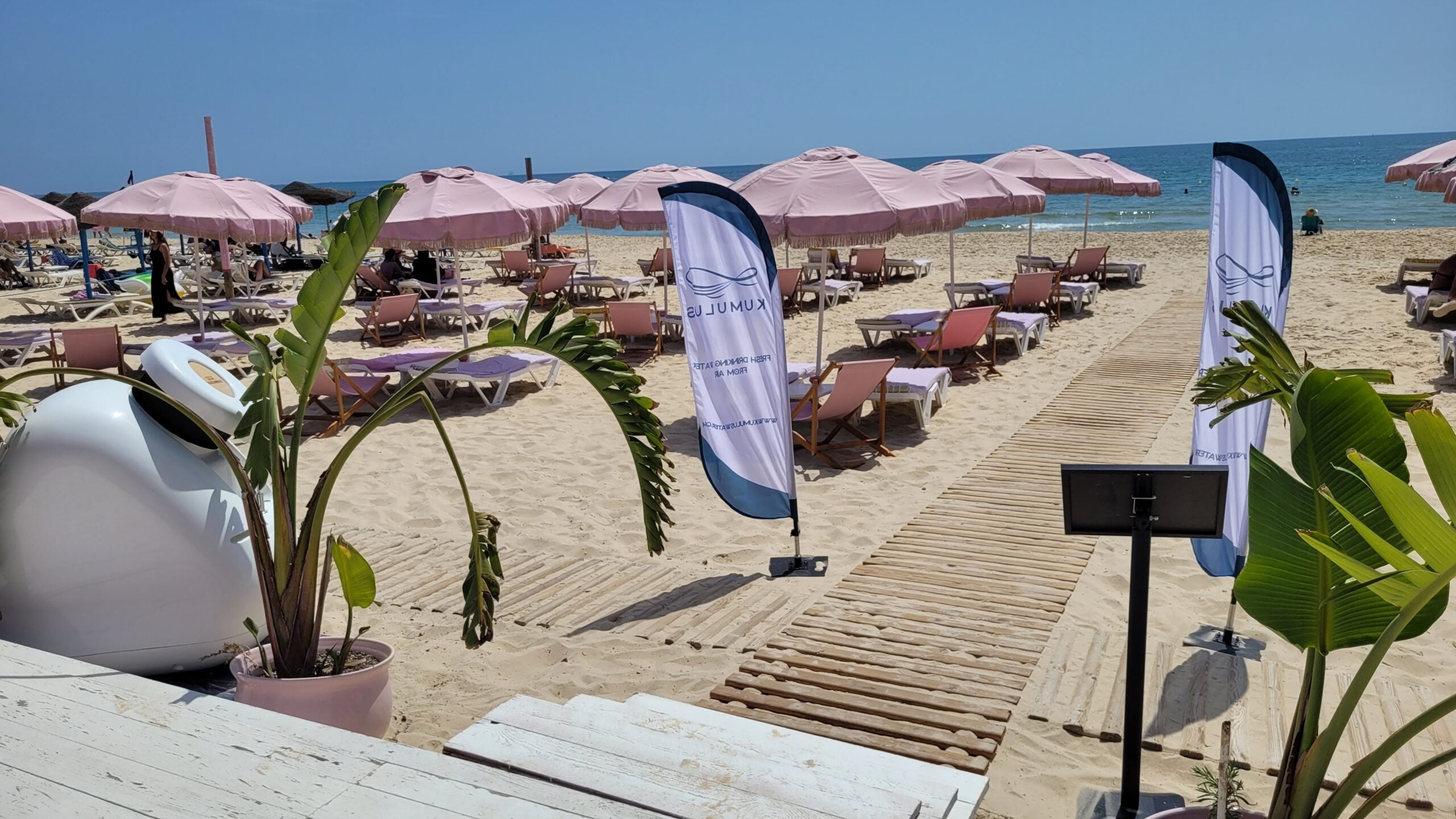
“Our mission is to revolutionise access to drinking water by making it more sustainable, more local, and easier to access. We aim to reduce the environmental and logistical burden of traditional water supply – especially plastic waste and transport emissions – by producing drinking water directly where it’s needed.”
HOW DOES IT WORK?
Kumulus Water’s solutions capture humidity from the air and convert it into clean drinking water.
Fans draw in humid air, filling the reservoir. Once it is filled to a certain level, the condensation process begins. The trapped air is cooled using a coolant, which causes the water vapour in the air to turn into liquid water. This water is then directed through a multi-stage filtration system.
The multi-stage filtration system involves:
- Particle filter – a particle filter removes dust, particles, and other impurities to ensure optimal water quality.
- Carbon filter – the water passes through a carbon filter tube that captures organic compounds, removes odours, and improves overall taste.
- Resin filter – the water flows through a resin filter which eliminates unwanted ions.
- UV filter – the purified water finally passes through UV sterilisation, which helps to neutralise any remaining microorganisms present.
The final step of the process is mineralisation. The water passes through the mineraliser tube, which contains mineral rocks composed of calcium and magnesium. These key minerals are added back into the water to achieve a balanced taste, enhance water quality, and provide nutritional benefits.
“The experience is intentionally simple: users can dispense water directly from the machine, and the system is designed to be intelligent and connected, enabling remote monitoring and easier maintenance,” Triki explained.
Kumulus Water currently has three solutions, as water needs aren’t one-size-fits-all.
- Amphore – this model has been made for everyday B2B use cases, ideal for offices, hotels, and hospitality environments. On average, it creates 30 litres of water a day, and uses 0.4 to 0.8kWh/litre, dependant on climate conditions.
- Boks – this model is ideal for off-grid sites with limited access to drinking water, such as construction sites and ports. The Boks also creates 30 litres of water a day, and uses 0.4 to 0.8kWh/litre, dependant on climate conditions.
Water Cooler – the water cooler is a complementary product that can be directly connected to Kumulus Water’s other products, as it comes with a large reservoir and provides chilled water.
Discussing the future of the products, Triki revealed: “We are developing a large-scale solution called the Titan, which is built for higher-demand or rapid-deployment contexts – think industrial or commercial sites, emergency response, large-scale events, and off-grid locations where scale and autonomy matter.”
SOLVING PROBLEMS
In the modern day, water isn’t as simple as one may think. There are many issues surrounding it, of which Kumulus is trying to fix. The first is access and reliance, ensuring there is reliable drinking water in places where networks are limited, expensive, or unstable.
Kumulus’ solutions reduce the dependence on transporting, storing, and managing bottled water in a variety of environments, as well as cutting single-use plastic and reducing emissions tied to bottled water supply chains.
“Sustainability is embedded in the core logic of Kumulus: producing water on-site removes an entire bottled water supply chain. On the product side, we design for reliability, maintainability, and monitoring, so performance remains consistent over time and servicing is efficient,” Triki explained. “We also take compliance and quality seriously, with recognised standards and third-party testing approaches supporting safety and performance expectations.”
Kumulus is not the only player in the game when it comes to atmospheric water generation, however, it has an edge in the industry.
Triki explained: “Our key differentiator is water quality: we deliver EU-standard quality water, supported by certification, and we go a step further with mineralisation to ensure a consistently pleasant, premium taste.
“Just as importantly, we don’t simply sell machines – we provide Water-as-a-Service, which makes adoption easier for customers through a streamlined, service-led model that covers performance, monitoring, and ongoing support.”

GO WITH THE FLOW
Building a startup is difficult, and building hardware even more so. Triki explained some of the challenges Kumulus has faced on the journey so far. “Building hardware that operates in diverse real-world conditions is always demanding – especially when you’re balancing performance, quality, cost, and operational simplicity.”
Education when it comes to new technologies can also be a barrier to making it into new markets: “Another challenge is that new technologies sometimes require customer education and trust building. We’ve addressed this by doing what works best in water: pilot deployments, strong monitoring, tight iteration based on feedback, and credible partners and advisors.”
However, with the challenges, come the highlights, which make the journey worthwhile.
So far, “highlights include strong early deployments across different contexts – from construction sites to airports to CSR projects – and growing recognition through innovation ecosystems and partners.”
There has been a lot of support for the startup, solidifying that the work it is doing is truly impactful.
Triki said: “Another key milestone has been building a serious support structure around the company, including strategic and scientific committees that bring deep expertise from water, industry, and tech.”
WHAT’S NEXT FOR THE COMPANY?
For Kumulus, the future is all about scaling, both the range of products, and as a business.
Triki discussed Kumulus’ plans for the next year: “We’re focused on two things: scaling in our highest-priority markets – especially Indian Ocean islands like Mayotte and Mauritius – and scaling our product range, with our next capacity steps targeting ~150L/day for larger workplaces and ~1,000–2,000L/day for high-demand sites. In parallel, we’re focused on strengthening partnerships (commercial and impact), and building the operational backbone required to scale a ‘utility-like’ service reliably.”
For Kumulus Water, the road ahead is not about chasing rain, but about building systems that work whatever the weather.
This article originally appeared in the January/February 2026 issue of Startups Magazine. Click here to subscribe
