

IXI: spec-tacular innovation

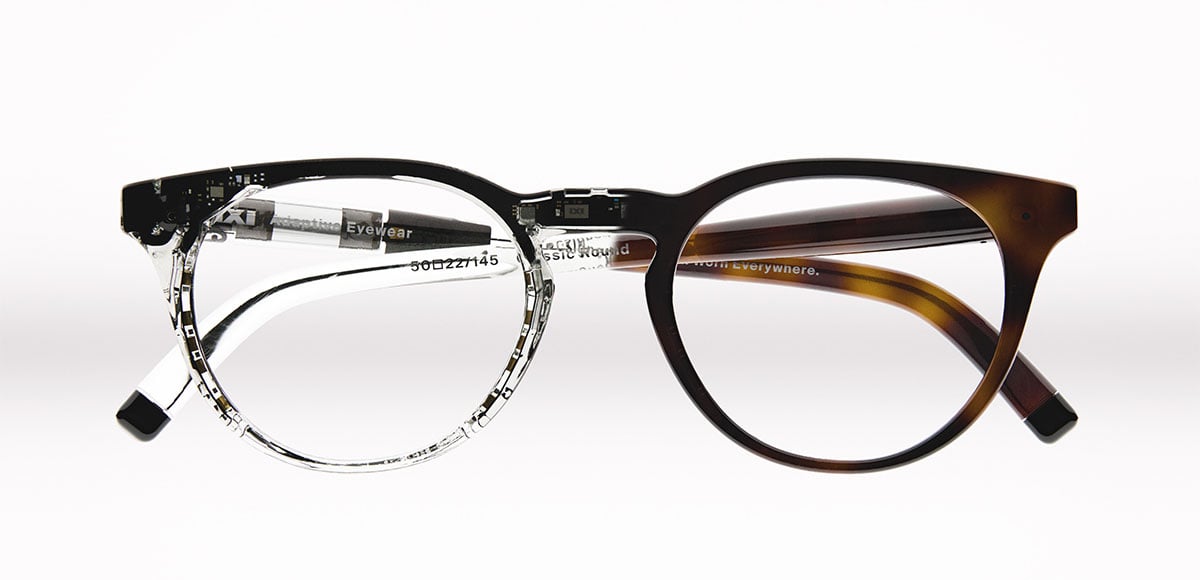
From startups to big tech, smart glasses are being launched at a rapid pace, and they are gaining popularity fast. The market is projected to grow from $1,223.7 million in 2025, to $4,129.3 million by 2030. However, with this technology developing at such a fast rate, why has the eyeglasses industry remained stagnant, even though technology has improved? Why are smart glasses all the rage, but the everyday pair of spectacles haven’t improved, even with advancements in technology?
These are questions Niko Eiden and Ville Miettinen, Co-Founders of IXI, are aiming to put behind us. IXI is developing the world’s first autofocus eyeglasses. In the words of Ville Miettinen, Co-Founder and Chief Algorithm Officer (CAO), “We’re not doing smart glasses … we’re making glasses better.”

IXI
IXI’s innovative glasses may be smart, but they aren’t conventional ‘smart glasses’. The startup is on a mission to overhaul the traditional eyeglasses industry with cutting-edge technology, in order to make the glasses people need to be able to see, a whole lot clearer.
Eyewear technology hasn’t changed or developed for a very long time, however, as technology is developing, why is this still the case?
Niko Eiden, Co-Founder and CEO, said: “We are trying to use technology to actually fix vision, instead of putting stuff into eyewear as a new wearable platform. We are trying to make better eyewear.”
The Co-Founders are perfectly placed to be working on such technology. Eiden has experience working on different types of optical, camera, and mobile devices for quite some time. His career has spanned across technology, having worked at Nokia, Microsoft, and the European Laboratory for Particle Physics. His work at Microsoft consisted of running the Forward Labs team, developing future-looking products, and learning to build stuff fast.
Prior to IXI, Eiden co-founded Varjo (alongside Miettinen and others), a manufacturer of VR, AR, and mixed reality headsets, developing high-resolution devices offering clarity comparable to the human eye. Miettinen has been coding since the age of six, and has been doing so professionally since the age of 16. At 19, he founded his first startup Hybrid Graphics, which was later acquired by NVIDIA. He then founded many more startups, all in the realm of computer graphics and real-time computer vision.
The pair met around nine years ago, and the rest is history (in the making).
With the pair’s experience in eye-tracking and ocular technology, they decided to start IXI to truly change the eyewear industry.
Looking at why IXI was founded, the pair likened it to camera technology. “There was fixed focus cameras 100 years ago, then we had manual focus cameras, and now every camera is automatically focusing based on what you’re pointing to … It [IXI] feels like the Kodak moment for the industry. Something fundamental is happening. Traditional film has been there for 100 years, and now there’s a new kid in town trying to change stuff.”
How it works
The existing approach to eyewear has remained stagnant. Eyeglasses work by correcting the way light enters the eye so that it focuses properly on the retina, the light-sensitive layer at the back of the eye responsible for forming images. Normally, light rays should converge directly on the retina to create a clear picture, however, in people with vision problems, such as short-sightedness or long-sightedness, the light focuses either in front of or behind the retina.
The lenses in traditional eyeglasses refract incoming light rays to compensate for this misfocus.
- Concave lenses, which are thinner at the centre, spread light rays outwards and are used to correct short-sightedness.
- Convex lenses, which are thicker at the centre, converge light rays and are used for long-sightedness.
There are also bifocal or progressive lenses, which correct multiple vision distances, by splitting the lens of the eyeglasses.
Now looking towards IXI’s groundbreaking technology, the startup is using a tuneable lens system that emulates a traditional lens by using liquid crystal.
Eiden explained: “If you think of a Cassio calculator, those displays were made with liquid crystal, where an electrical field flipped liquid crystal on and off. When it flipped it became black. When it turned off, it became transparent. We are using liquid crystal in a slightly more sophisticated way.
“We have an electrode structure that can flip these liquid crystals in tiny amounts and in a totally controlled fashion. When light goes through liquid crystal, it’s fast. We can tilt the liquid crystal in different ways to manipulate the speed of light, and in that way, we can create a wave front that emulates the traditional lens. It’s a very thin layer of liquid crystal, and there are no moving parts, so it’s all encapsulated inside of the lens.”
Miettinen continued: “It should be mentioned, the process of changing the curvature is extremely fast. We’re talking about low hundreds of milliseconds.
“In order to control something like this, we of course could have gone for manual control where you push a button. But we decided that we’re going to make it completely automatic, and auto-focus based on the distance at which you’re focusing.
“To figure that out, we’re using the convergence of the eyes, so we’re tracking the rotational angles of the eyes. When you’re looking near, they’re converging. At this time, when you’re looking far, they’re basically parallel. And this is pretty tricky to do.”
The eye tracking components of the eyeglasses sit on both sides of the lenses, the compute happens at the nose bridge, and in the temples lie the tiny batteries that power the glasses. The glasses have no visible electronics, as this is all embedded within the frames, making sure they don’t look like a gadget, but have the tech power of one.
Even more interestingly, through its technology, the glasses will be able to constantly measure eyes in a way that hasn’t been done before. In a world that is obsessed with data and tracking health markers, IXI can put this power into eye health.
Eiden explained: “Nobody’s measuring blink rates at the moment, but it provides direct indication on whether we’re focused on something, or relaxed, or stressed. It’s a very simple measurement to do for us, and if you can combine it with a little bit of contextual information, it might have value for it. We can see where a person is able to focus, and if your eyes get tired in the afternoon, so might need a different amount of optical power. That’s something you could do with these type of glasses.”
The challenges
As many hardware founders can attest to, building hardware is hard.
When asked about the challenges of the journey so far, Miettinen said they were “mainly technical.”
“If we think about the product, the three big challenges have been creating the liquid crystal lens, building the eye tracking technology, and cramming all of this into designer eyewear.”
Eiden elaborated: “When we started off making the lenses, we looked at traditional ways of making liquid crystals.”
He explained that big liquid crystal factories have slowed down production, as liquid crystal displays – like those used in TV screens – are no longer in high demand.
The pair explained: “When we reached out and began exploring potential iterations with them, we realised that not only was their capacity limited, but their iteration speed also couldn’t meet our needs.
“Since speed is crucial for us, we decided to develop our own liquid crystal development method from the ground up.”
Eiden elaborated: “It took two to three months for each batch of lenses that we could produce, and it was so frustrating if we made a mistake, or there was an error in our designs, as we got nothing, and would have to wait another two and a half months, which is an eternity in the startup world.
“We came up with a completely new manufacturing method based on very novel femtosecond lasers … Today we can produce our own lenses, and our cycle went from two and a half months to 24 hours. This was one of the big things that changed the game, and has allowed us to push the designs much faster and further than any other team out there.”
Another challenge has been the AI training side of the eyeglasses. The glasses have ultra-low power consumption, with very small batteries fitted. The CPU power of the technology inside has a fraction of the processing power than a mobile phone, and a tiny bit of memory, compared to “maybe a million times less than a mobile phone.”
“Every software algorithm we had to design with these constraints, so we can’t use existing approaches, everything had to be done from scratch,” explained Miettinen.
Figuring out the eye tracking technology inside the glasses has been a challenge. The tracker shoots lights from LEDs, and captures them with photodiodes, getting bounced from your eye. This happens in 940 nanometre infrared, so the wearer doesn’t see that light.
“Unfortunately, everyone uses 940 nanometre for everything. So if you open up your iPhone and try to take a picture, it is going to shoot 940 nanometre light for facial recognition or for 3D modelling. All light sources, starting from the sun, and then all the indoor LED lights, they’re all blasting in that same frequency, so we get tonnes of noise and garbage into the signals, and need to get rid of those,” Miettinen said.
Having worked on the R&D for almost four years, the startup is now ready to begin the switch to commercial activities. Although, an exact date of release has not been announced.
The highlights
Whilst the startup was founded in 2021, it stayed in stealth for a long time, having only announced itself publicly alongside a funding round in Spring 2025.
Miettinen reflected on that moment: “When you work on something and deal with the problems every day, you don’t really see it as an outsider. Everything becomes normalised. Then when people were seeing it for the first time, they were completely blown away. I love seeing people’s faces when they come down to our lab and see a liquid crystal lens changing for the very first time in their life. They’d say ‘Wow, that’s magic.’ And it is quite magical. The reception has been very nice.”
Already looking ahead to the next highlights they are expecting, Eiden said: “I think the next step is going to be when you walk on the street and see the product being worn by somebody. That is the next highlight we’re looking towards.”
Looking ahead
As has already been mentioned, the startup is ramping up its capability to produce the product, and is slowly transitioning into a commercial model.
But with that comes new challenges that will have to be overcome. As a product in the medical device category, the glasses will need to comply with different regulatory bodies, so there will be a lot of work in making sure the glasses are compliant, and then carrying out clinical trials.
IXI is firstly looking at the European and UK markets for product rollout, but this will most likely expand as the company grows and gains customers.
This article originally appeared in the November/December 2025 issue of Startups Magazine. Click here to subscribe
