

Entrepreneurship with purpose: inside the EASI Showcase


On a January evening in east London, entrepreneurs, liverymen, and mentors gathered at The Trampery Old Street for the fourth EASI Showcase – a celebration of early‑stage enterprises using business as a force for social and environmental good.
From the outset, the tone was clear: this was not a standard startup pitch night. EASI’s cohorts aren’t just chasing growth; they exist to improve the world.
In a video address from overseas, Charles Armstrong, Founder of The Trampery, framed EASI within a much longer story of social entrepreneurship and London’s livery movement: “I believe that entrepreneurship is humanity’s most powerful mechanism for change, but we urgently need a culture change so that the most talented entrepreneurs focus on innovations that benefit society and the environment, rather than solely seeking to become wealthy.”
Armstrong positioned both EASI and The Trampery as catalysts for that culture shift, highlighting free workspace and support for under‑represented founders and noting that Old Street has housed some of the world’s most influential purpose‑led businesses.
The livery connection – often hazy to outsiders – was unpacked by Mark Huxley, Past Master of the Worshipful Company of Entrepreneurs. He explained how historic guilds have evolved into powerful philanthropic networks: “We are basically historic trade associations and guilds … we’ve grown and evolved out of that now much into the charitable work.”
That philanthropic engine underpins EASI’s model.
From one grant to a whole cohort
Judy Hadden, Founder of EASI, traced the programme’s origin back to an encounter at The Trampery with Norwegian startup No Isolation – whose robots help sick children stay connected to school: “That was my inspiration … it’s business, but also trying to make a difference. We all have that ability to do something really different.”
EASI began as a single £10,000 grant, but the first cohort changed everything: “When they pitched for the award, it was so difficult to choose between them … we decided almost on that spot that we would support the whole cohort.”
Today, EASI combines grants with mentoring, masterclasses, access to experts and the wider livery community, and has supported 22 early‑stage enterprises with its fifth cohort now launched.
When a 17th‑Century livery meets medtech
The Worshipful Company of Needle Makers offered a vivid example of livery reinvention. Immediate Past Master Dr Sue Summers described their shift from representing needle manufacturing to backing advanced medical technologies: “It became clear that we should be more closely associated, not only with needle making, but with needle usage … biosciences, the life sciences, medicine, and vaccines, areas where needles or innovative alternatives to needles play a critical role.”
This led to the Advanced Needle Technology Award and a close collaboration with EASI, pairing technical and commercial mentors around ventures (and award winners) like Cascade Medtech, which is reinventing how surgical drains are secured.
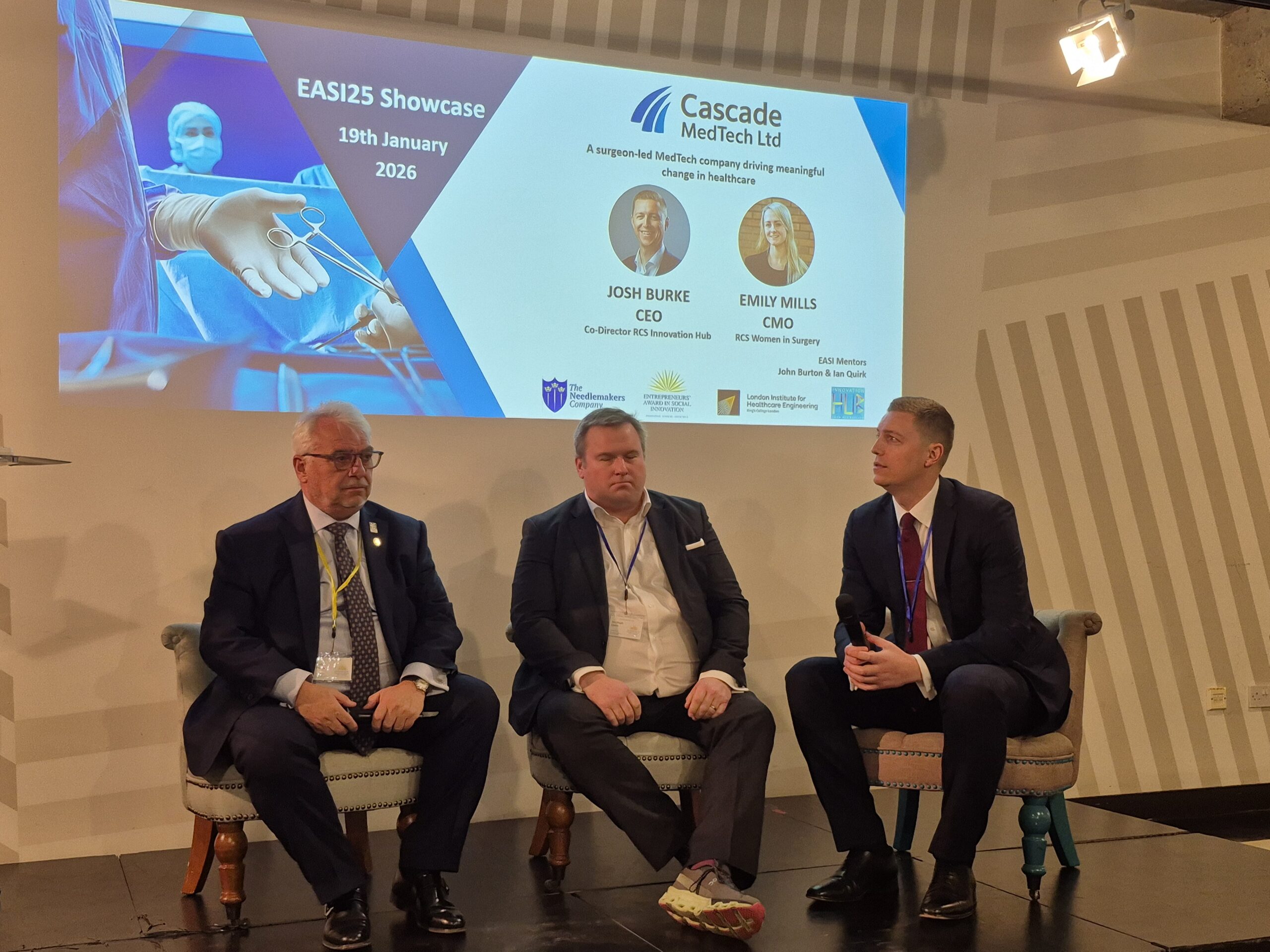
Surgeon‑Co-Founder Josh Burke highlighted the scale of the problem – and the conservatism of existing practice: “For 100 years, we’ve sutured [drains] into place … that process hasn’t changed for a century. They’re really painful … some of them migrate … and get retained in the abdominal cavity.”
Cascade’s needle‑free, clip‑based device aims to reduce pain and complications while opening up rich, underused post‑operative data.
Climatetech in the real world
The evening event showcased the breadth – and grit – of EASI’s latest cohort.
Carbon Cell: making polystyrene obsolete
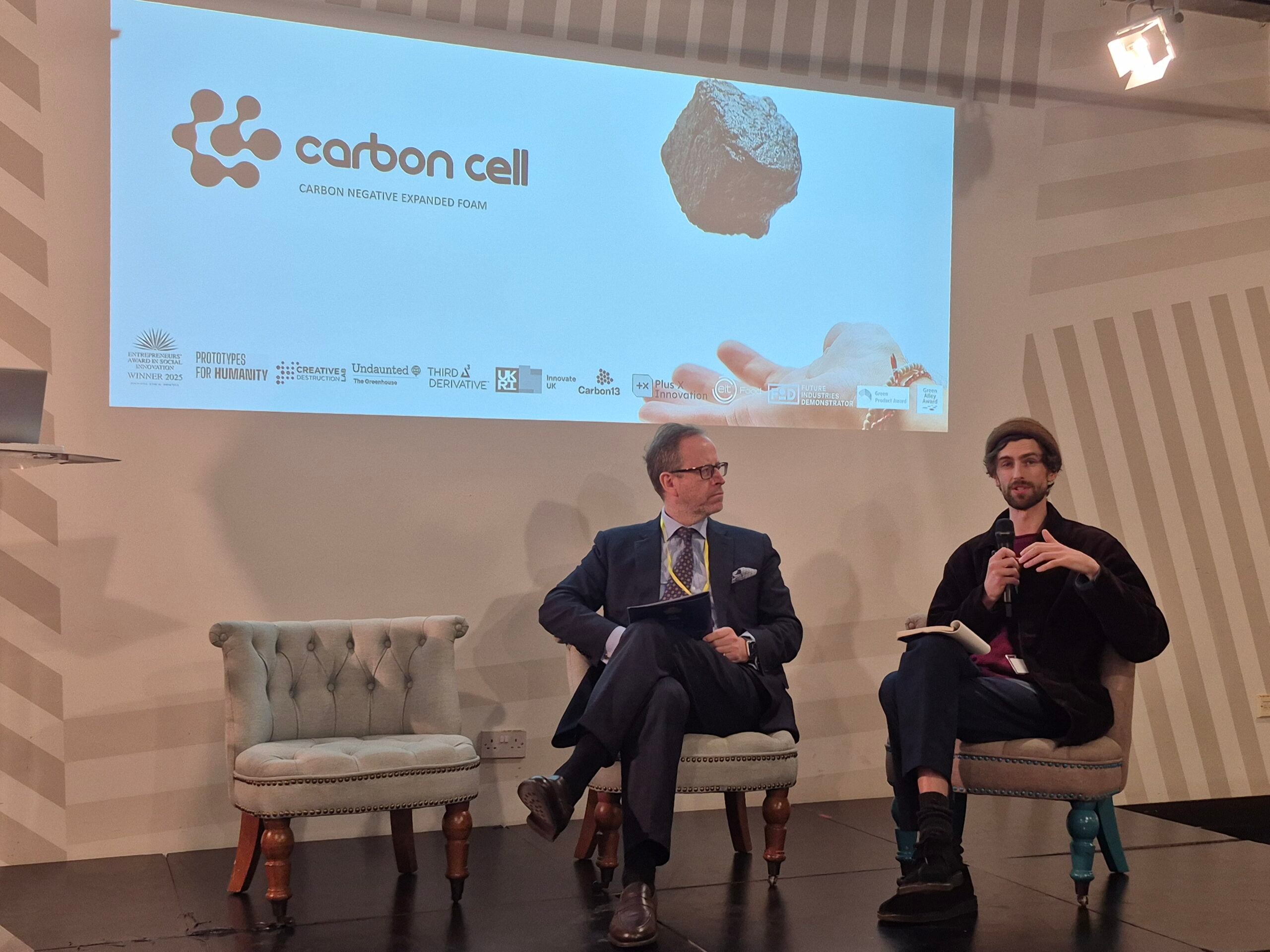
Carbon Cell is tackling one of the most ubiquitous, hated materials in packaging: expanded polystyrene.
“Last year, we produced 11 million tonnes of expanded polystyrene. That’s enough foam to cover the whole of the European continent, 50 millimetres thick,” said Eden Harrison, Co-Founder.
Their biochar‑based foam is carbon‑negative, structurally strong and mouldable, targeting insulation, acoustic panels and fabrication foams: “For every kilogram of our material that we’re making, we’re helping to pull out 0.96 kilogrammes of carbon dioxide from the atmosphere.”
Winners of EASI 25, the £10K grant helped them graduate from “microwave” experiments to industrially relevant heat‑press tooling – unlocking trials with European manufacturing partners.
Enstic: listening to the world’s smallest climate actors
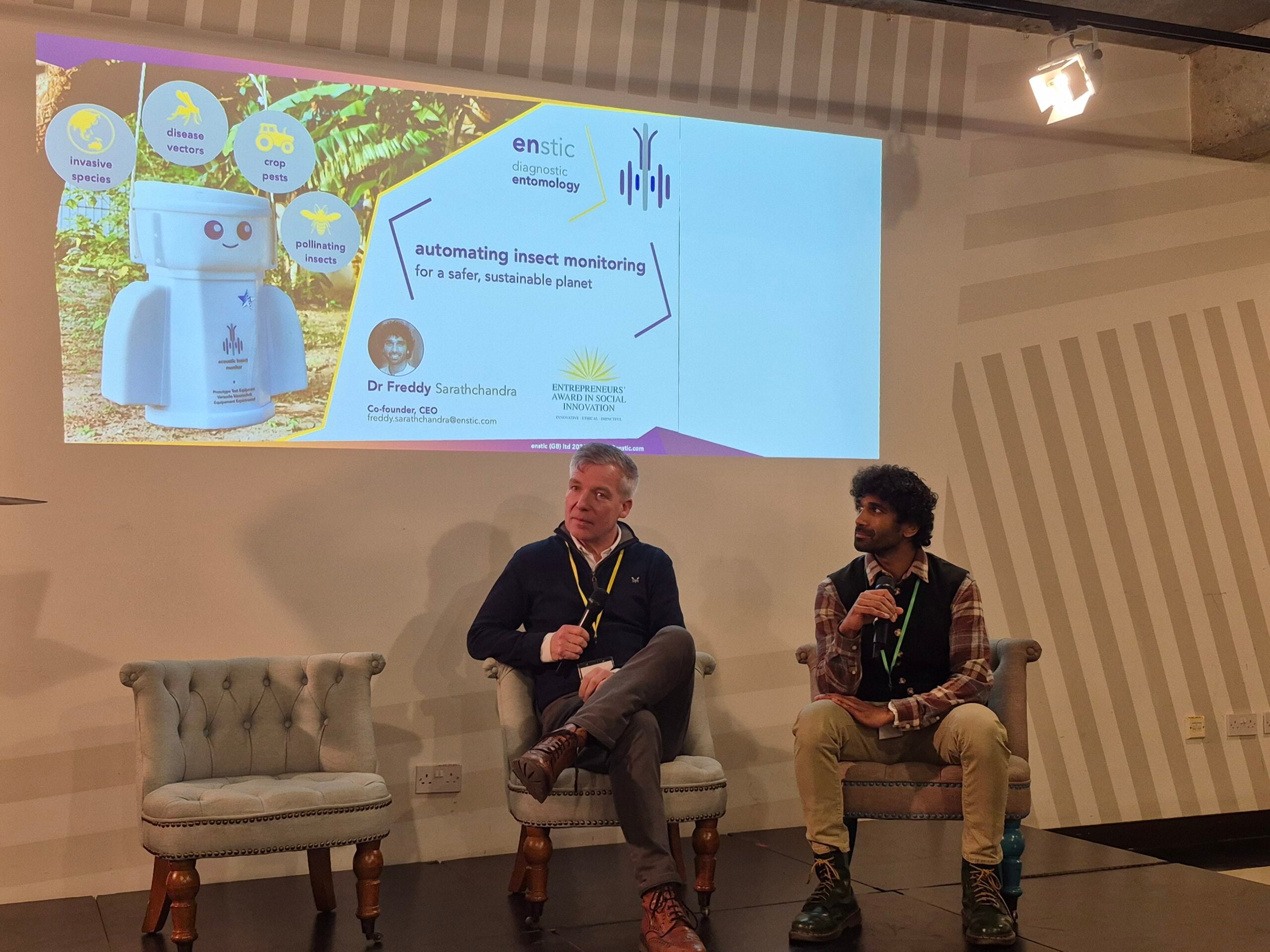
Former automotive sound engineer Freddy Sarathchandra, Co-Founder and CEO of Enstic is using bioacoustics to automatically detect insects and forecast their impact on crops, health, and biodiversity: “The world’s most recognisable sound is arguably the most annoying one, that of a mosquito … they sound different depending on what they transmit. If it gives you malaria, it sounds different to one that gives you Zika.”
His low‑cost “Patrick” devices translate insect wingbeats into species and abundance data at scale – vital as EU member states prepare for mandatory insect population reporting.
Air Aware Labs: making invisible risk actionable
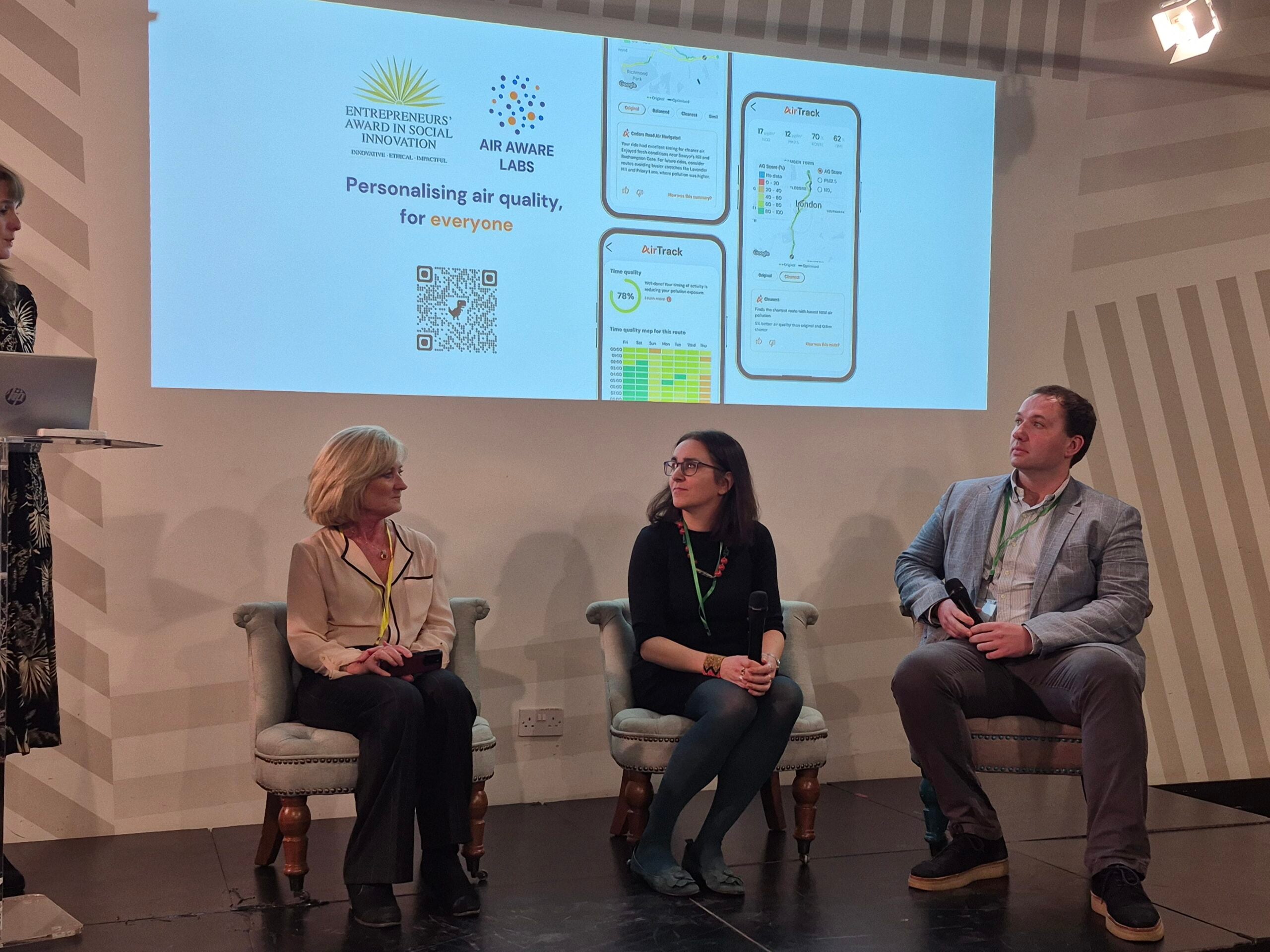
From mosquitoes to microscopic particulates, Air Aware Labs is turning complex air pollution data into simple, personal decisions.
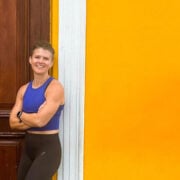
“Eight million deaths [a year are] caused by air pollution … I just knew that there wasn’t enough being done with the wealth of data that’s out there that can help people understand their exposure and then reduce it,” said Louise Thomas, Co-Founder & CEO.
Their mobile app layers high‑resolution modelling with user behaviour, now offering “cleaner routes” so runners, walkers, and commuters can actively choose lower‑exposure journeys in real time.
With B2C traction via Strava integration and B2B opportunities in healthcare and employee wellbeing, they are raising £200K to scale.
CarbonTrac: health‑first nudges for climate‑smart shopping
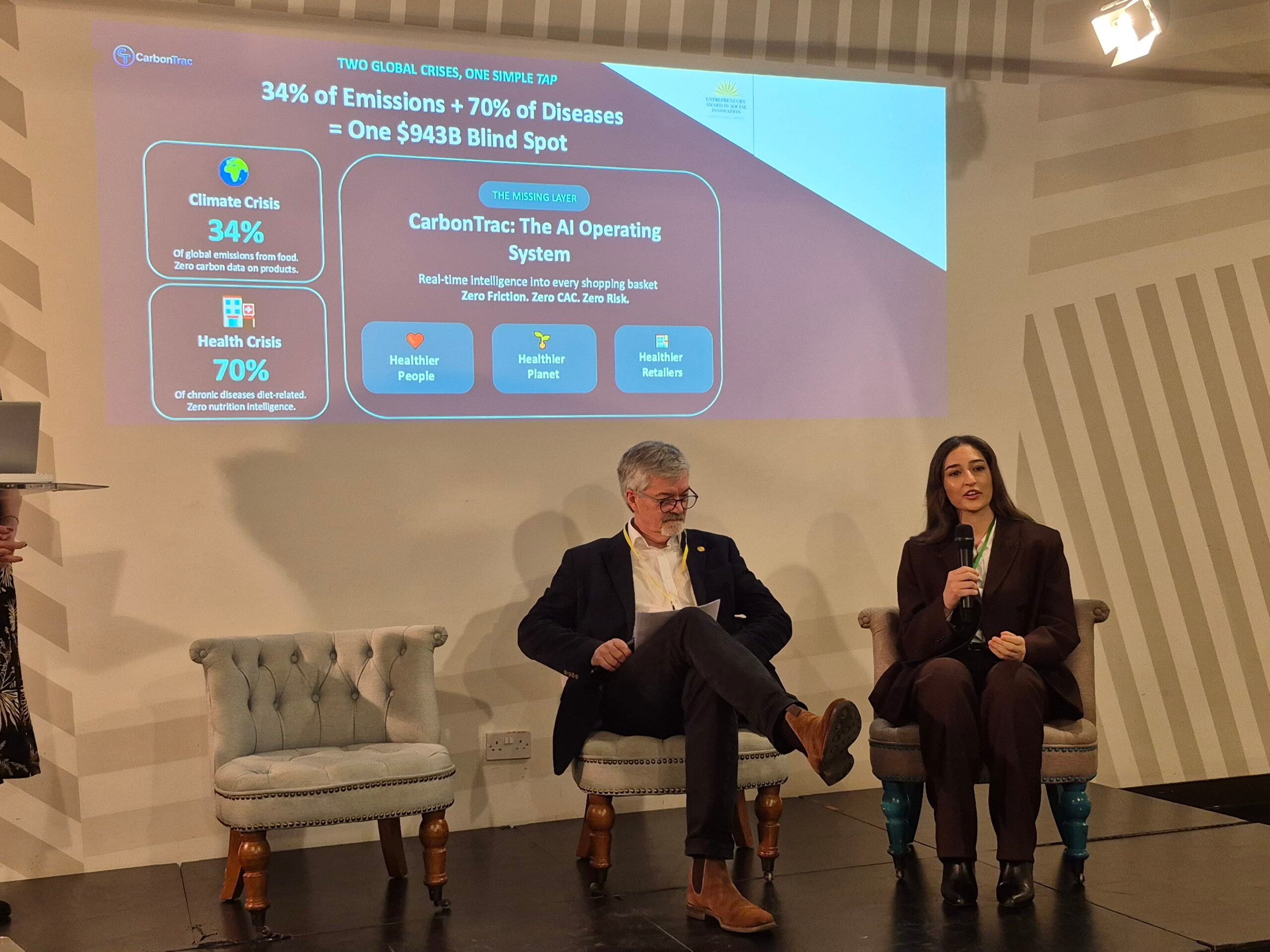
Finally, CarbonTrac – founded by 23‑year‑old Yasmine Abdu – is reframing sustainable shopping through the lens of personal health.
She started from a stark behaviour gap: “Gen Z are the generations that care the most about climate change, their behaviour hasn’t changed at all … People don’t look for climate, they really look for price, health, and convenience.”
Her insight: if you can make the healthier choice also the lower‑carbon one, and embed it into existing online grocery journeys, you can drive climate impact without demanding more attention:
“You don’t win by making people care more about climate; you win by making it something you don’t even need to think about.”
CarbonTrac has pivoted to an AI shopping assistant that reads your basket, understands your conditions (e.g. diabetes, high cholesterol) and proposes swaps that are better for your health and the planet.
More than money: networks, mentors, and long horizons
Across ventures and sectors, founders repeatedly returned to the same theme: EASI’s value is as much relational as financial.
Surgeon‑founder Josh Burke put it plainly: “We’ve had a couple of other support mechanisms over the last 12 months, and none have compared to the advice that we received from [EASI mentors].”
For Judy Hadden, this is the core of EASI’s “simple ethos”: “Our objective is … to make the businesses and enterprises we support survive in the first instance … thrive and actually go more quickly and therefore make their impact more quickly.”
For more startup news, check out the other articles on the website, and subscribe to the magazine for free. Listen to The Cereal Entrepreneur podcast for more interviews with entrepreneurs and big-hitters in the startup ecosystem.
