Singtel and Nscale, an end-to-end AI Cloud platform, have unveiled a strategic partnership aimed at expanding GPU capacity across Europe and Southeast Asia. This collaboration seeks to address the surging global demand from enterprises for generative AI, high-performance computing, and data-intensive workloads.

Nine technology startups have been chosen to collaborate with four major train operators to drive innovation within the rail sector. Southeastern, Northern, LNER, and TransPennine Express have united under the Future Labs initiative to fast-track solutions to both longstanding and emerging challenges in the industry.

Buy now pay later fintech Klarna has announced that it is planning on axing almost half of its employees in the coming years, attributing these cuts to efficiencies gained through its investment in AI.

The demanding modern job market often sees startups facing big companies. As a new business will have fewer resources and less reputation, how does it stand out? One way is to create a challenger brand that challenges the status quo in the contemporary market. Below is how startups can create a brand and compete with established companies.

The Adaptavist Group, a global technology company with its North American headquarters in Toronto, Ontario, has announced the launch of its ‘Adapting for Tomorrow’ incubator programme.

Gen Z employees see business travel as a key career booster and are actively seeking more opportunities to travel for work, according to recent research by American Express.

A research report commissioned by Hewlett Packard Enterprise revealed that only 32% of IT leaders in the UK and Ireland feel their organisations are fully prepared to harness the benefits of AI, despite 96% having initiated or completed the establishment of AI goals. The report highlights significant strategic shortcomings, such as misalignment between processes and metrics, leading to a fragmented approach that could worsen implementation challenges.

Crypto Quantique, a provider of quantum-driven security for the Internet of Things (IoT), has introduced a specialised randomness test suite for Physical Unclonable Functions (PUFs). Named TuRiNG, this suite tackles the unique challenges associated with testing PUFs, which are increasingly embedded in semiconductors to generate secure, regenerable random numbers.

hofer powertrain, a global company in efficient drivetrain solutions, has announced an initiative aimed at slashing electric drive design time by 80% using advanced AI and deeptech innovations.

Aghanim, a fintech company specialising in mobile gaming, has announced a strategic partnership with Adyen, the global financial technology platform favoured. This collaboration will enhance Aghanim’s direct-to-consumer platform, providing mobile game developers and publishers with robust payment processing capabilities worldwide.

Harmonyze, formerly known as Legal Hat, an AI-driven platform aimed at enhancing franchisors’ profit margins, has successfully closed over $2 million in pre-seed funding.

Andrew Smith, Kyocera’s CISO, has shared his top five tips to make sure any organisation can take advantage of AI, without the security pitfalls.

According to YouGov, one in six people will experience imposter syndrome – a persistent feeling of inadequacy in their career despite others’ perceptions – at least once in their lifetime. Recently, Instant Offices, experts in office spaces, reported a staggering 96% rise in searches for “imposter syndrome,” indicating that more professionals are struggling with self-doubt.

Silver Telegram PR Agency has unveiled its “State of Tech” white paper for Summer 2024, offering a comprehensive analysis of the latest trends, data, and insights shaping the global technology sector.

The Series A funding round, spearheaded by Balderton Capital and joined by existing investors TQ Ventures, Earlybird, and Seedcamp, marks a significant milestone for Tilt, a real-time shopping platform. Founded by former Revolut employees Neil Shah and Abhi Thanendran, Tilt is revolutionising the e-commerce landscape by positioning itself as the premier destination for fashion worldwide.

Altery, a fintech startup based in the UK, has joined forces with Uzum Bank, a prominent digital bank in Uzbekistan, to deliver advanced and cost-efficient money transfer services tailored for the rapidly expanding Uzbek market
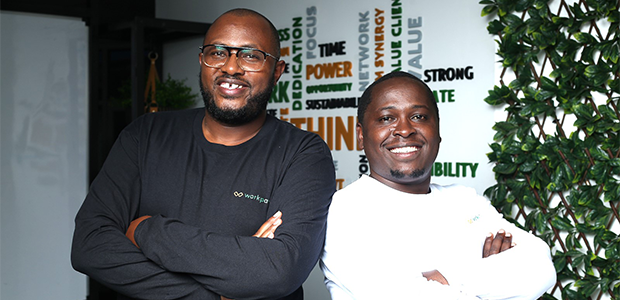
Workpay, a cloud-based platform designed to streamline HR, payroll, and employee benefits across Africa, has secured $5 million in Series A funding. The round was led by Norrsken22 and included investments from Visa, Y Combinator, Saviu Ventures, Axian, Plug n Play, Verod-Kepple Africa Ventures, and Acadian Ventures, a firm known for backing the next wave of work-related technologies. This new funding comes after Workpay’s successful pre-series A round, which raised $2.7 million earlier in 2023.
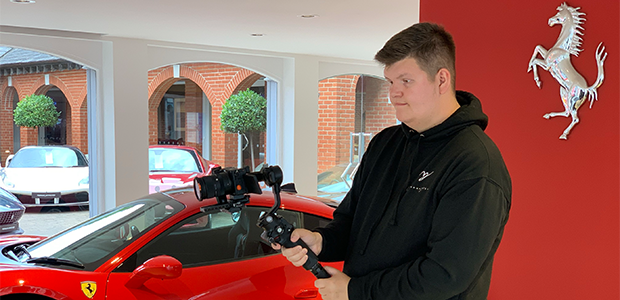
James McPherson, a 25-year-old entrepreneur from Bournemouth, has soared to new heights with the support of two SWEF enterprise grants from the Dorset Community Foundation.

Reboxed, a circular economy startup, has launched ReboxedOS, a comprehensive platform designed to simplify and accelerate the recommerce of consumer electronics. The platform enables brands to quickly establish and scale co-branded resale, trade-in, and recycling programmes, boosting both revenue and sustainability efforts.

Finnish biotech company NADMED has secured €3.5 million in a Series A funding round to support its expansion into the US and other global markets with its innovative technology for measuring nicotinamide adenine dinucleotide (NAD). This technology has the potential to enhance the precision of personalised treatments for a range of diseases.