
Close Brothers Invoice Finance has launched a new team – called ‘Scale Up’ – to help support startups and smaller SMEs with facilities up to £350,000, and prepayments of up to 100% to maximise liquidity from day one.

Definely, an AI-powered legaltech company that enables lawyers to efficiently and accurately review complex contracts, has launched ‘Cascade’. The product detects and tracks the ripple effects of changes across entire contracts, helping improve document quality, reduce risk, and streamline drafting and review workflows.

Riva Money, the global payments firm using blockchain technology to streamline the movement of money, has raised a pre-seed round from Project A as well as angels from Revolut, Monzo, and J.P. Morgan. The $3 million round will be used to solve the persistent pain points of global money transfers.

Wave Photonics has announced the launch of its PDK Management Platform to integrate foundry PDKs with EDA tools, provide ready-calculated S-Parameters for circuit simulation, and provide easy access for designers.

New data from the British Business Bank’s Start Up Loans programme, which provides finance and support to start up and early-stage businesses, shows a year-on-year increase in the value of finance being accessed.

A growing number of UK businesses are on the brink, with a new report examining workplace productivity in small and medium enterprises (SMEs) revealing that one in five businesses nationwide say they are operating in or near survival mode.

Three pioneering healthtech companies are set to accelerate their growth and market impact thanks to investment from STAC, Scotland’s accelerator for smart, connected, and deeptech startups.

In the latest episode of The Cereal Entrepreneur podcast, Startups Magazine Editor, Anna Wood, speaks with Shirley Baumer, Co-Founder and CPO of DreamTeam.
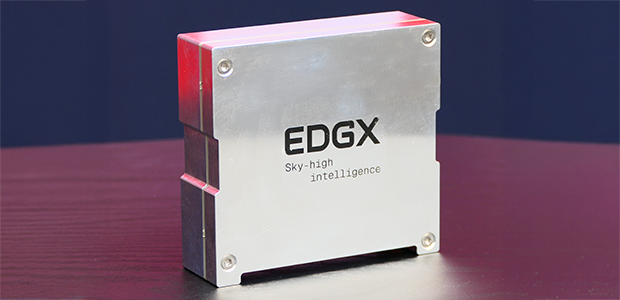
Belgian spacetech startup EDGX has closed a €2.3 million seed funding round to accelerate commercialisation of EDGX Sterna, a next generation Edge AI computer for satellites.

Innovation and growth company Plexal is collaborating with Google Cloud to provide fast-moving, security-focused startups developing breakthrough technologies with access to a breadth of resources unlocking the potential of Google Cloud. This will include support around AI innovations, which can support founders with product development, go-to-market strategies and operating model design.

As companies invest millions into AI, concerns have began to emerge from sources like MIT: an over-reliance on generative AI can reduce critical thinking. According to learning scientists at upskilling platform Multiverse, this erosion of human skills can threaten the very success of AI adoption if not properly addressed.
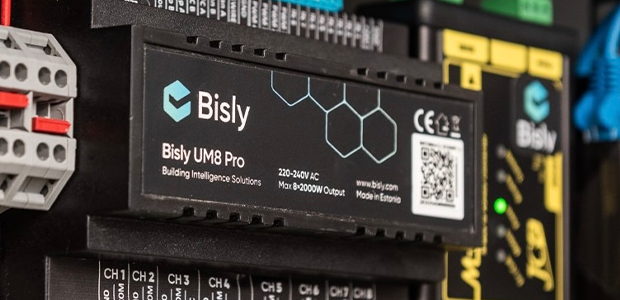
Bisly, a provider of scalable, smart building automation solutions, has raised a €4.3 million funding round to expand its operations across Central and Western Europe.

The fragmented approach to regulation and compliance across the globe is having a significant impact on businesses, according to BVI Finance’s Destination Digital report.

Techstars and AWS have launched a global initiative designed to support underrepresented founders around the world. The initiative involves hands-on technical training, expert business coaching, and direct access to funding and accelerator pathways.

Largo.ai, a global provider of advanced AI-driven solutions for the film, TV, and advertising industries, has acquired London-based market research technology and consultancy firm, QuMind.

More than half (52%) of Gen Z job seekers are prioritising ‘growth mindset’ roles that offer personal development opportunities, as competition with AI for entry-level work intensifies.

QuamCore, a deeptech startup tackling quantum computing’s hardest scalability challenges, announced a $26 million Series A, bringing total funding to $35 million. The round was led by Sentinel Global, with participation from Arkin Capital, as well as existing investors Viola Ventures, Earth & Beyond Ventures, Surround Ventures, Rhodium, and Quantum Leap. The Israel Innovation Authority contributed a $4 million non-dilutive grant.

AND Digital, the international tech consultancy, has partnered with the team at Google Digital Garage to deliver a new suite of trainer-led courses for small and medium-sized businesses (SMBs) looking to grow their AI and digital skills to stay ahead in the digital market.

Hytro, the UK-based performance brand behind the world’s first wearable Blood Flow Restriction (BFR) product, has announced new backing from sports and human performance investors Joyned Capital and Skin In The Game. The investment accelerates Hytro’s expansion plans in elite sport and human performance, and strengthens its global leadership in recovery technology.

Skyrora, the British rocket and space technology company, has been granted a launch operator licence from the UK Civil Aviation Authority (CAA). The licence approval puts Skyrora on course to launch its SkyLark L suborbital vehicle from British soil and, in doing so, will become the first British company to manufacture and launch a rocket into space from the UK.