
Destinus Group has announced it has signed an agreement to acquire Daedalean, an aviation AI solution company, for CHF 180 million ($225 million) in a combined cash-and-stock transaction.

QuamCore, a deeptech startup tackling quantum computing’s hardest scalability challenges, announced a $26 million Series A, bringing total funding to $35 million. The round was led by Sentinel Global, with participation from Arkin Capital, as well as existing investors Viola Ventures, Earth & Beyond Ventures, Surround Ventures, Rhodium, and Quantum Leap. The Israel Innovation Authority contributed a $4 million non-dilutive grant.

The Department for Science, Innovation and Technology (DSIT) has significantly increased its IT spending, investing nearly £5 million in laptops, phones, and tablets over the past two years. This investment is a key part of DSIT’s strategy to scale up internal digital capabilities and empower its workforce, supporting the UK’s ambition to become a global leader in technology and artificial intelligence.

Quantum computing startups are taking over the world of deeptech as the technology becomes more viable, investment surges, and breakthroughs are multiplying. The United Nations even crowned 2025 as the ‘International Year of Quantum Science and Technology’, making 100 years since the birth of quantum mechanics.

New research reveals US President Trump’s tariffs have shrunk exporting appetite for over half of UK SME leaders.
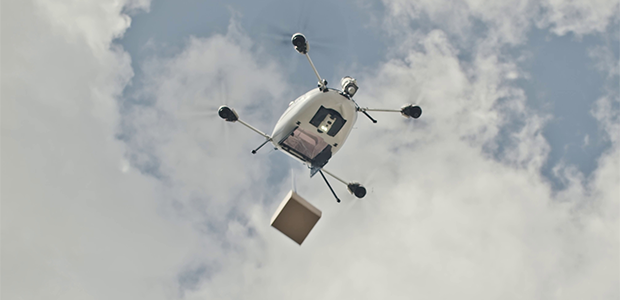
Flipdish, the all-in-one digital ordering and management platform for hospitality, has announced its ongoing partnership with fellow Irish startup Manna Air Delivery, an advanced drone delivery company.

The Government has launched its Small Business Plan, supporting the UK’s smaller firms by unlocking access to finance, enhancing business skills, and opening up opportunities for entrepreneurs.

The percentage of small businesses working on new initiatives to power future growth has fallen to a four-year low (65%) and is significantly down on the start to the year (71% for Q1 2025), according to research from Novuna Business Finance.

Despite the growing global attention on AI and its impact on businesses, Cloud transformation also ranks as a critical priority for UK tech leaders, according to new research from Coursera, in partnership with Amazon Web Services (AWS).

The UK government has launched a new global research initiative to tackle one of AI’s most urgent and technically complex challenges: ensuring that advanced systems behave in ways aligned with human values.

Sava Technologies, the London-based startup pioneering real-time molecular health monitoring, has raised $19 million in Series A funding, following promising early results from its clinical trial.

Cambridge Innovation Capital (CIC), the VC firm investing in the UK’s highest-potential deeptech and life sciences companies, is committing at least £100 million to invest in spinouts from the University of Cambridge.

In 2016, WASP first introduced the Shamballa project, inspired by the ideal of peace and harmony embodied in the legendary place of Tibetan tradition. The goal was ambitious: to turn that ideal into reality through the conscious use of an emerging technology: 3D printing. The project was conceived as a space dedicated to research, where 3D printing would be used to address the fundamental needs of human beings: food, housing, health, energy, work, and culture.

With salaries for AI-related roles expected to increase by 15–25% this year alone, according to a new survey, UK organisations are facing escalating AI skills shortages as rising salary expectations make hiring increasingly unsustainable.

iwoca’s latest SME Expert Index reveals that the Labour Government has had a negative impact on small and medium-sized enterprises (SMEs) during its first year in power, according to SME finance experts.

FuriosaAI, a semiconductor company building a new foundation for AI compute, today announced it has completed a $125 million Series C bridge funding round. The investment continues a period of significant momentum for Furiosa as global demand for high-performance, efficient AI infrastructure soars.

Enterprise leaders are eager to move beyond AI experimentation and unlock scalable value. However, new research from Kore.ai, a global leader in enterprise AI, reveals a critical gap: while 71% of companies are actively using or piloting AI, only 30% are prepared to scale – potentially slowing the momentum of the next wave of enterprise AI adoption.

Cotton Mouton Diagnostics (CMD), a UK-based diagnostics technology company, has received a half-a-million-pound investment from CPI Enterprises, the investment arm of CPI, as part of the Innovate UK Catapult Associated Fund.

Silverstone, the home of British motorsport, has named tem, the energy transactions platform, as its Official Supporting Partner in a new multi-year deal that cements the world-class circuit’s position at the forefront of sustainable innovation in sport.

The British Business Bank has made its first investment through the Regional Angels Programme new co-investment platform.