The pandemic has forced a recruitment rethink, and a huge uptake in flexible talent acquisition services. UK-founded scaleup, Talent Works reported 400% growth in March 2020 compared to March 2021, and a sustained 20% month-on-month forecasted compound growth.

Long COVID could have a big impact for employers for many months to come. It is a relatively new illness that is not yet fully understood and may keep employees from returning to work for indeterminate amounts of time.

If you own an up-and-coming startup, you need to find reliable, skilled workers – and freelancers usually fit the bill, especially because they come with flexible payment schedules. These employees can help your business navigate the initial stages to achieve success. That said, you should note that freelance workforces can be tough to manage.

A week after the next steps out of lockdown were taken the differences are palpable. A very large percentage of the population have been shopping in ‘non-essential’ shops, sat outside a coffee shop, eaten outside at a pub or restaurant, or had their hair cut. In fact, almost everyone that I have spoken to has already done more than one of these.

The last year has shone a spotlight on the long-term future of the UK’s business sector, its reliance on people and the need for business resilience. It was crucial to protect the financial security of consumers so that they could continue to conduct business with each other, and that was understandably Chancellor of the Exchequer Rishi Sunak’s priority, with the unprecedented introduction of Bounce Back Loan Scheme (BBLS), Coronavirus Business Interruption Loan Scheme (CBILS) and furlough schemes.

Networking. Some people love it, some people hate it. But everyone knows it’s essential if you’re setting up a new business. Or is it? Tell anyone that you’re setting up a business without any industry contacts, and they’ll raise their eyebrows at you. Wouldn’t it be better to get to know the industry first, they’ll ask? Shouldn’t you build up your network before diving in?

Research from Ezra has revealed that a fifth of UK workers feel they get less recognition within their career as a direct result of working remotely. It remains to be seen to what extent we will return to a full working environment, as COVID-19 restrictions see many continue to work from home for part of, if not their whole working week.

A team of top scientists from the University of Bristol have announced the formation of a new biotech company that is developing newly patented potential treatments for Coronavirus.

Oil major, BP recently announced that 25,000 members of staff must Work From Home (WFH) two days per week post pandemic. As more firms transition to long-term remote working, evaluating and improving home office set ups will be critical to success. Here Kristian Torode, Director and Co-founder of business unified communications provider, Crystaline, looks at what companies should provide for their workers.

BIG MAMMA founders, Tigrane Seydoux and Victor Lugger have joined forces with Christine de Wendel to announce a €20m seed round to support the launch of a new, innovative payment method – Sunday, created by restaurateurs for restaurants.

Suss Ventures have contributed a six-figure sum alongside a multi-million investment drive. This raise marks a huge success for Suss Ventures who are synonymous with sourcing sustainable businesses for their community of impact-driven investors and corporate partners. The zero-effort payment system eliminates the worry of parking fines and is completely cashless, automated and secure.

The year 2020 stands out as what you would call the banner year for remote work. While a good number of people worked remotely before that, the outbreak of the pandemic forced a major shift to remote work. People and companies that hadn’t embraced remote working had it rough trying to adjust to the circumstances.

Virtual reality is no longer a novelty, but VR events are an innovation in the event industry and marketing. A virtual event is a potent tool for promoting your brand or for organising conferences and concerts. This is an entirely new project that allows you to hold an event while staying at home, despite emergencies, such as the 2020 quarantine or other events.
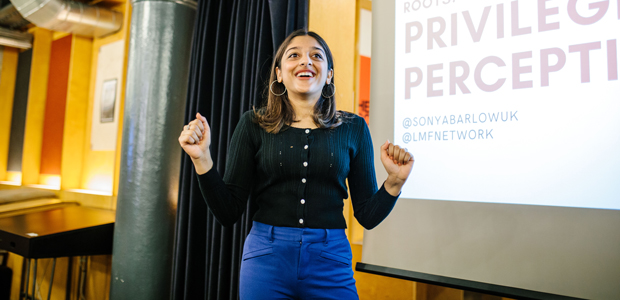
With the annual Hustle Awards event planning in full swing, we are excited to announce that Sonya Barlow, award winning entrepreneur, founder of the LMFnetwork, diversity business coach and motivational speaker, as her efforts are focused on bridging the skills gap and creating inclusive cultures.

With a number of people using eCommerce for the first time and employees working at home, the costs of cybercrime exceeded $1tn in 2020, up 50% from 2018.

As we enter the ‘roadmap’ to recovery from the COVID-19 pandemic, businesses are reassessing their people operations. Some have adopted a ‘hybrid’ working model, allowing employees to split their time between working from home and from the office, and others have even given up their office spaces entirely.

When you are building a plane in the sky – startup speak for tricky innovation in a tough environment – things slip. In the case of fast-growing businesses, important people priorities and processes fall down the agenda. Diversity and inclusion is one of them. It can be deprioritised by default, in a race to stay afloat, pay your teams and spend time on what will get you where you need to go, quickly.

The PR industry continues to go from strength to strength with a steady 5% growth in 2020 and the five years previous to that. This demonstrates that organisations recognise the value that communications play in their overall business strategy. Consumer research has shown that 48% see journalism and earned media to be the most credible source of information.

With the vaccine rollout continuing across the world and a potential end in sight to the COVID-19 pandemic, we have looked at three of the top payment trends businesses should get to know as life gets back to some normality and the hospitality, travel and other sectors start to open once again.

Founded by childhood friends, Lucy Cohen and Sophie Hughes, Mazuma is a UK-based provider of online accounting services for small and micro businesses. As qualified accountants, the pair spotted a gap in the market in 2006 for low cost and stress-free accountancy which specifically serviced SMEs and the self-employed. Fast forward to today and the company is celebrating its 15th anniversary.