
As an entrepreneur in today’s fast-paced business world, adopting a holistic approach to business planning may be better for one’s mind, body and soul. By embracing a holistic approach, you align your purpose, passion, and profit, creating a business which resonates with your deepest values and aspirations. It is never only about chasing financial success; it is about building a business reflecting who you truly are and what you believe in.

Times remain tough for startups. Any opportunity to strengthen the business and to grow is a vital metric to compete on in a challenging economic environment.

The road to startup success can be a long and uphill one, and it doesn’t have many pitstops to rest your weary legs along the way. You want to be a winner, not a quitter, and the 24/7 grind ethos has long since been a part of founding a company. But the way we build businesses needs to change for the sake of our entrepreneurs’ mental health.

Canva has a simple yet ambitious two-step plan: Step One is to build one of the world’s most valuable companies, and Step Two is to do the most good we can. As part of “doing the most good we can do,” it feels horrible to be living on a planet where hundreds of millions of people live in extreme poverty and are deprived of their fundamental human rights, like food, shelter, safety, clean water, education, and health care.

BHive is a global entrepreneur incubation programme providing hands-on guidance and support to empower startups from around the world to scale their business in North America.

AI expert Emad Mostaque commented that large AI models will only get “crazier and crazier” unless more regulation and control is taken. As the EU AI Act progresses, what challenges or priorities should businesses be on guard for?

One of the opening keynotes at Dublin Tech Summit this week came from Dr Patricia Scanlon, Ireland’s first AI ambassador, which explored the opportunities and challenges ahead in embracing AI.
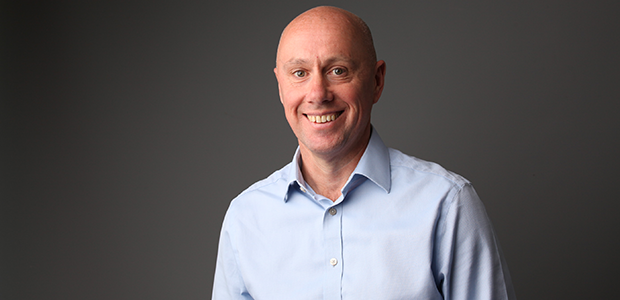
White Oak, a non-bank lender, has announced a new partnership with the Law Society of Scotland (LSOS).

In recent years, we’ve seen a surge of interest towards influencer marketing, social media and short-form video content in the marketing sphere – with email marketing looking rather tired and outdated by comparison. So, just like the fax before it, is it time to consign email to the scrapheap and open a TikTok account? Well, not quite.

WomenWise has begun a menopause revolution helping women understand their midlife body, so they know how to support it through perimenopause and beyond. Here we explore how workplaces can better support women in the workplace, support and empower employees and break the stigma.

UK organisations and consumers are ready to embrace a new era of digital identity according to a new report from Curity, an API-focussed identity and access management company.

With lifestyle having a huge impact on the prevention of cancer, and early detection being key to better outcomes, medical assessments can be a crucial piece of the puzzle. However, research revealed today by Towergate Health & Protection shows that only a quarter (26%) of employers offer their employees a medical assessment of their risk of serious illness.

Employees who earn less than £30,000 are bearing the brunt of the cost-of-living crisis, with their employers far less likely to offer meaningful financial wellbeing support, according to new research from Mintago.

New research reveals the extent of negative delivery experiences on customer loyalty, with 78% of UK consumers stating they are not likely to shop with a brand again following a below par experience.

Constant digitalisation and changing business models are revolutionising the culture of talent. The emergence of Artificial Intelligence on a global scale, the consolidation of teleworking, or the widespread development of EdTech, or educational technologies, are just some examples of the evolution of human resources. Without going any further, the World Economic Forum has recently pointed out that almost 80% of the most in-demand jobs in 2030 have not yet been created, so the market needs constant training to respond to this development. Added to this is the challenge of a shortage of teams with digital skills and competences.

VistaPrint, the design and marketing partner for small businesses, has revealed that despite the long hours, small business owners (SBOs) have a better work-life harmony working for themselves. The research found over half of small business owners (52%) started their own business to improve their work-life balance, this jumping to 58% for those aged 45-54.

ESG has for too long been a buzzword and a communication gap around the subject has emerged, a climate and sustainability expert has said. Chris Bennett, who founded Evora Global in 2011 to help make real estate more sustainable, said ESG is about helping companies to understand their future risks and taking steps to lower them.
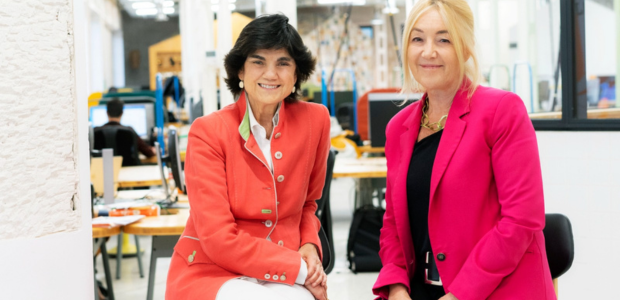
McCann Worldgroup and South Summit have just signed a strategic partnership agreement to collaborate and combine synergies in the world of entrepreneurship and innovation.

Data released today by insurance claims automation provider Sprout.ai has found that 59% of insurers with over 100 employees are already using generative AI in their organisation. The findings refute the widespread assumption that insurers are slow to adopt new technologies. AI within the insurance industry alone is forecast to be worth $35.77 billion by 2030.

Corporate greenwashing is not always deliberate but can be the result of extremely poor measurement practices in the field of sustainability and ESG, a sustainability expert has said. Chris Bennett, founder of sustainability services company Evora Global, has highlighted the issue of poor ESG measurement leading to a lack of clarity for many on sustainability issues.