There’s no shortage of ambition among the UK’s female tech founders. Every day, I meet women building businesses with drive, resilience, and vision – despite the fact that they’re operating in a system that wasn’t designed for them.

It’s easier than ever for businesses to go global, no matter their size. With the rise of employment models such as Employer of Record (EOR), startups and SMEs can set their sights on overseas opportunities from the get-go. This growing number of smaller organisations expanding internationally has been dubbed ‘micro-multinationals.’

AI fluency is now a standard requirement in technical roles, according to developer hiring platform Yotewo. The company reports that 85% of full stack and backend job briefs submitted to its platform over the past six months included a specific request for AI-related skills, such as prompt engineering, OpenAI API integration, or proficiency with tools like ChatGPT, Copilot, or Claude.

UK small and medium sized enterprises (SMEs) are being significantly impacted by the upending of the global trading environment, propelled by the US administration’s tariff policies, according to new research from independent funder Bibby Financial Services (BFS).

Gen Z workers are eager to bring AI into the workplace, but they’re not blindly buying into the buzz, according to a new survey from UKG which shows younger employees are leading the AI learning curve but are also questioning whether their employers truly understand the technology.

Tech employers are placing less weight on university prestige and greater emphasis on practical skills and workplace readiness when hiring graduates, according to new research highlighting a major shift in tech hiring priorities across the UK.

Laverock Therapeutics, a gene control company powering the development of disease-responsive advanced therapies, announces the expansion of its seed funding round, taking the total raised to more than £20 million.

This year, at the heart of London Climate Action Week, Blue Earth Forum, the official Innovation Hub of LCAW 2025 soared to even greater heights.
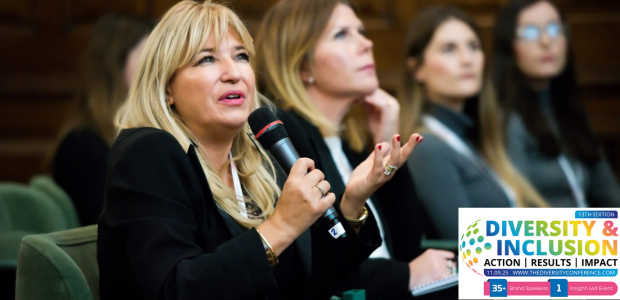
From psychological safety to AI bias, The Diversity & Inclusion Conference arms founders with actionable insights to build future-ready, values-led teams that outperform and endure.

Skynopy, a French NewSpace startup providing ground station services for low Earth orbit satellites, has completed a record fundraising round less than 18 months after its creation.

An initiative designed to help propel growth for startups and protect their ideas has been launched by law firm Myers & Co and intellectual property specialist Pure Ideas.

Achieving SOC 2 compliance can be a challenging and resource-intensive process for organisations. However, with the right compliance software, companies can streamline the process, reduce complexity, and ensure they meet the strict requirements set by the American Institute of CPAs (AICPA).

At the Latitude59 technology conference held last month in Tallinn, deeptech experts discussed developments in the field, emphasising that Europe needs not only the freedom to test innovation but also stronger cooperation with corporations.

Flowstep, the designtech startup building an AI-native canvas for product design teams, has secured a $2.6 million seed round led by London based Supernode Global with a list of supporting investors.

More than 190 organisations, founders, health professionals, and campaigners have co-signed an open letter calling on social media platforms to end the routine censorship of women’s health content online.

German rocket startup Isar Aerospace joined Europe’s unicorn ranks, reaching a valuation of more than $1 billion following a €150 million (£128 million) funding round led by Eldridge Industries – a US firm chaired by billionaire and Chelsea FC co-owner, Todd Boehly.

A new independent review to identify and dismantle the barriers to entrepreneurship caused by economic deprivation has been launched.

As values-driven Gen Z and Millennial consumers come to dominate the market, corporate social responsibility (CSR) and environmental, social, and governance (ESG) performance have become make-or-break issues for brands – especially in fintech.

Founded in 2013 by Jennifer Davidson from her bedroom and without external investment, the business was built on the belief and drive to build something different. Since then, Sleek has grown into a global force, delivering some of the biggest events and experiences in the world from their London headquarters.

DejaBlue, the French electrification startup building a platform to optimise flexible energy loads, including EV charging and on-site solar, announced an $8 million seed round led by redalpine, with the participation of Zeno Ventures and Bpifrance.