
AI auditing platform Warden AI has announced a new funding round led by the founders of Onfido, the digital identity verification company acquired by Entrust in 2024. The round also includes participation from Playfair, an early-stage VC firm, and will support Warden’s geographic expansion and product development.

cocreatd’s first incubation, System7, an AI automation and development platform for marketing and sales teams, has been acquired by Vault PLC in a seven-figure deal just eight months after it launched.
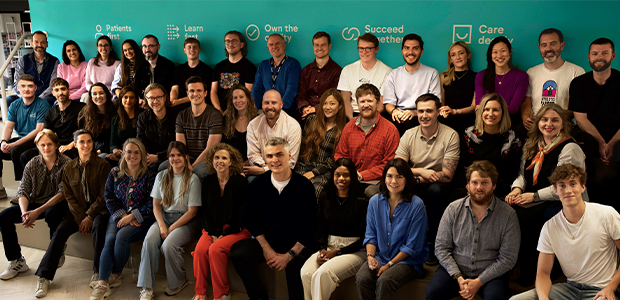
Numan, the digital health provider has announced that it has raised $60 million in fresh funding, following another year of exceptional growth.
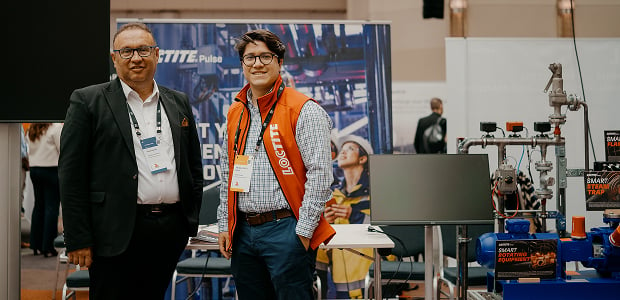
Driven by environmental concerns and the need for greater efficiency, the oil and gas industry is rapidly adopting digital twins and remote monitoring. AUTOMA 2025 explores transformative technologies in dedicated sessions during the Congress in Amsterdam, the Netherlands on 13-14 October.

The team behind Unomaly, the machine learning-based observability platform acquired by LogicMonitor in 2020, has re-emerged with a new mission: to make AI infrastructure as reliable as Stripe is for payments.

In today’s highly competitive sales environment, success hinges on building strong relationships and deeply understanding customer needs. Generative AI (GenAI) is redefining the game, empowering sales professionals to integrate this transformative technology seamlessly into core business strategies, unlocking new efficiencies and a decisive competitive edge.

The Department for Science, Innovation and Technology (DSIT) has unveiled its Regional Tech Booster programme – a fresh push to accelerate the growth of tech clusters and early-stage digital startups in regions such as Scotland, the North East, Humber and East, and South Yorkshire.

Exein, the embedded IoT cybersecurity company, has raised €70 million in a Series C round. The round was led by Balderton and joined by Supernova and Lakestar, with 33N, United Ventures, and Partech following on from the previous round.

Half of Brits would ask AI for legal advice over a qualified solicitor – but experts warn that trusting technology alone could leave people paying the price.
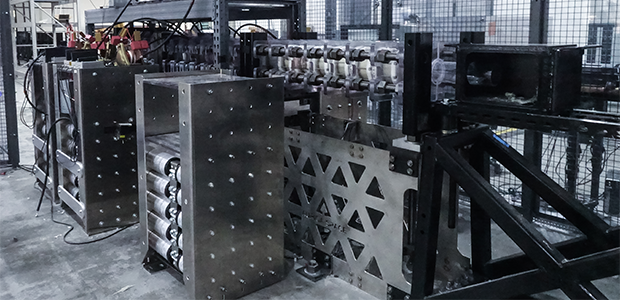
Auriga Space, a company in electromagnetic hypersonic launch technology, has announced $6 million in additional funding in the form of a seed round and Small Business Innovation Research (SBIR) contracts from the US AFWERX and SpaceWERX, the innovation arms of the US Air Force and Space Force respectively.

Qodea, one of Europe’s largest dedicated Google Cloud consultancies, backed by Marlin Equity Partners, has announced its definitive agreement to acquire technology consultancy Beyond, from Next 15 Group.

For the second year in a row, employers’ biggest concern for their staff is stress and anxiety related to work, according to research conducted by GRiD, the industry body for the group risk sector.

Transport for London (TfL) has appointed Plexal, the innovation and growth company founded by Delancey, as an Innovation Operation Supplier for a multi-year partnership.

Portugal is establishing itself as one of Europe’s leading digital and AI ready hubs and further growth in data centre development in the country could contribute up to €26 billion to the national GDP between 2025 and 2030 (i.e. average of c. € 4.4 billion per year), according to a study conducted this year by Start Campus and Copenhagen Economics.

Think of an investment pitch and you think of the numbers. You think of spreadsheets, metrics, margins, and forecasts. But the bigger picture that many businesses are missing is that securing investment is more often than not about emotion. Because, when it comes down to it, investors are just people.

With the enforcement of the EU’s Pay Transparency Directive approaching, startups – and all businesses for that matter – must start preparing before it comes into force next June. Those with operations in member states will face new reporting responsibilities and the rules will put pressure onto others to follow suit to stay competitive – even if only operating locally.

Cryogenx has raised a £1.7 million seed funding round to accelerate the development of its breakthrough portable cooling technology. As part of the round, the UK Innovation & Science Seed Fund (UKI2S), managed by Future Planet Capital, has invested £430,000.

New research reveals that small and medium-sized enterprises (SMEs) are significantly lagging in AI adoption, putting their productivity, innovation, and long-term competitiveness at risk.

Founders often obsess over product features, funnels, and pricing but forget the one thing that drives decisions: human psychology.

Start Up Loans announces that it has provided nearly 900 entrepreneurs in Cambridgeshire with a total of £10 million since the programme started in 2012. The average loan value used to start or grow businesses in the county was £11,313.