

The real reason founders burn out, and how to break through it
Burnout is one of the most common challenges facing founders today, yet despite the thousands of articles written about it, most advice still focuses on symptoms rather than causes.
We’re told to improve our time management, take more holidays, set better boundaries, delegate more effectively, or optimise our routines. And while all of those things can help, they often fail to solve the real problem.
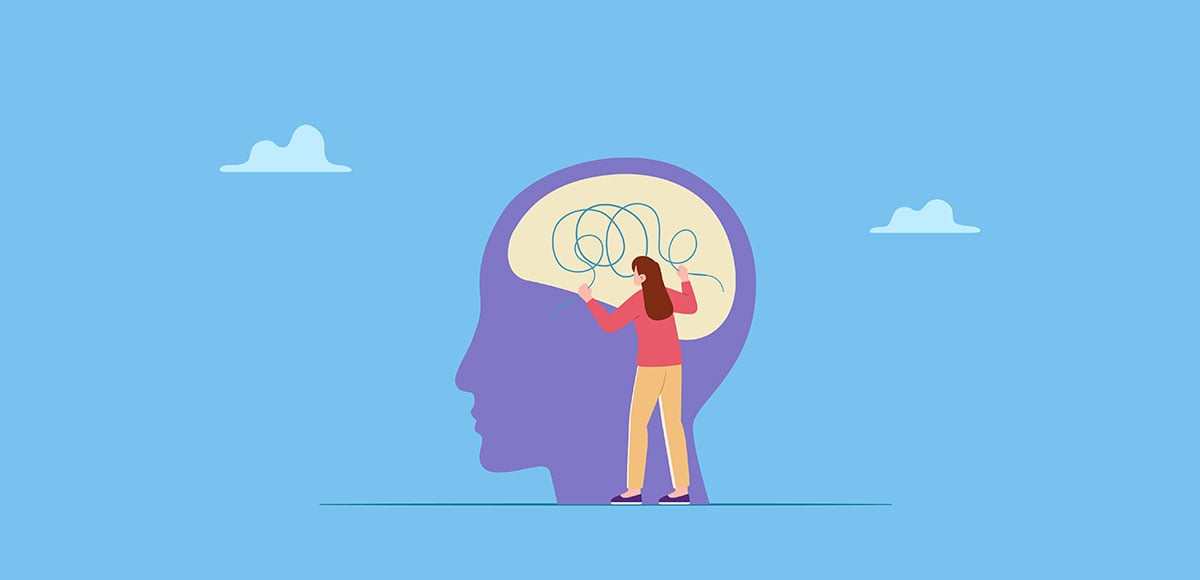
Because burnout is rarely a time-management issue. More often, it is an operating-system issue. Over the years, I’ve worked with entrepreneurs in more than 180 countries, from early-stage founders to leaders running multi-million-pound businesses. What continually fascinates me is that burnout often appears at exactly the point where success should feel most rewarding.
Revenue grows. Clients arrive. Opportunities increase. Yet energy declines. Stress increases. Busyness becomes a new normal. Motivation dwindles. And what once felt exciting starts feeling heavy.
Why? Because most founders are trying to solve burnout at the surface level. I often explain this through the metaphor of an iceberg. Above the waterline sits what everyone can see: sales, revenue, visibility, growth, clients and business results.
Just below that sits the “how”: strategy, marketing, funnels, systems, content and execution. This is where most business advice focuses. But beneath both of those layers lies something far more powerful: identity, nervous system regulation, subconscious programming and the energetic patterns that shape how we think, act and lead.
In short, the founder’s internal operating system. This is where burnout usually stems from.
A founder can have the perfect strategy and still burn out. A founder can have an incredible team and still burn out. A founder can even achieve their biggest goals and still feel exhausted.
Because if the internal operating system remains unchanged, success simply amplifies whatever is already there. Many founders unknowingly operate from what I call reactive consciousness. They are driven by proving. Proving their worth. Proving they are successful. Proving they belong. Proving they can keep up.
From the outside, this can look like ambition. But internally, it creates a constant state of pressure. No achievement ever feels enough because the nervous system never receives the message that it is safe.
Every goal achieved simply creates the next one. Every milestone becomes another benchmark to reach. Eventually, exhaustion becomes inevitable. The alternative is what I call creative consciousness.
Creative consciousness operates from a fundamentally different question. Instead of asking: “What do I need to do to prove myself?” it asks: “What do I want to create?”
The difference may seem subtle, but it changes everything. Reactive leadership consumes energy. Creative leadership generates energy.
One is fuelled by a fear of inadequacy. The other is fuelled by vision. One constantly reacts to circumstances. The other creates from possibility. Learning this distinction changed the trajectory of my own entrepreneurial journey.
Years ago, after losing a business I had spent years building, I found myself asking a question that would ultimately transform everything: “What would I do if I didn’t care what people thought of me, and if I knew I couldn’t fail?”
The answers that emerged from that question led me to make decisions that felt uncomfortable at the time. I stopped trying to fit into existing business models. I moved online before it felt safe. I brought together psychology, leadership, strategy and personal energy in a way that very few people were discussing. Eventually, that work became Business Energetics®.

But looking back, I don’t think burnout was ever really about the workload. At least, it wasn’t for me. What exhausted me was the constant pressure of trying to become someone. Trying to prove I was capable. Trying to prove I could rebuild. Trying to prove I deserved success. Trying to prove I hadn’t failed.
The irony is that many founders are rewarded for this energy. It can look like ambition. It can even create results for a while. But it comes at a cost.
What changed everything for me was realising that the most sustainable growth doesn’t come from proving. It comes from creating. The businesses that change industries are rarely built by people asking, “How do I keep up?” They’re built by people asking, “What do I feel called to create?”
Those are very different questions. One drains energy. The other generates it.
Today, when I see a founder approaching burnout, I rarely wonder how many hours they’re working. I’m more curious about what is driving those hours.
Because when your work becomes an expression of vision rather than a measure of worth, something shifts. You still take bold action. You still care deeply. You still stretch yourself. But the energy changes.
And perhaps that is the question worth returning to when success starts feeling heavy: What do I feel called to create? Because the answer to that question has the power to change not only your business, but your experience building it.
For more startup news, check out the other articles on the website, and subscribe to the magazine for free. Listen to The Cereal Entrepreneur podcast for more interviews with entrepreneurs and big-hitters in the startup ecosystem.
