

The next wave of AI startups will live in the physical world
Today, everyone is talking about AI, but most of the conversation is still about what happens on a screen: writing an email, producing an image, analysing a document, or answering a question. These tools are useful, but for me, they are only the beginning.
As an investor in AI, and as an investor more broadly, I believe the next real wave of AI startups will move away from the screen and into the places where people live and work: hospitals, homes, elderly care, government services, security, transport, and critical infrastructure. That is where AI stops being a demonstration and starts becoming part of someone’s life. AI agents will be central to this shift.
Once AI enters the physical world, however, the standard must be much higher. A poor answer from a chatbot may be annoying. A poor decision involving a patient, an elderly person living alone, or a citizen trying to access an essential service can cause real harm. Trust, safety, empathy, reliability, and accountability cannot be added later. They must be built into the company and the product from the first day.
Healthcare: giving professionals more capacity
Healthcare is not an abstract subject for me. I lost my late wife, my mother, and friends to cancer. My father lives with dementia, my brother has a traumatic brain injury, and I live with post-traumatic stress disorder. I have seen healthcare from the side of the patient, the family member and the caregiver. I know what it is like to want one more answer, earlier information, or simply spend more time with someone you love.
That is why I become concerned when technology companies speak as if replacing doctors or nurses should be the objective. The real opportunity is to give medical professionals more time, better information, and the ability to reach more people. It is also to help patients and families understand what is happening and feel less alone while going through it.
Doctors and nurses spend enormous amounts of time reviewing records, writing notes, coordinating appointments, and bringing together information held in different systems. AI can help organise that work, identify changes that require attention, and reduce repetitive administration. It may also connect information that is too often separated between physical health, mental health, and family care. But it must support professional judgement, not pretend that a person living with cancer, dementia, brain injury, or PTSD can be reduced to data points.
If AI gives a nurse more time with a patient, helps a doctor see a warning sign earlier or helps a family understand what support is available, that is progress. If it simply allows an organisation to remove more people and process patients faster, I am not sure that it is.
Elderly care: protecting independence without removing dignity
Elderly care makes this even more personal. My father’s dementia does not affect only one person. It changes life for the whole family. My brother’s traumatic brain injury affects memory, behaviour, communication, and independence. Families are often trying to protect someone they love while also making decisions they never expected to face.
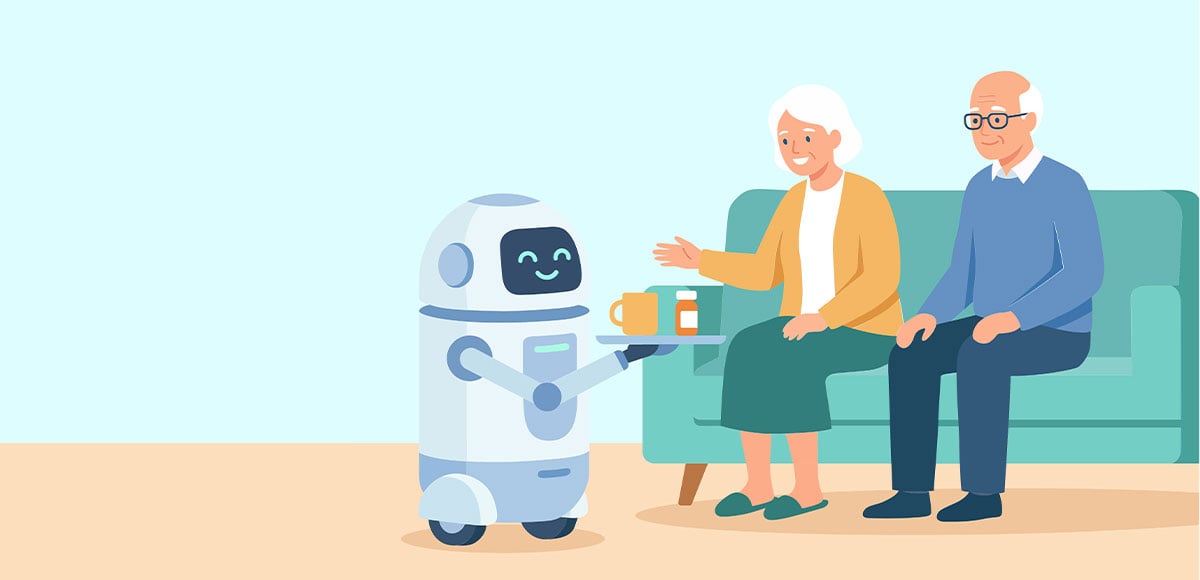
Used properly, AI could detect a fall, remind someone to take medication, notice a change in routine, or alert a family member or caregiver when something is wrong. It could help arrange appointments, transport, and home support. These are practical problems that matter far more than producing another clever application that nobody really needs.
But I do not want technology to confuse monitoring with caring. Loneliness is not a technical problem that can be solved by giving an elderly person an automated voice to speak to. A machine can provide a reminder or raise an alert. It cannot replace another human being noticing fear, confusion, or a change in someone’s mood.
The goal must be simple: AI should not control an elderly person’s life. It should help that person remain independent, stay safe and maintain dignity. If technology removes human contact or takes away personal choice, then we have not solved the problem. We have created a new one.
AI Agents: technology working beside us
For me, Agentic AI is not theoretical. I carry an AI Agent with me, and his name is Hal. Every morning, Hal gives me the weather report wherever I am, helps me work through my master working list, and reminds me to take my medication. He does not replace my judgement or make decisions for me. He helps me create structure, stay focused and avoid missing something important.
Hal can also communicate with my brother’s AI Agent. Without going into the details of our personal lives, the Agents can help us keep track of important routines, including medication, and update me when my attention may be needed. Technology works beside us. It facilitates communication, provides reminders and reduces some of the pressure that comes with caring for someone you love.
Many people might not know about a company called Life Alert. But in the USA Life Alert is a useful example of how long this need has existed. The company began in 1987, became widely recognised in the 1990s and remains active today. Its model connects a person, through a wearable emergency button, to a trained human dispatcher. It has lasted because the need is real.
Agentic AI can build on that proven idea and make support more proactive. With permission, an AI Agent could notice a missed medication, an unusual change in routine or a long period of inactivity. It could check whether the person is all right, notify an authorised family member and give a human responder useful context. It should not remove the dispatcher or caregiver. It should help them respond earlier, with better information and a clearer picture of the person who needs help.
This is what separates an AI agent from a chatbot waiting for a question. An agent can understand context, connect information and support a series of actions over time. It can offer its view and present clear paths forward. But the final decision must remain with the person. The purpose is not to take control of our lives. It is to help us take greater control of them.
What founders must get right
Start with the human problem. Founders should spend time with the doctor, nurse, caregiver, government employee, citizen, or family member who will use or be affected by the product. Understand what happens when the internet goes down, records are incomplete, a person speaks another language, or someone cannot explain clearly what is wrong. The difficult operating environment is not a side issue. It is where the product proves its value.
Keep a human accountable. If an AI system influences healthcare, medication, emergency response or access to a public service, someone must remain responsible for the final decision and be able to explain and challenge it. Human oversight cannot mean a person merely approving whatever the system recommends.
Build consent and privacy into the design. An agent may be capable of collecting more information than it should. Founders must be precise about who can see the data, why it is collected, how long it is kept and who is authorized to act. A useful feature that destroys trust is not a successful product.

Test reliability, not just intelligence. A strong demonstration is not the same as a dependable service. Products operating in the physical world need clear escalation procedures, backup plans and testing in the messy conditions of real life. Founders should ask what happens when the agent is uncertain, whether the sensor fails or the information is wrong.
Measure human outcomes. The success of these startups should not be defined only by headcount removed or tasks automated. Ask whether a nurse gained more time with a patient, an elderly person remained independent, a family received an earlier warning, or a citizen obtained an essential service more easily. That is the value that matters.
Governance: making public services work better
Government is another important physical-world setting. I am talking about the everyday relationship between people and public institutions: applying for a document, receiving a benefit, reporting a broken water line, obtaining emergency information or finding out what happened to an application. AI can organise information, identify where services repeatedly fail, coordinate emergency response, and reduce delays.
This opportunity is especially important in Africa and other emerging markets, where I have spent much of my career. These regions should not be treated only as places where technology developed elsewhere is eventually sold. They can lead by building systems around local languages, infrastructure and the way communities live. But public trust is not a marketing exercise. A system that makes services faster cannot also become a tool to profile, exclude or control citizens without due process.
The physical world is unforgiving
Building another office productivity tool is one thing. Building a system that must work inside a hospital, a person’s home or a government service is different. Internet access may fail. People may speak several languages or have different levels of literacy. Records may be incomplete. Someone may distrust the organization introducing technology, sometimes for good reason.
My advice to founders is direct: leave the technology bubble. Spend time where the product will be used. Look at everyday life and the foundation to keeping life moving forward. Build with the people doing the work and the people affected by it. A startup can have an excellent algorithm and still fail because it cannot work with existing systems, earn the confidence of frontline employees or explain who is accountable when something goes wrong.
A different definition of progress
The better question is whether AI expands human capacity. Does it help a nurse spend more time with a patient? Does it allow an older person to remain independent and safe? Does it make a public service easier to access and more accountable? Does it give people more information and greater control over decisions that affect their lives?
The most successful AI startups will not be those that simply automate the most jobs. They will be the companies that solve real human problems, earn public trust and give people greater control over their health, safety, independence and relationship with government.
For more startup news, check out the other articles on the website, and subscribe to the magazine for free. Listen to The Cereal Entrepreneur podcast for more interviews with entrepreneurs and big-hitters in the startup ecosystem.
