

What Europe can learn from Sweden’s startup success
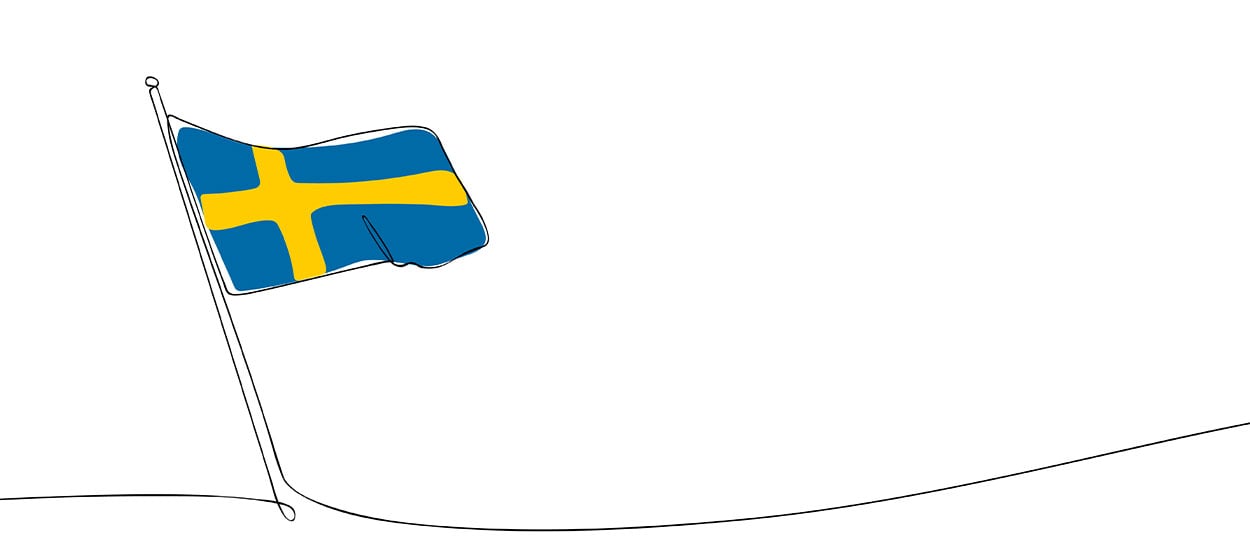
Legora’s $8.8 billion valuation last month is the latest in a string of eye-watering sums attached to Swedish startups. It followed Lovable’s $13.3 billion valuation in August, and Neko Health’s $7 billion in July, cementing all three on the long list of success stories that include Spotify, Skype, and Klarna, along with the industrial and retail giants like Ericsson, IKEA, and Atlas Copco.
Sometimes referred to as ‘Silicon Valhalla’, Nasdaq Stockholm attracted more IPO capital last year than any other European exchange. At the same time, Sweden’s 2026 growth forecast is more than double that of Germany and France, at only a fraction of their public debt level. The city of Stockholm has the second most unicorns per capita in the world behind only San Francisco, and Swedish startups are set to raise more than $5 billion this year.
Sweden’s self sustaining innovation ecosystem is by design rather than coincidence. When a country of 10 million consistently produces world class founders, it implies a set of circumstances that cultivate brilliance. It’s time the rest of Europe paid attention to the carefully crafted conditions for success that churn out one global name after another.
The first ingredient is inventor-friendliness. Sweden ranks as the world’s second most innovative country, according to the UN’s Global Innovation Index. Sweden remains one of the few countries in the world where university researchers retain ownership of their inventions under the “professor’s privilege” policy. The UK’s Oxford and Cambridge by comparison, demand up to 20% of equity, even if they’ve done little more than provide the lab space. Without institutional entanglements at the cap table, one single lab at Uppsala University has spun out more than 20 companies, including Olink, which was acquired by Thermo Fisher for $3.1 billion. As a result, Sweden files more patents per person than almost every other European country.
The second ingredient is patience and long-term planning. Swedish applied AI may currently be grabbing the headlines, but we also have thriving life science, industrial, and deeptech sectors. We know that some successes have to be built over decades, and so Sweden invests around 3.6% of its GDP in research and development, the highest in the EU. By putting innovation and inventors first, Sweden turns academic breakthroughs into commercial successes and knows how to play the long game.
The third ingredient is talent, both home-grown and from abroad. While forward thinking policies have created high digital proficiency, mass higher education, and four of the world’s top 130 universities domestically, tax relief on income for foreign hires – including specific exemptions for the cost of relocation – creates the conditions to attract top talent.
Building in Sweden is also supported by a culture that makes entrepreneurial risk taking easier. A strong social safety net makes it okay to aim big and to fail. Leaving a secure job to found a company might mean betting your career here, but not your house.
The final ingredient is a cycle of reinvestment. Successful Swedish companies come around so often because of the incentives and sense of duty to reinvest successful exits into the next generation of new ventures. The alumni of previously successful tech companies have gone on to found or fund a huge number of new companies. Daniel Ek used his earnings from Spotify to co-found Neko Health, while Lovable founder Anton Osika was Sana’s first employee before going on to build one of Europe’s fastest growing companies. Not only do they provide capital, but more importantly their experience and know-how on developing successful companies.

That cycle is strongest at the seed level, and the success of Swedish startups is in part down to the local Swedish venture firms such as Creandum, EQT, and Northzone that back these companies first. EQT (the early investor in Einride and Voi) was picked to manage the €5 billion Scaleup Europe Fund in May, while Creandum (known for its early investments in Lovable, Klarna, iZettle, and Spotify) closed its eighth and largest fund to date at the start of November, securing an additional $750 million for early stage tech startups. One in six companies backed by Creandum has become a $1 billion+ company. International investors regularly back Swedish companies. The real opportunity lies with the Swedish firms that spot them first.
These factors have powered Sweden to its position as Europe’s most compelling innovation economy for investors, and one of the best places in the world to build a company. We have the innovation, the flywheel of talent, the safety net, and the track record to prove that the system works. Europe’s ambitions to produce more globally competitive tech companies depend on getting the fundamentals right, and Sweden offers the blueprint.
For more startup news, check out the other articles on the website, and subscribe to the magazine for free. Listen to The Cereal Entrepreneur podcast for more interviews with entrepreneurs and big-hitters in the startup ecosystem.
