

The new geography of tech: where the next great companies will be built



“The best tech companies are being built in places most investors aren’t looking.”
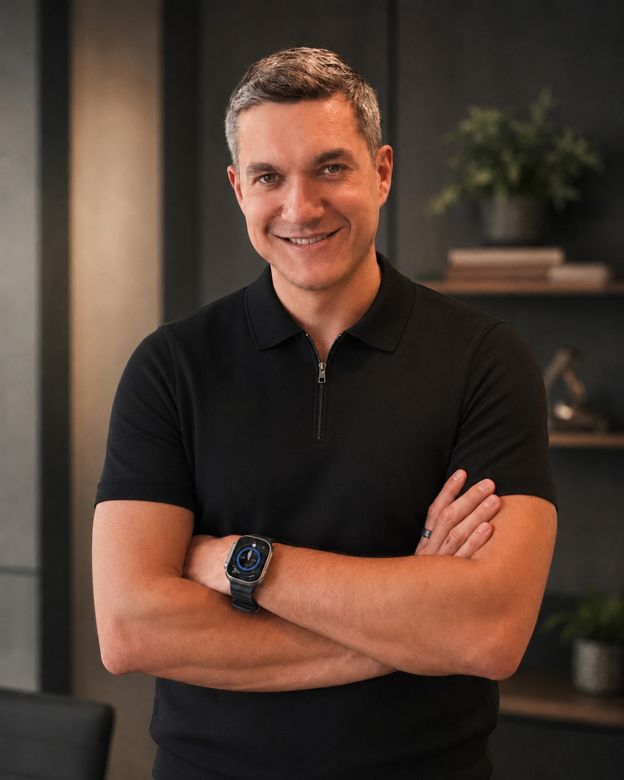 Aleksandr Zemtsov spent seven years in corporate development at Yandex – one of the world’s largest internet companies, with over 30,000 employees – where he led M&A, partnerships, and investment activity across fintech, AI, data infrastructure, e-commerce, and B2B. Now an independent strategic advisor and angel investor, he backs early-stage technology ventures and helps founders navigate growth across markets. In this interview, Startups Magazine speaks with Aleksandr Zemtsov about why the cost of building a tech company has never been lower, how AI is reshaping enterprise technology, and what he looks for when writing angel cheques.
How Yandex shaped thinking on tech growth
Zemtsov is quick to challenge a common misconception about what drives growth in technology. “People outside the industry tend to think tech companies grow by building great products. That’s necessary, but it’s maybe a third of the story. The other two-thirds is ecosystem design – partnerships, acquisitions, internal ventures, strategic investments – all of which compound over time and create something much harder to replicate than any single product.
“At Yandex, I had a front-row seat to how a company that started as a search engine became a platform spanning ride-hailing, fintech, e-commerce, cloud, food delivery, entertainment, and B2B services. That didn’t happen only organically. It happened through a very deliberate combination of building, buying, and partnering. I was personally involved in over thirty transactions and strategic initiatives across those verticals – from multi-billion-dollar M&A to early-stage venture bets to complex joint ventures.
“What that taught me is that the best technology companies think about M&A and partnerships not as a corporate finance exercise, but as a product decision. The question isn’t ‘is this a good deal?’ – it’s ‘does this make our ecosystem stronger in a way that’s impossible to replicate?’
The geography of tech: is Silicon Valley’s advantage fading?
On the question of where the next generation of important tech companies will be built, Zemtsov holds a nuanced position. Both things are true simultaneously, and that’s what makes this moment interesting.
“The US still has the strongest startup infrastructure in the world – and it’s not close. The density of capital, the legal frameworks, the talent networks, the exit ecosystem – all of that gives American founders a structural head start. If you’re building a company and you have the option of being in the Valley, that option has real value. I don’t think you should romanticise building outside the US.
“But what’s changed – and changed dramatically in just the last two or three years – is the cost of starting. Cloud infrastructure is essentially free at the earliest stages. AI tools are replacing entire functions that used to require hiring. Open-source has commoditised what used to be expensive proprietary technology. A team of three engineers today can build what required twenty five years ago. That changes the math for founders everywhere.
“In practice, this means it’s becoming easier worldwide to bring a product to market. A founder in London, Dubai, São Paulo, or Bangalore can ship a working product in weeks, not months. The infrastructure disadvantage outside the US still exists – it’s harder to raise a Series A, harder to find specialised talent at scale, harder to navigate regulation. But the cost of reaching the point where those problems even matter has dropped by an order of magnitude.
“This is why I’m increasingly interested in founders building outside the traditional centres. Not because the current centres don’t matter – they absolutely do. But because the current wave of automation and AI tooling means you can validate an idea with a fraction of the capital you needed before. And the founders who are used to operating with constraints – less money, less infrastructure, more regulatory complexity – often build more disciplined, more capital-efficient companies. Those are exactly the kind of companies I want to be backing early.
“What to do right now if you’re a founder outside the US: validate before you relocate. Use the current cost structure to get to a working product and ten paying customers from wherever you are. That’s enough to have a real conversation with investors in any geography.”
AI in the enterprise: what’s real and what isn’t
Zemtsov is sceptical of much of what is currently marketed as AI-powered B2B.
“Most of what’s being sold as ‘AI-powered B2B’ today is a thin interface layer on top of a foundation model. No proprietary data, no workflow integration, no switching cost. These products will be commoditised within eighteen months.
“What’s real – and what I find exciting as an investor – is AI that’s embedded in the operational backbone of a business. AI that makes the supply chain faster, the underwriting more accurate, the customer support genuinely autonomous. Not a chatbot – a system that replaces an entire workflow and gets better with every transaction.
“The companies buying enterprise technology today aren’t looking for features – they’re assembling infrastructure stacks. And the AI layer is becoming the most critical piece of that stack, because it’s the piece that turns data into decisions at a speed that humans can’t match.
“For early-stage founders: don’t build an AI product. Build a workflow product that happens to use AI as its engine. The companies that will win are the ones solving a specific, painful, expensive business problem – not the ones with the most impressive demo.”
But doesn’t that mean most of the current AI startup wave is essentially dead on arrival?
“I wouldn’t say dead – but I’d say undifferentiated. There will be a brutal shakeout in the next eighteen to twenty-four months. The companies that survive will be the ones that used this window to get deep into a specific workflow, accumulate proprietary data, and build switching costs. The ones that stayed at the interface layer will discover that their product can be replicated by an incumbent in a weekend.
“What to do right now if you’re building AI for enterprise: Pick one workflow. Not a department – one workflow. Map every step. Find the step that’s slowest, most expensive, and most error-prone. Build there. If you can’t name the specific job title of the person whose day you’re making better, you’re too abstract.”
What separates the companies that scale from the ones that don’t
Based on both his dealmaking experience inside Yandex and his current work as an angel investor, Zemtsov identifies three consistent factors in the companies that actually scale – and notes that none of them are what most people expect.
“First, a real problem. Not a market – a problem. A specific, expensive, painful thing that someone is already paying to solve badly. If the founder can describe the problem in one sentence and the customer nods before they finish – that’s the starting point. Distribution follows from there: the companies that scale fastest are the ones where the product is so obviously better at solving that one problem that customers pull it in.
“Second, structural defensibility – does the company’s position get stronger as it scales? Does more usage create more data, which creates a better product, which creates more usage? Or does growth just mean more servers and more cost?
“Third – the founder’s ability to operate through complexity. Scaling across markets, jurisdictions, and cultures is enormously complex. The founders who succeed aren’t necessarily the smartest – they’re the ones who can hold multiple problems in their head and make decisions with incomplete information. That’s the single most important thing I evaluate when deciding whether to back someone.”
Angel investing: thesis, instinct, and the limits of pattern-matching
Zemtsov describes his approach to angel investing as deliberately non-rigid.
“I don’t have a rigid thesis, and I think that’s a feature, not a bug. A rigid thesis means you’ve already decided what the future looks like. I’d rather stay open and let the founders teach me.
“That said, there are patterns in what I gravitate towards. I’m drawn to companies where the founder has a genuine, unfair insight – usually because they’ve lived the problem. The best pitches I see aren’t “here’s a market opportunity” – they’re “I spent five years doing this manually and I know exactly where the system breaks.” That kind of founder doesn’t need to guess about product-market fit. They already know.
“In terms of sectors, I tend to look at B2B infrastructure, travel, fintech, and AI-native tools – partly because that’s where my expertise is deepest, and partly because those are areas where the combination of technical complexity and domain knowledge creates a real barrier. Consumer is fascinating, but it’s not where I add the most value.
“The other thing I look for is capital efficiency. Coming from a world of multi-billion-dollar transactions, I have a deep appreciation for founders who can do a lot with a little. The best angel investments I’ve made weren’t the ones where the founder needed twenty million to prove the concept. They were the ones where two hundred thousand was enough to get to meaningful traction. The current environment – AI tooling, open-source infrastructure – makes this kind of capital-efficient building more possible than ever.”
But there’s an obvious bias there, isn’t there? Zemtsov said he backed founders who “lived the problem” – but how does he distinguish someone solving a real market pain from someone who’s just married to their own personal frustration? The ex-manager who hated expense reports isn’t necessarily building for a real market.
“That’s a very fair challenge, and honestly it’s one of the hardest things to calibrate. The bias is real – a founder who experienced a problem viscerally can become blind to whether anyone else experiences it the same way. I’ve seen founders build beautifully engineered solutions to problems that only exist inside companies exactly like the one they left.
“The test I use is simple: before I invest, I want to see evidence that the founder has talked to at least twenty to fifty potential customers who are not their former colleagues. Not surveys – real conversations. If the problem is real, those conversations will have produced not just validation but surprise – things the founder didn’t expect. If every customer conversation confirms exactly what the founder already believed, that’s actually a red flag. Reality is messier than your thesis.
“What to do right now if you’re validating a startup idea: Talk to fifty people who have the problem. Not friends – strangers. Before you pitch anyone, run the Mom Test (check a book by Rob Fitzpatrick). Don’t ask potential customers what they think of your idea – ask about their life. Good questions live in the past: “how did you handle this last time it happened?” Bad ones live in the future: “would you pay for this?” People are polite. They’ll tell you what you want to hear. The only way to get to the truth is to stop talking about your idea and start listening to their problem.”
On building pivot-ready companies: what Zemtsov actually looks for as an investor
“I think the word “pivot” is overused and often misunderstood. A real pivot isn’t changing your landing page or trying a different pricing model – it’s fundamentally changing who you serve or what problem you solve. That’s a much bigger decision than most people realise, and doing it well is extremely rare.
“What I actually evaluate isn’t “can this company pivot?” – it’s “is this company built in a way that produces signal fast enough to know when to pivot?” Those are different things. A company that’s burning through cash on a twelve-month product roadmap before talking to customers won’t know it needs to pivot until it’s too late. A company that’s running cheap experiments every two weeks will see the signal early.
“The founders who navigate pivots best share a specific trait: they’re emotionally attached to the problem, not to the solution. If a founder says “I’m building X” and you can feel that X is their identity – that’s a risk. If they say “I’m obsessed with this problem and X is my current best guess at solving it” – that’s much healthier. The first founder will resist evidence. The second will follow it.
“Practically, what makes a company pivot-ready is capital efficiency and team flexibility. If you’ve spent two million dollars and eighteen months building one product, pivoting is agonising. If you’ve spent two hundred thousand and three months, pivoting is a Tuesday. This is another reason the current environment – AI-assisted development, cheap infrastructure – is so powerful. It compresses the cost of being wrong, which means founders can afford to be wrong faster and more often. That’s a structural advantage.”
What to do right now if you want to build a pivot-ready company: “Keep your burn low enough that you can afford to be wrong three times. Structure your first six months as three two-month experiments, not one six-month build. After each cycle, ask: “What did we learn that we didn’t expect?” If the answer is nothing – you’re not experimenting, you’re executing a plan. And plans in early-stage tech are almost always wrong.”

The uncomfortable truth about early-stage investing: most startups die
“The statistics are brutal, and I think anyone who pretends otherwise is doing founders a disservice. The majority of angel investments go to zero. Not “underperform” – zero. That’s the baseline, and both investors and founders need to internalise it.
“What I tell founders is this: the odds being against you is not the same as the odds being random. Most startups don’t die because the market didn’t exist – they die from three very specific, very preventable causes. First, they run out of money before finding product-market fit, usually because they spent too much too early on things that didn’t matter. Second, the founding team breaks apart under pressure. Third, they build something technically impressive that nobody wants to pay for.
“All three of these are addressable if you’re honest with yourself. Spend less. Test faster. Choose co-founders you’ve been through hard things with, not just people who are smart. And validate willingness to pay before you build, not after.”
On his own track record: the bets that didn’t work out
“Any investor who claims a clean track record is either lying or hasn’t made enough bets. I’ve backed founders where the thesis was right but the timing was wrong – the market wasn’t ready. I’ve invested in teams that had extraordinary domain knowledge but couldn’t make the leap from understanding a problem to building a product that solved it.
“The lesson I took from those is that early-stage investing is fundamentally about people and timing, in that order. The market analysis can be perfect. If the team can’t execute under pressure, or if they’re two years early to a market that doesn’t know it needs them yet – it doesn’t matter. I’ve become much more focused on the “who” and the “when” than the “what.””
What pre-seed founders should actually expect to raise in 2026
The honest answer is that it varies enormously by geography, sector, and what you’re actually building – and that’s precisely the problem. You’ll see pre-seed rounds from $150K to $3M for companies that look superficially similar.
On the practical question of fundraising, Zemtsov cuts through the noise quickly. “At pre-seed, you’re raising enough to get to a clear signal – not to build a company,” he said. “In most B2B and infrastructure plays, that means $200K to $500K gets you to a working product and your first ten to twenty paying customers. In AI-native businesses, it might be less – the tooling is so good now that you can build a functional prototype in weeks. If you’re telling me you need two million dollars before you can show anything, I’d push back and ask what exactly that money is buying”
He is also candid about the role of pedigree in early-stage investment decisions. Yes, investors pay attention to where founders worked before – ex-Google, ex-Meta, ex-Yandex – but he frames it as an imperfect signal, not a determinative one. “What I look for is a specific combination: the pattern recognition and operational maturity that comes from large-scale experience, combined with the scrappiness and speed that comes from building with constraints. That’s a rare combination – but when you find it, it’s very powerful.”
What to do right now if you’re raising pre-seed: Don’t guess your round size – reverse-engineer it from your milestones. Define the three things you need to prove before a seed round. Price each one. Add a buffer. That’s your raise. For most B2B companies, it’s $200K–$500K. If it’s more, challenge every assumption. Talk to five founders who raised in your sector and geography in the last six months – their experience is worth more than any benchmark report.
On experimentation: lessons from inside Yandex and the angel portfolio
“Inside a large tech company, the biggest insight I had was that a lot of valuable projects often started as experiments. A side project that one team built because they were curious. An internal tool that solved a niche problem. These things have an organic quality that top-down strategic initiatives almost never replicate.
“The problem is that most large companies across the industry are structurally bad at letting experiments survive. The incentives push towards predictable outcomes – quarterly targets, roadmap commitments, resource allocation processes. An experiment that doesn’t immediately show metrics gets killed or absorbed into something bigger. Promising internal ventures get shut down not because they fail, but because they can’t demonstrate ROI on a corporate timeline. That’s an institutional problem, not a people problem – and it’s one of the reasons the most interesting innovation increasingly happens outside large organisations, not inside them.
“That view shaped how I think about angel investing. At the earliest stage, every company is an experiment. The question isn’t “does this work at scale?” – it’s “is this experiment designed in a way that will produce a clear signal?” I’m much more interested in a founder who says “I’m going to test three hypotheses in the next ninety days” than one who says “here’s my five-year plan.” Plans are fictions. Experiments produce data.
“This is also why I think the current moment is so exciting for angel investors. The cost of running an experiment has never been lower. You can test a B2B product hypothesis with a landing page, an AI prototype, and fifty customer conversations – all in a few weeks. That means the feedback loop between idea and evidence has compressed dramatically. For someone like me who writes relatively small cheques, that compression is enormously valuable – I get signal faster, and the founders get to the truth faster.”
Corporate structure and capital strategy for founders building globally
Zemtsov sees the single biggest mistake is treating corporate structure as a legal afterthought. Founders pick a jurisdiction because their lawyer suggested it, set up entities reactively, and three years later discover their structure prevents them from raising capital, entering markets, or executing a deal.
“Structure is strategy. Where you incorporate, how you hold your IP, how entities relate to each other – these decisions either accelerate growth or create friction that compounds. I’ve been on both sides: I’ve helped structure transactions where clean architecture made a deal possible, and I’ve seen deals collapse because the target’s structure was too tangled to unwind.
“For founders building across markets: think about structure from day one. If you plan to raise from US investors, have a US-compatible structure. If you’re operating in multiple jurisdictions, understand the implications before you’re forced to.
“On capital: flexibility matters more than optimisation. Don’t optimise for the lowest dilution today – optimise for the widest set of options tomorrow. The companies that navigate uncertainty best are the ones with clean balance sheets and investor bases that understand their market.”
For more startup news, check out the other articles on the website, and subscribe to the magazine for free. Listen to The Cereal Entrepreneur podcast for more interviews with entrepreneurs and big-hitters in the startup ecosystem.
