

Business, marriage, and the art of making it work
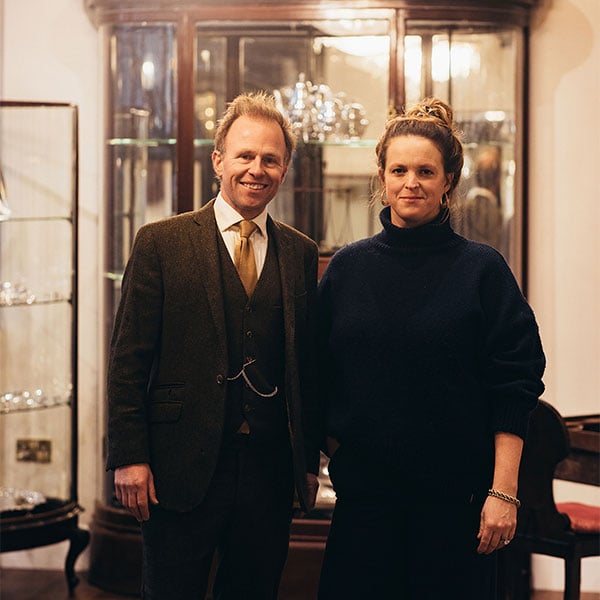
My husband and I have worked together for eight years and have been married for 14. While I still nod to the romantic in me from time to time, I’ve always viewed marriage a little like a contract: two people agreeing to the terms of a partnership. So when I joined our family business eight years ago, having decided not to return to teaching, I was perhaps better prepared than most for the realities of working alongside a spouse.
I manage the e-commerce side of our business, Banwells, while my husband, Simon, is the jewellery expert and oversees all other aspects. I am no authority on running a business, but I can say wholeheartedly that I am an expert in working with a spouse, despite there being no qualification to prove it. Sharing work, life, and children for this long has forced me to develop strategies that keep things ticking along, even when the pressures of small business threaten to overwhelm.
In that time, we’ve navigated a major restoration project of a 1902 jeweller’s building (relocating our retail space just before Christmas, no less), HR challenges, financial pinch points, and, like everyone else, COVID. Those hurdles would be demanding enough for any business partners. Add in personal lows such as grief and illness, experienced simultaneously by two people who then walk through the same front door at the end of the day, and that’s when the real work begins.
Over the years, I’ve learned that a few key practices can make the difference between simply surviving and actually functioning well, especially during periods of stress. They support quicker problem-solving and help defuse moments that might otherwise erupt.
Be clear about roles
I’m responsible for e-commerce, and naturally that feels like my priority. But it isn’t the bread and butter of our business. When Simon needs me to shift focus to a staffing issue or an operational problem, I have to remind myself that he carries responsibility for the nuts and bolts of our success. Sometimes my to-do list simply has to wait.
Rethink “working hours”
Coming from a profession with defined hours, a contract, and a line manager to escalate problems to, I had to abandon the idea of clocking off. Running a small business means that while you may choose when you work, you are ultimately always working. Simon already lived in that reality; I had to let go of resentment and learn to embrace the freedoms that come with being your own boss.
Create physical separation
I work from home, Simon is back and forth, and we technically share an office, but I tend to work at the kitchen table. After fourteen years of marriage, I know exactly what a long exhale from Simon means, and my instinct as his wife is to fix it. As his colleague, that instinct isn’t always helpful. Sometimes the best thing I can do is remove myself from earshot.
Learn to regulate your nervous system
There was a period when I suffered from cluster migraines triggered by traumatic event and a severely dysregulated nervous system. I was barely able to work, and Simon had to shoulder not only an already heavy workload but much of the parenting too. Through conscious connected breathwork, I learned how to reset my nervous system. I now experience migraines only once every few months, and I carry a free, effective tool with me at all times.

Use communication that removes emotion
I’m a reactive person, so to maintain professionalism I often email or message work-related questions rather than raising them face to face, even if Simon is in the next room. It gives both of us space to respond thoughtfully and flexibly, without unnecessary heat.
Accept that work doesn’t stop at 5pm
I no longer fight this. The business is interwoven into our lives, so dinner conversations often include the latest success or setback. What I have learned is how to recognise when I’ve had enough, and how to put a pin in a topic until the next day.
These approaches didn’t emerge overnight. They’ve been tested repeatedly, and there have been moments when I’ve questioned the value of my role entirely. But the most important factor, above all else, is mutual respect. I respect Simon, what he does and how he does it and he would say the same of me. Without that, no system or strategy would hold.
For more startup news, check out the other articles on the website, and subscribe to the magazine for free. Listen to The Cereal Entrepreneur podcast for more interviews with entrepreneurs and big-hitters in the startup ecosystem.
