Swish Solar, a cleantech company based at Velocity, the University of Waterloo’s startup incubator, has closed an oversubscribed $1.5 million pre-seed round. The new financing will accelerate market adoption of its self-cleaning solar technology that helps make renewable energy more efficient and sustainable.

Balnord, an early-stage investor for the Baltic Sea Region, has announced that it has oversubscribed its €70 million fund target and is well on its way to achieving a final close of €100 million by mid-2026.

Aquark Technologies has announced it has been awarded a £1,409,702 contract by Innovate UK. The contract will facilitate the future deployment of Aquark’s cold atom-based atomic clock, AQlock, at a major telecommunications site in the UK.

Cizzle Biotech, a British biotech company has signed a Letter of Intent (LOI) that could lead to a transformational partnership in delivering how lung cancer is diagnosed across the NHS.

Grab a bowl & dig into this! Startups Magazine interviews the most innovative startups of…
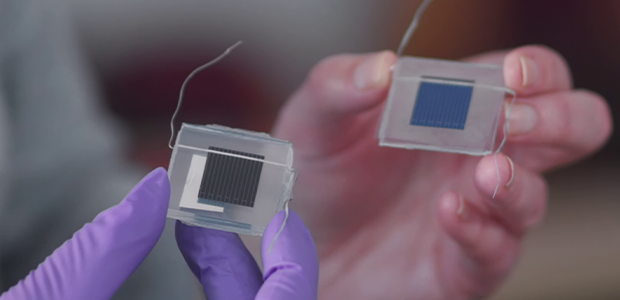
Cambridge Photon Technology (CPT), a deeptech spin-out from the University of Cambridge, has raised £1,556,000 in new funding to accelerate the commercialisation of its photon-multiplier technology. The pre-Series A round combines £926,000 in equity investment with a £630,000 grant from Innovate UK’s Investor Partnerships: Clean Energy and Climate Technologies programme.

Cornerstone Photonics Innovation Centre (C-PIC), the UK’s dedicated Innovation and Knowledge Centre (IKC) for silicon photonics, has partnered with Future Worlds, the University of Southampton’s startup accelerator, to launch a dedicated Silicon Photonics Stream at an upcoming Future Worlds Bootcamp, taking place on 29–30 November 2025.
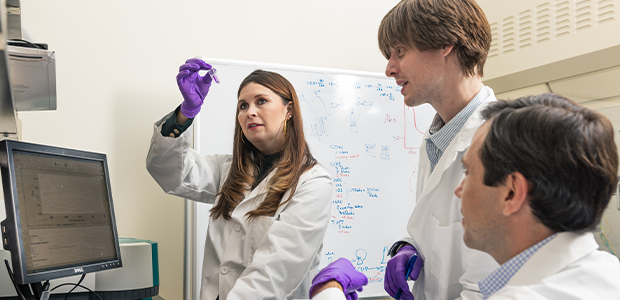
LambdaVision, a biotech innovator leveraging microgravity to manufacture its investigational protein-based artificial retina to help patients regain sight lost to retinal degenerative diseases, has closed a $7 million seed funding round co-led by Seven Seven Six and Aurelia Foundry Fund, with additional support from Seraphim Space, providing runway into 2027.

Bumblebee Power, an Imperial spinout pioneering next-generation wireless charging, has been awarded funding support by the UK Space Agency for a project with MDA Space, a trusted mission partner to the rapidly growing space economy, to advance the use of wireless power in space.

Fashion technology startup Fit Collective, founded by Savile Row-trained designer Phoebe Gormley, has raised £3 million in pre-seed funding, marking the largest round ever raised by a solo female founder in the UK.

Vanta, the AI-powered trust management platform, today released its third annual State of Trust Report, an in-depth analysis uncovering trends in AI, security, compliance, and trust from a survey of 3,500 IT and business leaders across the US, UK, France, Germany, and Australia.

At CES Unveiled Europe, E-magy and Rebel Cactus announced the signing of a strategic Memorandum of Understanding (MoU) to co-develop a customised lithium-ion battery cell for Rebel Cactus’s next-generation children’s smartwatch.

Honest Mobile, the UKʼs top-rated B Corp challenger mobile network, will appear on Dragonsʼ Den at 8pm on Thursday 30th October 2025 on BBC One and iPlayer.

Businesses must stay efficient without losing their competitive edge. When scaling, whether through organic growth or acquisition, using the right tools and technology can streamline operations, reduce manual overhead, foster clear communication, and improve both physical and cyber security measures – all essential factors for sustainable growth.

This November 11th, the HubSpot for Startups AiSummit brings together startup founders and leading investors that are shaping the future of Artificial Intelligence (AI).

SheMed, the female-founded health technology company changing how women access personalised healthcare, has announced it has raised $50 million to further develop its innovative health platform and advance new breakthroughs for pre-emptive healthcare.

Queen Mary University of London has launched a new spinout, Procyon Diagnostics, to take omics-based single cancer early detection tests from research to reality. Cancer causes over a quarter of deaths in England, and early detection offers the best hope of survival.

New research paints a stark picture: UK businesses are now facing a sick leave crisis that costs upwards of £20,000 per worker for long-term absences. The root causes are clear burnout, stress, and a growing sense of disconnection among employees, especially pronounced in frontline managers and younger professionals. This is not just about days lost to illness; it is a crisis of workplace wellbeing that threatens organisational productivity, innovation, and morale.
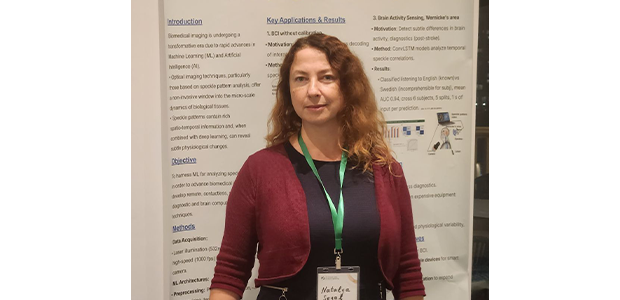
The scope of Natalya Segal’s influence on the field becomes clear in her patent record. Segal and her team filed a graphics rendering patent addressing visual synchronization (US20120262463A1), smart rendering optimization, and cloud-based GPU usage – work that anticipated both cloud gaming and the GPU infrastructure now essential to AI development, with the patent later acquired by Google. Her subsequent wearable technology patents (US 9,955,286; US 10,225,721; US 10,959,099 (2021)) have been cited by Apple in multiple filings, as well as by Nvidia, Qualcomm, Samsung, Dell, Sony, and Microsoft. Whether in cloud infrastructure or wearable interfaces, her work sits at the architectural foundation of modern computing.

A well-structured partnership agreement is vital to the survival of any startup. When enthusiasm and innovation take centre stage, legal detail often falls behind. Many founders focus on growth and funding, overlooking how ownership, governance, and intellectual property are defined.