
Italy confirms itself as a point of reference for European and international innovation, with hundreds of change makers from around the world choosing to be present at WMF – We Make Future for 2024 as well.

AI in the workforce is akin to Aladdin’s genie – its power equal to its potential risks – with the ideal scenario being a human-led partnership between AI tools and the person using them, to strike a balance between efficiency and trust.
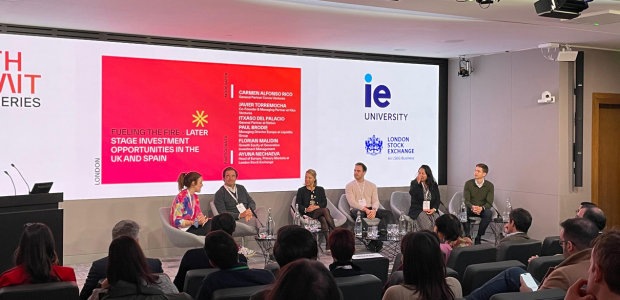
South Summit and IE University held the second edition of the ‘Scaleup Series’ in London this week. This international gathering brings together founders and leaders of scaleups, unicorns, investment funds, and corporations in major European cities to explore growth opportunities as well as key investment and innovation trends in the European entrepreneurial ecosystem.

HiBob, the creator of Bob, a HR platform revolutionising the operation of organisations in today’s work environment, has published its third annual Women in the Workplace report. The report reveals a significant disparity between men’s and women’s perceptions of workplace equality.

Navigating the intricate landscape of trade marks and brand protection is crucial for startups aiming to carve out a distinctive identity in a competitive market. This article addresses the ten most frequently asked questions by startups about trade marks and brand protection. It provides valuable insights into how emerging businesses can safeguard their innovations, ensure their brand stands out, and avoid common pitfalls.

A popular programme, which has helped thousands of sole traders and microbusinesses across the UK to grow, is making a come-back to support small firms facing the impact of recession.

The numbers are in — last year, the UK’s tech sector ranked number three globally with a valuation of over $1 trillion/£826 billion, solidifying its status as one of the world’s digital giants. Amidst widespread anxieties of a post-Brexit funding downturn, British tech has proved itself remarkably robust.

For most early-stage companies, much of 2023 felt like an especially harrowing series of episodes from a Mr. Robot-ish dystopian narrative. The combination of a recession, layoffs across the tech industry and beyond, SVB and Credit Suisse destabilising the banking sector, inflation in the US, and a general slowdown of financing from the jubilee-like days of 2021-22 feel like a series of heavyweight punches engineered to knock founders off their feet, and then keep them down there.

After a challenging year or two, the roots of meaningful innovation are starting to take hold in traditional industries which will shape the way we work and live for decades.

Global businesses are suffering major financial and human costs from critical IoT connectivity failures with almost two thirds losing sales and customers as a direct result, according to a new report released by rSIM, the developer of a new intelligent SIM that aims to put an end to the issues.

Findable, which automates building documentation using Artificial Intelligence (AI), has arrived in the UK to solve building document chaos, using AI to read and automatically sort over one million documents for its customers to date.

The Royal Countryside Fund (RCF) has announce an investment of £434,945 in rural community and farm support organisations across the UK.

Multifi is thrilled to unveil its pioneering 120-day payment terms, now directly accessible to Small and Medium-sized Businesses (SMBs) throughout the UK, after a triumphant broker pilot scheme.

HACE: Data Changing Child Labour, has raised £450,000 in its pre-seed funding round, beating its initial target by 20%.

Diversity, equity, and inclusion (DEI) are essential to a healthy and successful workplace, but which country sets the gold standard when it comes to creating a safe and supportive environment for its workforce?

Cue, an emerging leader in customer service chat software, has announced the successful completion of its seed funding round, securing $2 million from angel investors.

Volt, the international platform for real-time payments, has been granted an Electronic Money Institution (EMI) licence by the Financial Conduct Authority (FCA) in the United Kingdom.

UK SMEs are feeling increasingly confident about the future of their businesses, according to the ‘Alibaba.com B2B Sentiment Survey’ by Alibaba.com, a platform for global business-to-business (B2B) e-commerce.

Huckletree Liverpool Street is set to inaugurate on 2nd April 2024, introducing 35,000 sq. ft of ready-to-use office space along with versatile hotdesking solutions to the local area.

Any revolution is a major step in change and change is simultaneously difficult and exciting, providing drawbacks and opportunities, often in equal measure. People called the industrial revolution the ‘end of the world’. They asked what would happen to people’s farms and their jobs – the artisan skills – and there was a period of uncomfortable transition, however in reality it opened up opportunities that they had never dreamt of.