NVIDIA Corporation, founded in 1993 and headquartered in Santa Clara, California, has established itself as a leading designer of graphics processing units (GPUs) for the gaming and professional markets. Renowned for its pioneering work in AI and deep learning, NVIDIA has expanded its reach beyond gaming into various sectors, including automotive, data centres, and healthcare. The company’s GPUs are integral to the development of high-performance computing and advanced visualisation technologies, making it a critical player in the evolution of the tech industry.

OpenAI’s former Chief Technology Officer, Mira Murati, is reportedly raising funding from venture capitalists for her new AI startup. The news was originally reported by Reuters, who claimed it came from sources familiar with the matter.

NVIDIA has expanded its collaboration with Microsoft to support AI startups worldwide, initially targeting the healthcare and life sciences sectors.

The value of bad debt suffered by small businesses has surged by a staggering 127%, according to a report by SME funder, Bibby Financial Services (BFS).

New PayPal data has revealed the reach and impact of ‘alternative business funding’ amongst British small businesses.

A survey by AND Digital, featured in its ‘Rewards & Resilience’ report, revealed that 68% of women believe more can be done to enhance the workplace for women in leadership, particularly through better career pathways and mentorship support.

In a bid to enable future success and growth, ten entrepreneurial life science and technology businesses have begun the immersive Discovery Spark programme, with a prize package worth over £50,000 up for grabs.

Genie AI, an AI legal editor, has raised £13.3 million in Series A funding, led by GV (Google Ventures), and joined by Khosla Ventures (early investors in OpenAI), taking its total raised to over £15 million. Previous to this round, Genie AI received one of the UK Government’s largest grants for a startup, and seed funding led by Connect Ventures.

Workwize, the global IT operating system used to deploy, manage, and retrieve laptops and IT equipment across more than 100 countries, has released its new Automation Suite.

Dryad Networks, a startup working in ultra-early wildfire detection technology, has announced a major financial boost to advance its wildfire prevention solutions. The company has been awarded a €3.8 million grant from the European Regional Development Fund (ERDF), via Investitionsbank des Landes Brandenburg (ILB), to accelerate the development of its revolutionary wildfire suppression project, codenamed “Florian.”

Hiring international team members can help startups grow quickly and cost-effectively, but navigating international laws can be challenging and often leads to compliance mistakes. Many startups struggle with managing payments and onboarding, especially when using multiple tools, which increases the risk of errors. A lack of proper compliance processes can harm investor confidence and damage the startup’s employer brand.

Struggling to keep your energy and focus as an entrepreneur? Here are 3 practical strategies that will not only boost your productivity but also protect your mental health and keep you on track toward your vision.

In a world where a single tweet can launch a brand or a viral TikTok can transform a small shop into a global phenomenon, digital literacy is the difference between SMBs thriving or falling behind. Today, entrepreneurs are faced with a new reality: digital hesitancy is just as – if not more – important than understanding business cash flow or generating sales.

You might think that being famous is all red carpets, secluded mansions and private jets. Making huge purchases – in cash of course – and living the high life. However, though this is the case for some of the world’s A-listers, plenty of care and attention goes into managing their money, so they stay rich sustainably.
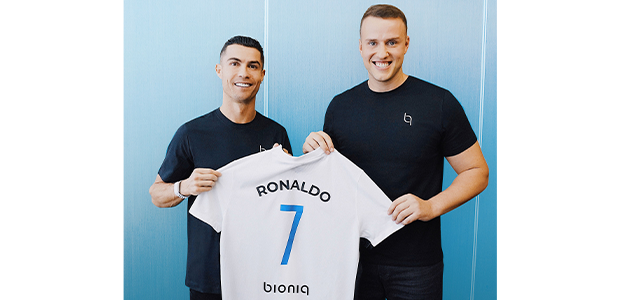
Cristiano Ronaldo, the global football legend, has made a significant investment in Bioniq, a startup known for its personalised nutritional solutions based on blood biomarker data. Founded in 2019, Bioniq has now reached a total valuation of $82 million.

Zip, the AI-driven procurement orchestration platform, has secured $190 million in Series D funding, with BOND leading the round. This substantial investment ranks among the largest in the enterprise SaaS space this year, boosting Zip’s valuation to $2.2 billion, up from $1.5 billion in 2023. New investors DST Global, Adams Street, and Alkeon joined the round, alongside returning backers Y Combinator and CRV.

Authologic, a global digital identity verification platform, has raised $8.2 million in its Series A funding round, led by European VC firm OpenOcean. YCombinator, Peak Capital, and SMOK VC also contributed, backing Authologic’s mission to modernise KYC and AML processes with secure e-ID solutions. Traditional KYC systems that rely on document images are becoming outdated, as AI-generated fake documents make these methods increasingly vulnerable to fraud, identity theft, and compliance issues. Authologic’s platform offers a more secure approach, addressing the flaws in legacy verification systems.

The race to net-zero is no longer an aspirational goal – it’s a global imperative. As we surge forward, significant technological gaps stand in the way of realising this ambition. According to the International Energy Agency (IEA), a striking 35% of the technologies required are still in early development or pilot phases, not yet commercially available.

Drax Group has partnered with Smart Green Shipping to advance the use of wind-assisted technology in decarbonising the shipping sector. The project centres on Smart Green Shipping’s ‘FastRig’ wingsail, which aims to cut fuel consumption and emissions by up to 30% annually.

The Spanish entrepreneurial ecosystem has reached maturity and needs to explore new ways to revitalise itself and ensure its business model continues to grow. This the main conclusion of the 2024 Entrepreneurship Map, developed by South Summit in collaboration with IE University, which shows how startups already reach an average age of 3,19 years and follow a constant consolidation and growth compared to the 3,12 years registered in 2023. Additionally, 2 out of 10 startups in Spain are now scaleups, representing 3 percentage points more than the previous year and is also a symptom of this growing maturity.